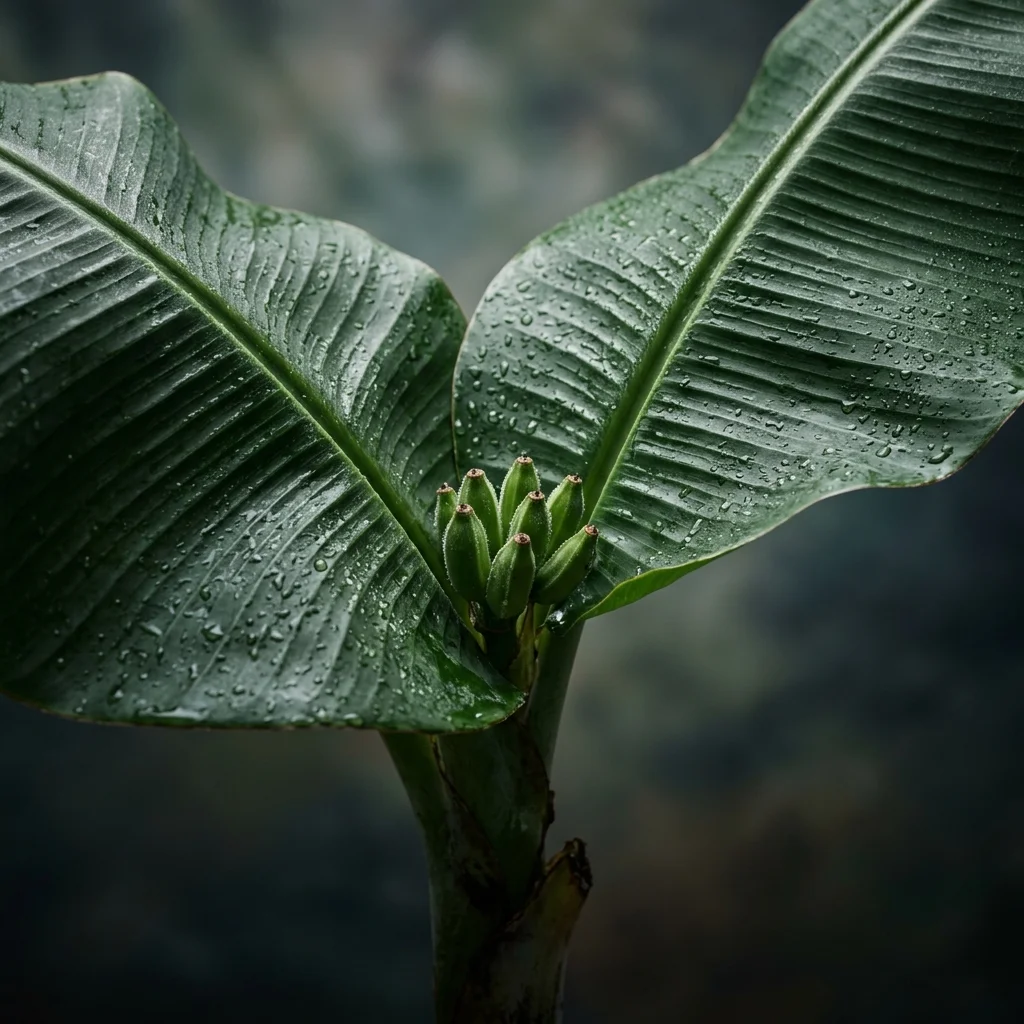
Musa acuminata

Banana Tree Care & Identification Guide

The magnificent Banana Tree (Musa acuminata) is a spectacular giant perennial herb native to Southeast Asia, celebrated globally for its rapid tropical growth, massive soft paddle-shaped leaves, and sweet edible fruits. It has no true woody trunk; its structural trunk is a pseudostem formed by tightly overlapping leaf sheaths. Its massive leaf blades are designed to shred naturally under strong wind to prevent the plant from being uprooted. It requires rich organic soil, heavy watering, and full tropical sun.


Sunlight Icon
Sunlight Full Sun
Watering Icon
Watering High
Soil Mix Icon
Soil Mix Rich Organic Humus
Temperature Icon
Temperature 15°C to 35°C
Toxicity Warning Icon
Toxicity Non-toxic
Botanical photography of Banana Tree (Musa acuminata) - Plant AI care database

How to Identify Banana Tree

Identify Banana Tree immediately by its highly distinct biological features. Native to its specific ecosystem, it showcases spectacular foliage and structural habits optimized for its environment.

  • Distinctive Features: Overlapping leaf-sheath pseudostem, massive paddle-shaped thin green leaves, and hanging clusters of green to yellow finger-like fruits.
  • Typical Coloration: Vibrant lime-green leaves, fibrous light-green pseudostem, and yellow curved fruits.
  • Potential Confusions: Similar to Canna Lily or Strelitzia, but distinguished by its significantly larger paddle leaves (up to 3 meters long) and hanging clusters of edible fruit.

11-Step Professional Care & Planting Guide

💧 【Watering & Moisture】 Water heavily! The massive leaf area causes high transpiration rates. Keep soil consistently moist but never waterlogged; water deeply 2-3 times a week.

☀️ 【Sunlight & Exposure】 Requires full direct sun. Thrives in bright, warm conditions with 6-8 hours of direct sunlight. Shelter from strong wind to prevent unsightly leaf tearing.

🪴 【Ideal Soil Mix】 Requires deep, highly fertile, humus-rich soil. Blend 40% organic compost, 30% peat moss, 20% loam, and 10% perlite (pH 5.5-6.5).

🌡️ 【Temperature & Winter Care】 Cold-sensitive (USDA Zone 9-11). Growth slows below 15°C; leaves suffer frost damage at 0°C. Protect pseudostem with burlap wraps in winter.

✂ 【Pruning & Grooming】 Cut back old, shredded, or browned outer leaves to the pseudostem. After fruiting, the entire fruited stem must be cut to the ground to allow suckers to rise.

🧪 【Fertilization】 Extremely heavy feeder! Apply high-potassium organic fertilizer monthly during the active growing season to support massive leaves and fruit weight.

🏺 【Potting & Garden Planting】 Plant in highly fertile garden spots or huge tubs. Ensure drainage is outstanding, and mulch heavily with composted bark to retain moisture.

🌱 【Propagation】 Propagated easily by dividing and transplanting 'pups' or suckers that naturally emerge from the underground corm in spring.

🐛 【Common Pests】 Watch out for aphids, spider mites, and banana weevils. Control using organic neem oil sprays and clean sanitation.

🦠 【Common Diseases】 Highly vulnerable to Panama Disease (Fusarium wilt TR4) and Sigatoka leaf spot fungus. Ensure excellent air circulation and soil drainage.

🎓 【Botanist Advice】 The natural tearing of banana leaves is actually an evolutionary adaptation! It allows strong winds to pass through without tearing the fragile, non-woody pseudostem out of the ground.

Frequently Asked Questions

Q: Why are my banana leaves splitting?

A: This is completely normal! Banana leaves are biologically designed to tear along their lateral veins in response to wind. This reduces wind resistance and prevents the heavy giant herb from being uprooted.

Q: What is Panama Disease and how can I treat it?

A: Panama Disease is a lethal vascular wilt caused by the soil fungus *Fusarium oxysporum*. It enters through the roots, blocking water transport. There is no cure; once infected, the soil remains contaminated. Always plant certified disease-resistant varieties.

Q: How long does it take for a banana tree to produce fruit?

A: Under warm, bright conditions, a banana stem takes about 9 to 12 months to grow to full size, followed by 3 to 4 months for the fruit to mature and ripen.

Q: Is the banana tree safe for cats and dogs?

A: Yes, Musa acuminata is completely non-toxic and pet-safe. It is an excellent choice for creating safe, lush tropical indoor or outdoor spaces.

Is your Banana Tree showing yellow or dry leaves?

Don't let rot or scale pests kill your trees. Upload a photo now to get an instant AI botanical diagnosis and save your forest today!

Diagnose Banana Tree Now