Baobab Care & Identification Guide
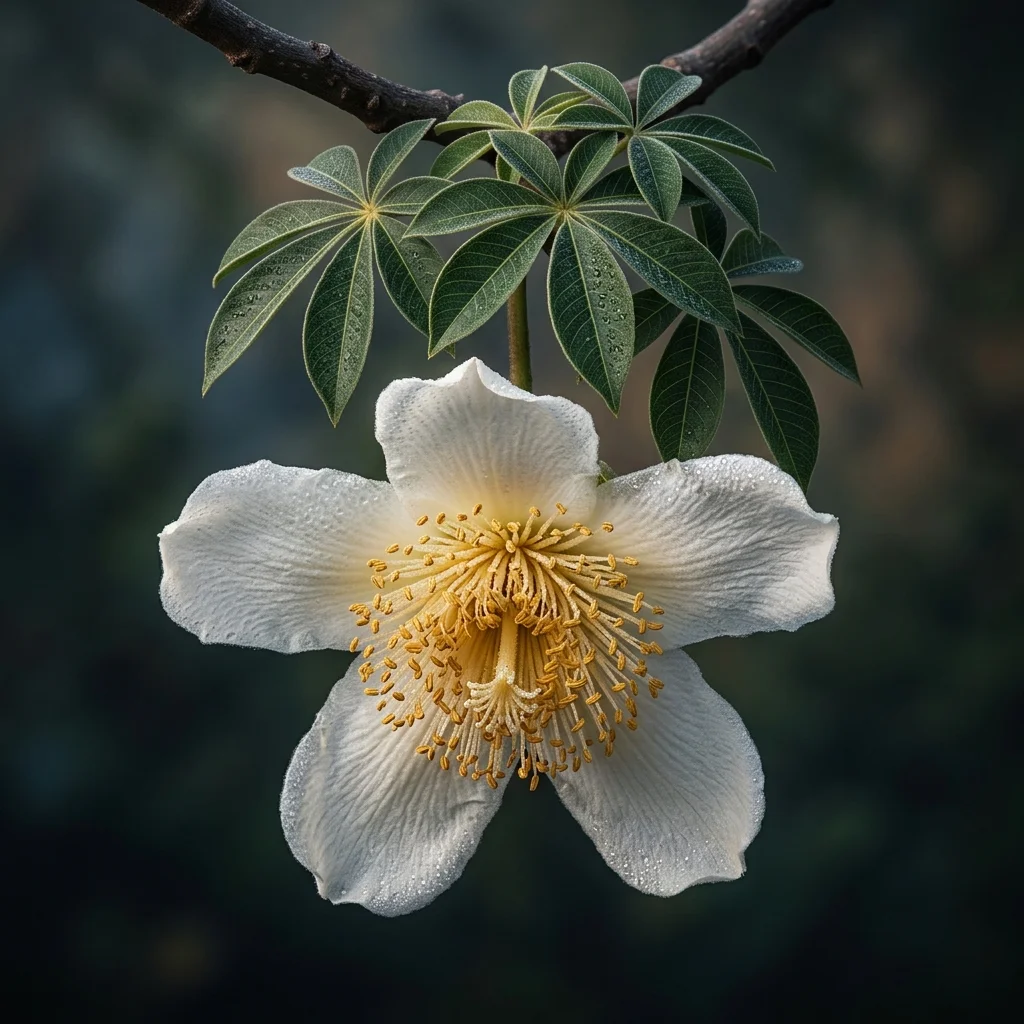
The magnificent Baobab (Adansonia digitata) is a spectacular and long-lived tropical deciduous tree native to the semi-arid savannahs of Sub-Saharan Africa, celebrated globally for its colossal bottle-shaped trunk that stores thousands of liters of water to survive drought. Known as the 'upside-down tree' because its leafless branches resemble roots in the dry season. It produces large, hanging, fragrant white flowers pollinated by bats. It requires sandy mineral soil, full sun, and strictly dry winters.





How to Identify Baobab
Identify Baobab immediately by its highly distinct biological features. Native to its specific ecosystem, it showcases spectacular foliage and structural habits optimized for its environment.
-
✓
Distinctive Features: Colossal, swollen bottle-shaped grey trunk, sparse root-like crown, palmate compound leaves, and large hanging white flowers.
-
✓
Typical Coloration: Grey smooth outer bark, medium green palmate leaves, and large snow-white hanging flowers with yellow stamens.
-
✓
Potential Confusions: Similar to Bottle Tree (Brachychiton), but easily distinguished by its significantly larger size, palmate leaves, and massive hanging white flowers.
11-Step Professional Care & Planting Guide
Frequently Asked Questions
Why is it called the Upside-Down Tree?
It is a visual illusion! During the dry season, the Baobab sheds all its leaves to conserve water. Its bare, gnarly, spreading branches resemble a root system pointing toward the sky, giving the impression that it was planted upside-down by the gods.
Is the Baobab safe for household pets?
Yes, Adansonia digitata is completely non-toxic and pet-safe. Its vitamin-rich leaves and fruit powder are highly nutritious and safe.
How much water can a Baobab tree store?
A mature, giant Baobab tree can store up to 100,000 to 140,000 liters of water inside its soft, spongy woody fibers, allowing it to easily survive years of severe savannah drought.
Can I grow a Baobab as a indoor bonsai?
Yes! Baobabs make exceptionally spectacular bonsai subjects because their fleshy trunks swell rapidly in pots, and they tolerate heavy pruning and dry indoor air beautifully.