Black Locust Care & Identification Guide
The magnificent Black Locust (Robinia pseudoacacia) is a highly spectacular deciduous native of the Appalachian Mountains, celebrated globally for its stunning late spring display of hanging, wisteria-like racemes of highly fragrant white pea-like flowers. It features pinnately compound leaves with elegant, oval-shaped leaflets. Its exceptionally dense wood is famous for being incredibly rot-resistant, outlasting pressure-treated lumber. Critical Warning: The bark, leaves, and seeds are toxic to horses, dogs, and humans. It requires well-drained loam, full sun, and moderate watering.





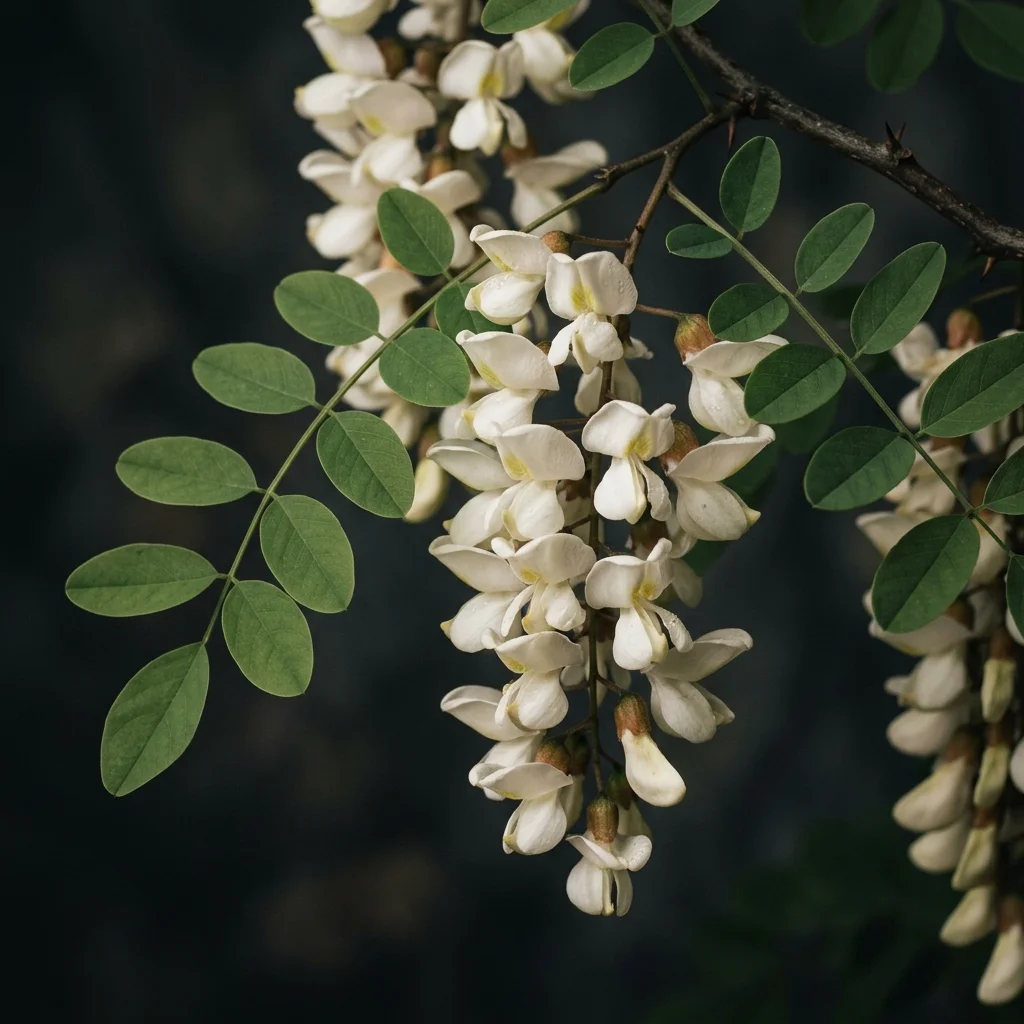
How to Identify Black Locust
Identify Black Locust immediately by its highly distinct biological features. Native to its specific ecosystem, it showcases spectacular foliage and structural habits optimized for its environment.
-
✓
Distinctive Features: Hanging racemes of fragrant white pea-like flowers, pinnately compound leaves with round oval leaflets, short paired spines at the leaf nodes, and deeply furrowed bark.
-
✓
Typical Coloration: Bright bluish-green foliage, showy white-yellow blossoms, and dark brown deeply furrowed bark.
-
✓
Potential Confusions: Similar to Honey Locust, but easily distinguished by its hanging white spring flowers (Honey Locust has greenish-yellow inconspicuous blooms) and short paired thorns (Honey Locust has massive branched thorns).
11-Step Professional Care & Planting Guide
Frequently Asked Questions
Why is the wood of Black Locust so famous?
It is legendary! Black Locust wood is one of the hardest and most rot-resistant woods in North America, naturally lasting 50 to 100 years in the ground without rotting or requiring chemical treatment.
Are Black Locust trees safe for pets?
No, Robinia pseudoacacia is highly toxic to dogs, cats, and horses, containing the toxic phytotoxins Robin and Robinetin in its bark, leaves, and seeds.
Are the flowers edible?
Yes, the white pea-like flowers are the only non-toxic part of the tree and are historically dipped in batter and fried in European cuisine, but all other parts must be avoided.
Does it spread aggressively?
Yes, it is a pioneer species that spreads rapidly through underground root suckers, quickly forming dense groves in disturbed soils.