Black Spruce Care & Identification Guide
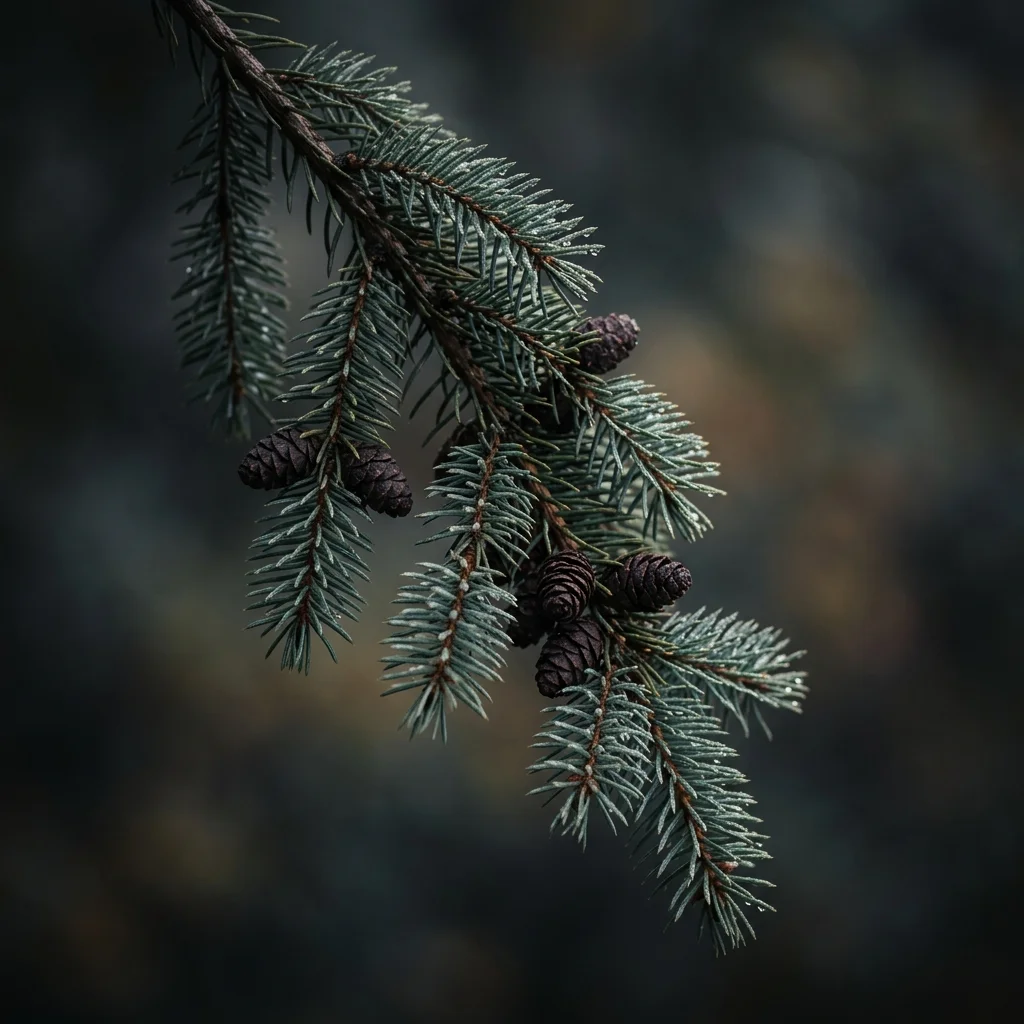
The magnificent Black Spruce (Picea mariana) is a spectacular and narrow-crowned evergreen conifer native to the subarctic forests and wetlands of North America, celebrated globally for its ability to thrive in cold, acidic peat bogs. Its foliage consists of short, stiff, bluish-green needles. Its cones are semi-serotinous, remaining closed on the tree for years until the heat of a forest fire triggers them to open and release seeds. It requires acidic boggy soil, full sun, and low to moderate nutrient levels.





How to Identify Black Spruce
Identify Black Spruce immediately by its highly distinct biological features. Native to its specific ecosystem, it showcases spectacular foliage and structural habits optimized for its environment.
-
✓
Distinctive Features: Narrow, slender spire-like crown, short bluish-green needles, and small dark purple to blackish egg-shaped cones clustering at the top.
-
✓
Typical Coloration: Bluish-green dense needles, dark purple to grey-brown woody cones, and scaly greyish-brown inner bark.
-
✓
Potential Confusions: Similar to Red Spruce (Picea rubens), but distinguished by its smaller, darker cones, narrower spire-like crown, and strict preference for wet, acidic bog habitats.
11-Step Professional Care & Planting Guide
Frequently Asked Questions
Why is my black spruce growing so slowly?
This is its natural biology! Black Spruce is highly adapted to wet, cold, nutrient-poor bog environments, resulting in slow growth (often just a few inches a year) to conserve energy.
Is the Black Spruce safe for pets?
Yes, Picea mariana is completely non-toxic and pet-safe for cats and dogs, making it a very safe evergreen for residential gardens.
What is a 'Krummholz' form?
In extreme wind-swept polar tree lines, Black Spruce develops a stunted, twisted, wind-battered dwarf form called Krummholz (German for 'crooked wood') to survive.
Why are the needles turning yellow?
This is likely due to Iron Chlorosis caused by alkaline soil (pH above 6.5). Black Spruce requires highly acidic soil to absorb iron. Amend soil immediately with peat moss or elemental sulfur.