Bur Oak Care & Identification Guide
The magnificent Bur Oak (Quercus macrocarpa), also known as the Mossycup Oak, is a colossal and highly spectacular deciduous giant native to Central North America, celebrated globally for its massive trunk, extreme hardiness, and gargantuan acorns. It features large, violin-shaped green leaves and deeply textured, corky bark that naturally insulates it from forest fires. It produces the largest acorns of any North American oak, enclosed in a highly distinct, heavily fringed, mossy bur-like cap. It requires deep loam, full sun, and moderate watering.





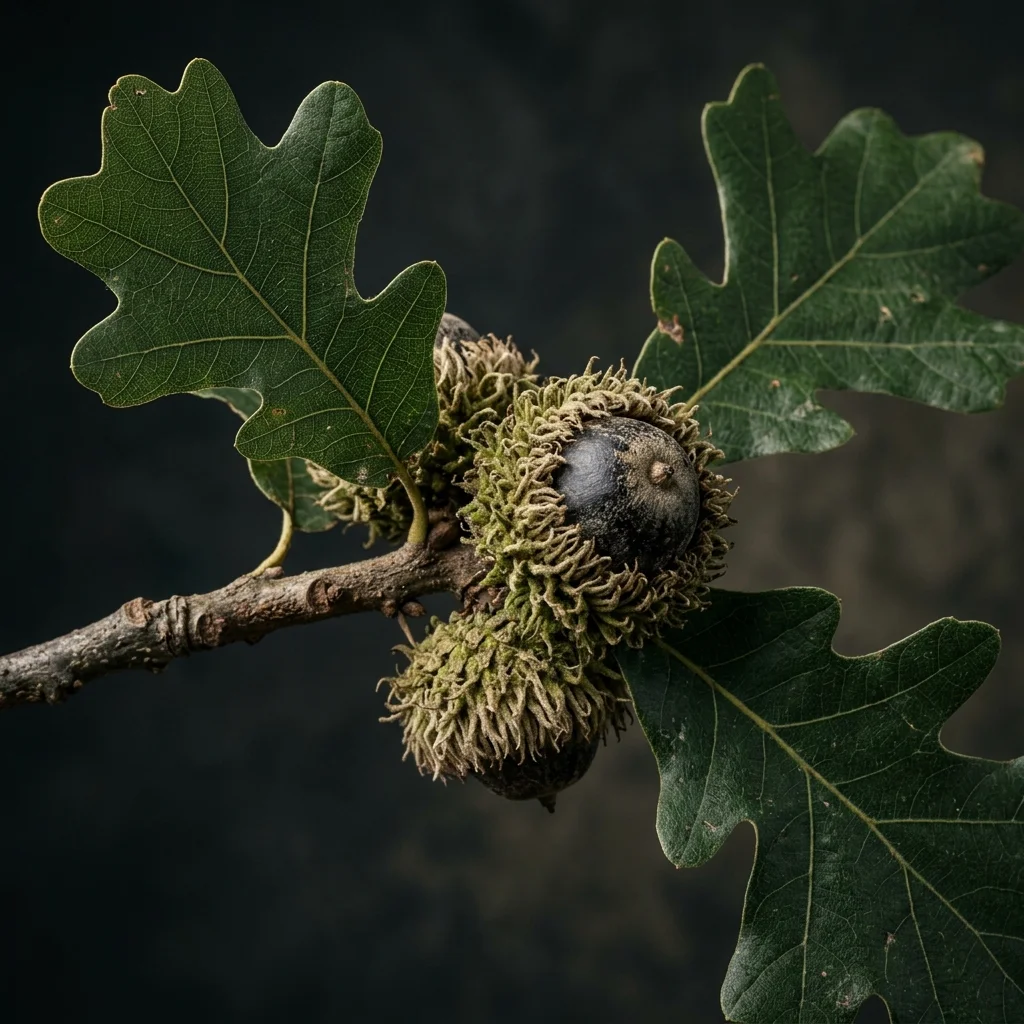
How to Identify Bur Oak
Identify Bur Oak immediately by its highly distinct biological features. Native to its specific ecosystem, it showcases spectacular foliage and structural habits optimized for its environment.
-
✓
Distinctive Features: Massive violin-shaped leaves, deeply textured corky bark, and gargantuan acorns enclosed in heavily fringed mossy caps.
-
✓
Typical Coloration: Dark green summer foliage with pale fuzzy leaf undersides, turning to a warm golden-bronze or copper-amber in autumn.
-
✓
Potential Confusions: Similar to White Oak, but easily distinguished by its massive violin-shaped leaves and heavily fringed, giant acorn caps.
11-Step Professional Care & Planting Guide
Frequently Asked Questions
Why is it called the Bur Oak?
Because of its acorn caps! The cap is covered in thick, heavily fringed, woody scales that look like a prickly mossy bur (hence 'Mossycup Oak').
Is the Bur Oak safe for dogs and cats?
Yes, Quercus macrocarpa is completely non-toxic and pet-safe for cats and dogs.
How large are the acorns?
They are gargantuan! They are the largest acorns of any North American oak, growing up to 2 inches in size and enclosed in deep fringed caps.
Is it tolerant of alkaline clay soils?
Yes! Unlike many other oaks, the Bur Oak is highly adaptable, easily tolerating alkaline clay, dry gravelly soils, and severe urban pollution.