Common Horse Chestnut Care & Identification Guide
The magnificent Common Horse Chestnut (Aesculus hippocastanum) is a highly spectacular deciduous tree native to the Balkan forests, celebrated globally for its majestic dome-shaped crown and breathtaking spring display of erect, candelabra-like white flowers blotched with yellow and red. It features large, dark green palmately compound leaves with 5 to 7 leaflets that spread out like fingers. It produces spiky, green, leather-like capsules housing shiny, dark brown seeds called 'conkers'. Critical Warning: The entire tree, especially the seeds, is toxic to pets and humans. It requires moist, rich soil and full sun.





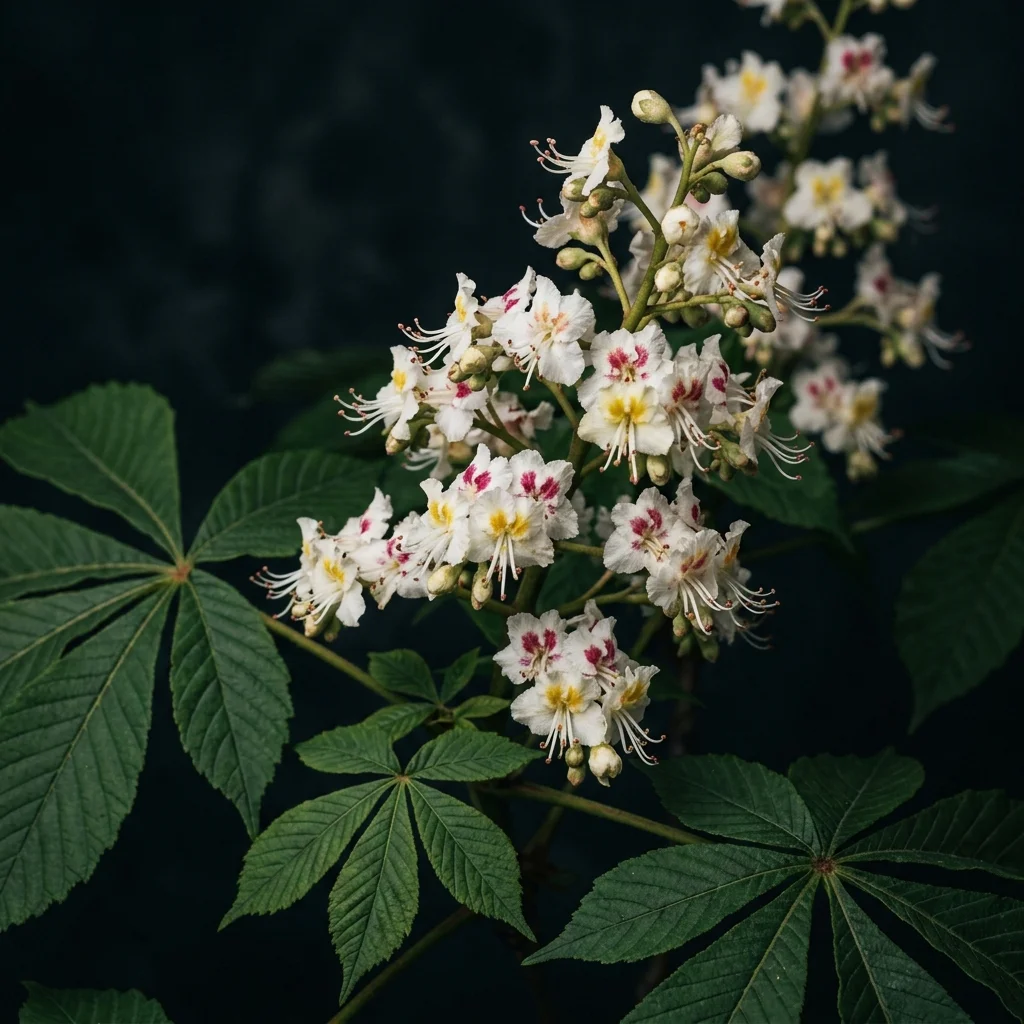
How to Identify Common Horse Chestnut
Identify Common Horse Chestnut immediately by its highly distinct biological features. Native to its specific ecosystem, it showcases spectacular foliage and structural habits optimized for its environment.
-
✓
Distinctive Features: Palmately compound leaves with 5-7 large leaflets radiating from a central point, erect white flower cones (candelabras), and spiky green seed husks.
-
✓
Typical Coloration: Rich green palmately divided foliage turning bronze-yellow in autumn, showy white-pink flowers, and dark reddish-brown scaly bark.
-
✓
Potential Confusions: Similar to Ohio Buckeye (Aesculus glabra), but distinguished by its much larger, showier flower panicles and sticky winter buds (Ohio Buckeye has dry, non-sticky winter buds).
11-Step Professional Care & Planting Guide
Frequently Asked Questions
Are the nuts from a Horse Chestnut edible?
No! Unlike sweet chestnuts, horse chestnuts (conkers) are highly toxic to humans and pets, containing saponin glycosides like Aesculin that cause severe gastrointestinal distress.
Why are the leaves turning brown and dry in mid-summer?
This is likely leaf scorch or leaf miner damage! Leaf miner larvae tunnel inside the leaves, making them turn brown and crispy. Ensure consistent watering and rake away fallen leaves.
What is a conker?
A conker is the glossy, dark brown seed of the horse chestnut. It grows inside a spiky green capsule and has a traditional British game named after it.
Does it grow well in wet soils?
It prefers moist, fertile soils, but will not tolerate waterlogged, stagnant clay which suffocates its massive roots.