Copper Beech Care & Identification Guide
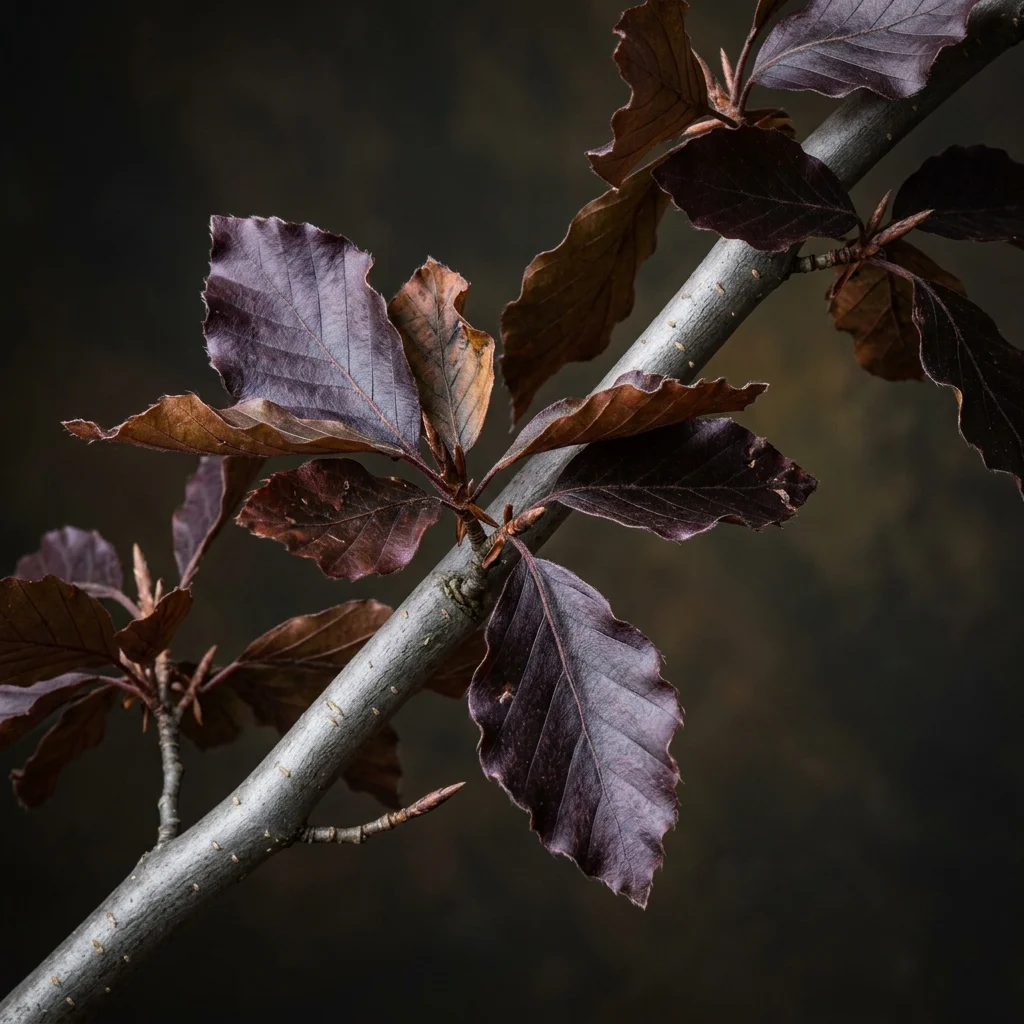
The magnificent Copper Beech (Fagus sylvatica 'Atropunicea'), also known as the Purple Beech, is a highly spectacular and prized deciduous cultivar of the European Beech, celebrated globally for its deep purple to coppery-bronze foliage and majestic horizontal scale. It shares the iconic smooth silver-grey elephant-hide bark of its parent, creating a stunning visual contrast with its dark, marbled crown. It requires moisture-retentive organic loam, bright filtered indirect to direct light, and cool summers.





How to Identify Copper Beech
Identify Copper Beech immediately by its highly distinct biological features. Native to its specific ecosystem, it showcases spectacular foliage and structural habits optimized for its environment.
-
✓
Distinctive Features: Smooth silver-grey bark contrasting sharply with a dense, massive crown of deep purple to coppery-bronze wavy leaves.
-
✓
Typical Coloration: Brilliant copper-purple in spring, turning deep black-purple in summer, and coppery-bronze to amber-yellow in autumn.
-
✓
Potential Confusions: Similar to European Beech, but instantly distinguished by its highly distinct purple-copper foliage color.
11-Step Professional Care & Planting Guide
Frequently Asked Questions
Why are the leaves purple-copper?
This is a natural mutation highly prized in horticulture! The leaves contain extremely high concentrations of anthocyanin pigments, which mask the green chlorophyll.
Is the Copper Beech safe for household pets?
Yes, Fagus sylvatica 'Atropunicea' is completely non-toxic and pet-safe.
Why is my Copper Beech turning green in summer?
This is typically caused by insufficient light. The plant produces more chlorophyll to compensate for lack of light, fading the purple color. Full sun is essential.
Can I grow it as a dark privacy hedge?
Yes! It is highly responsive to clipping, forming a spectacular, dense purple-bronze formal privacy barrier that blocks wind and views.