Douglas Fir Care & Identification Guide
The magnificent Douglas Fir (Pseudotsuga menziesii) is a colossal and highly spectacular evergreen giant native to the damp, misty forests of Western North America, celebrated for its towering height, timber quality, and ecological prominence. It is not a true fir (Abies) nor a hemlock (Tsuga), but belongs to its own unique genus. In the wild, it forms majestic conical canopies, carrying long needles with distinct sweet pine-scented resins and highly unique three-lobed bracts hanging out from its cones. It requires acidic organic loam, consistent moisture, and bright filtered sun.





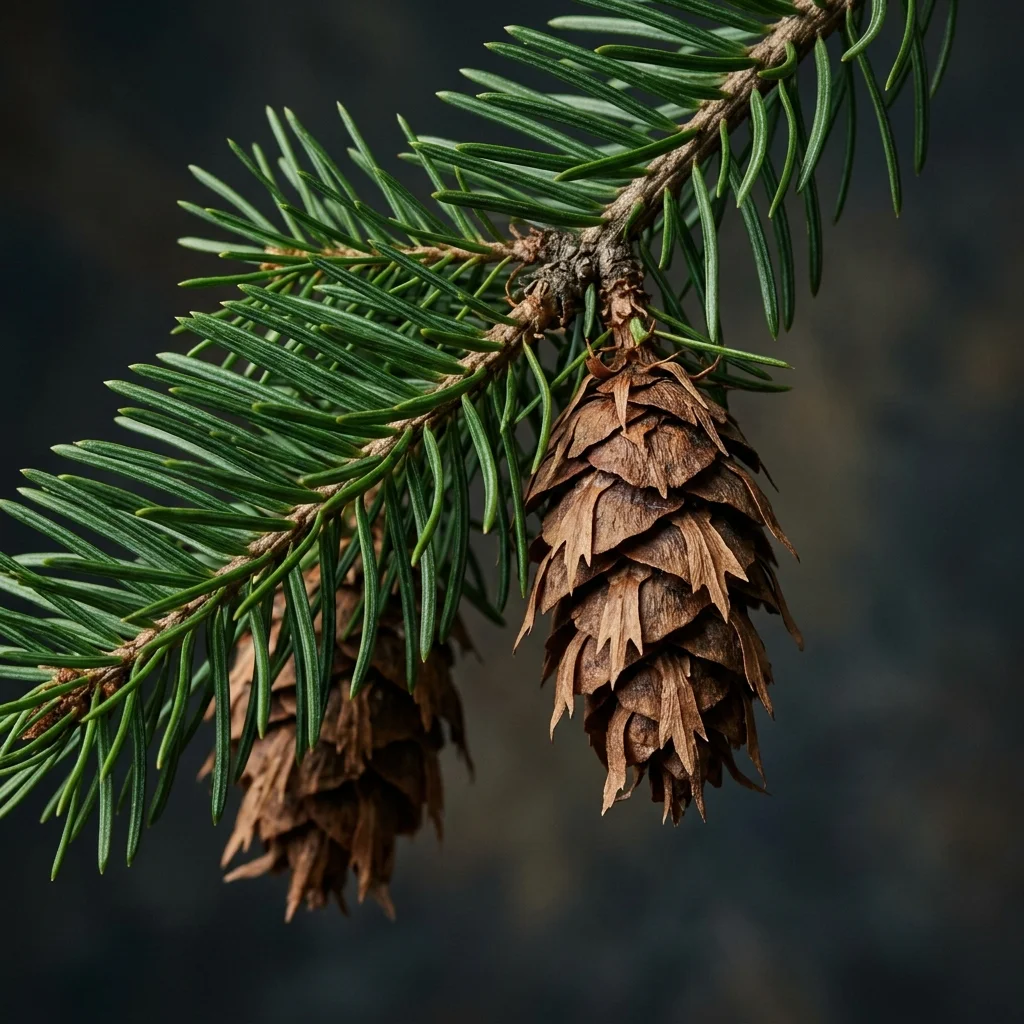
How to Identify Douglas Fir
Identify Douglas Fir immediately by its highly distinct biological features. Native to its specific ecosystem, it showcases spectacular foliage and structural habits optimized for its environment.
-
✓
Distinctive Features: Flat, soft needles arranged spirally around twigs, with highly unique three-lobed 'mickey mouse' bracts sticking out from its dangling cones.
-
✓
Typical Coloration: Lively deep forest green to slightly blue-green foliage, with highly textured reddish-brown fissured bark when mature.
-
✓
Potential Confusions: Similar to true Firs (Abies), but instantly distinguished by its three-lobed cone bracts and prominent pointed glossy buds.
11-Step Professional Care & Planting Guide
Frequently Asked Questions
Why is it not a true fir?
Because it belongs to the genus Pseudotsuga (false hemlock) rather than Abies (true fir). It is easily identified by its unique three-lobed cone bracts and pointed winter buds.
Is the Douglas Fir safe for cats and dogs?
Yes, Pseudotsuga menziesii is completely non-toxic and pet-safe.
What soil is best for planting this tree?
A deep, rich, well-drained acidic soil. It hates heavy, alkaline clay soils which block root respiration.
How fast does the Douglas Fir grow?
It is an incredibly rapid grower, capable of growing 2 to 3 feet per year once established in cool, moist climates.