Dragon's Blood Tree Care & Identification Guide
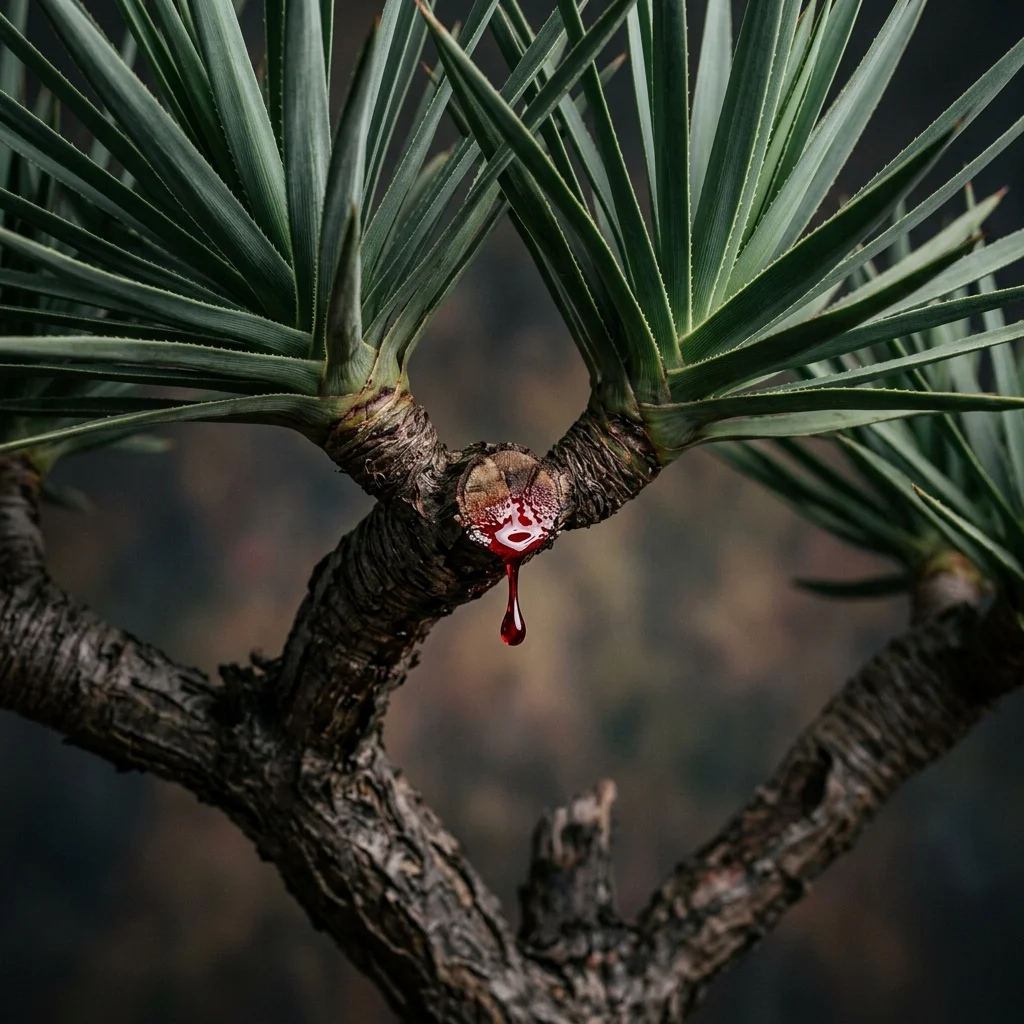
The magnificent Socotra Dragon's Blood Tree (Dracaena cinnabari) is a spectacular and highly bizarre evergreen monocot tree native strictly to the desert island of Socotra in Yemen, celebrated globally for its unique dense umbrella-shaped crown and thick, brilliant crimson-red sap (dragon's blood resin). Its highly symmetrical branches fork geometrically to form a massive sun-shielding dome that catches morning mist and channels moisture down to its shallow root system. It requires mineral sandy grit, full dry sun, and strict frost protection.





How to Identify Dragon's Blood Tree
Identify Dragon's Blood Tree immediately by its highly distinct biological features. Native to its specific ecosystem, it showcases spectacular foliage and structural habits optimized for its environment.
-
✓
Distinctive Features: Dense, architectural umbrella-shaped crown, highly geometric branching patterns, and stiff, sword-like spiky leaves with deep crimson resin oozing from trunk wounds.
-
✓
Typical Coloration: Medium grey bark, grey-green sword leaves, and brilliant blood-red sap.
-
✓
Potential Confusions: Similar to Canary Island Dragon Tree (Dracaena draco), but easily distinguished by its significantly denser, tighter umbrella canopy shape and narrower leaves.
11-Step Professional Care & Planting Guide
Frequently Asked Questions
Why is the sap red?
It has medicinal chemistry! The brilliant blood-red color of the sap is due to a high concentration of pigments (chalcones and flavonoids). In ancient history, it was prized globally as a premium dye, artistic pigment, and highly effective wound-healing medicine.
Is the Dragon's Blood Tree toxic to household pets?
Yes, Dracaena cinnabari contains toxic Saponins, which cause severe vomiting (occasionally with blood), excessive drooling, diarrhea, dilated pupils (in cats), and general weakness.
Why is it shaped like an umbrella?
It is a brilliant desert adaptation! The dense, overlapping umbrella shape creates deep shade directly underneath the tree, drastically reducing soil evaporation and protecting its shallow root system from scorching desert sun.
How fast does it grow?
It grows incredibly slowly! A young seedling can take up to 10 years to reach just 1 meter in height, and the geometric branching only starts after the first flowering occurs (around 15-20 years of age).