Empress Tree Care & Identification Guide
The magnificent Empress Tree (Paulownia tomentosa), also known as the Princess Tree or Royal Paulownia, is a colossal and highly spectacular deciduous giant native to China, celebrated globally for its rapid growth rate, giant velvety heart-shaped leaves, and showy lavender flowers. In early spring before leaf emergence, it produces erect panicles of tubular pale lavender-violet blossoms. Critical Warning: It is classified as an aggressive invasive species in North America. It requires rich loam, full sun, and high watering.





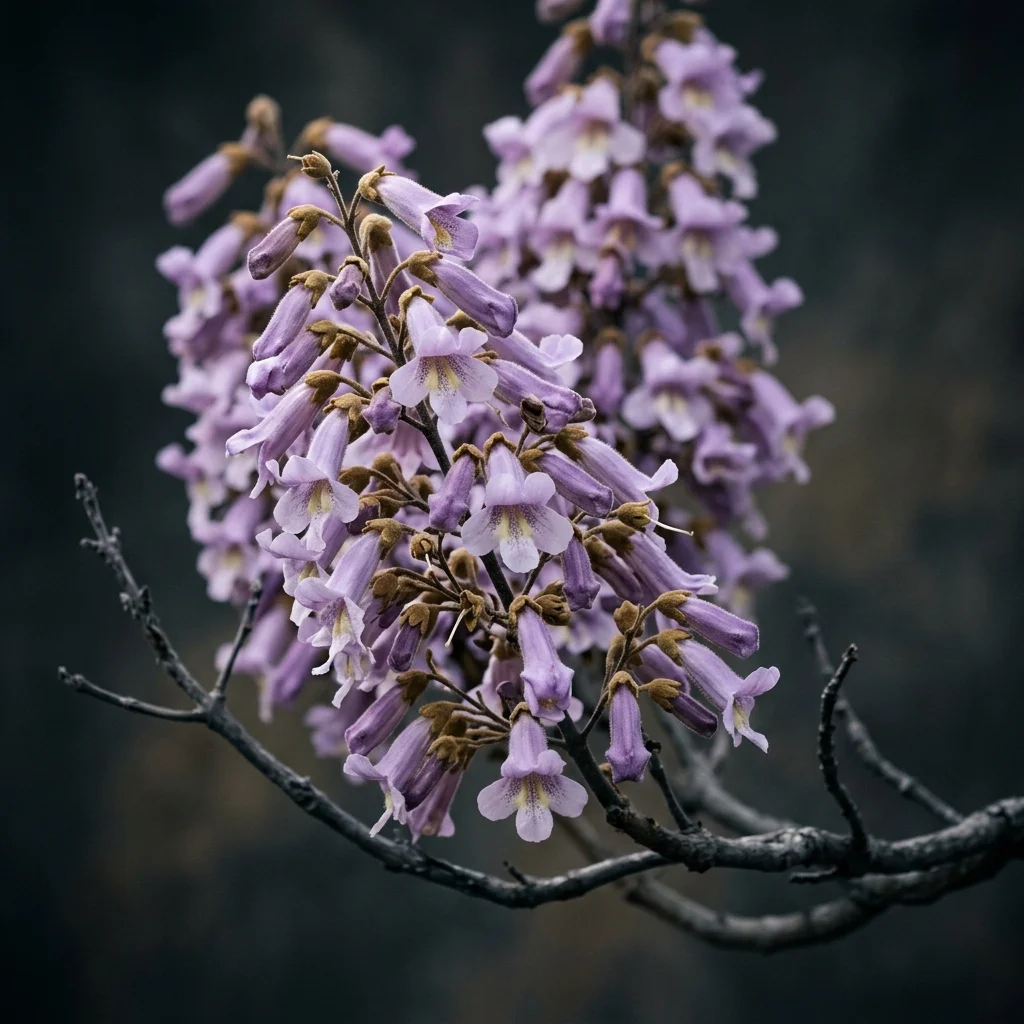
How to Identify Empress Tree
Identify Empress Tree immediately by its highly distinct biological features. Native to its specific ecosystem, it showcases spectacular foliage and structural habits optimized for its environment.
-
✓
Distinctive Features: Colossal growth speed, huge heart-shaped leaves covered in soft velvety hairs on both sides, erect panicles of tubular pale lavender blossoms, and sticky woody seed capsules.
-
✓
Typical Coloration: Pale lavender-violet flowers with yellow stripes inside, emerald-green leaves, and light brown sticky seed pods.
-
✓
Potential Confusions: Similar to Northern Catalpa, but distinguished by its opposite leaves (Catalpa has leaves in whorls of three) and fragrant lavender tubular flowers.
11-Step Professional Care & Planting Guide
Frequently Asked Questions
Why is it called the Empress Tree?
It has historic royalty! The tree was named in honor of Grand Duchess Anna Pavlovna of Russia, daughter of Tsar Paul I, celebrating its regal purple flowers and majestic scale.
Is the Empress Tree safe for household pets?
Yes, Paulownia tomentosa is completely non-toxic and pet-safe for cats and dogs.
Why is it considered aggressively invasive?
It is a seed factory! A single mature tree can produce up to 20 million tiny, winged seeds every year that disperse widely in the wind. Its rapid growth blocks sunlight from native forest saplings.
How can I grow those colossal 2-foot leaves?
Use the coppicing technique! Cut the main trunk down to the ground in late winter. In spring, the root system will drive all its energy into a few giant shoots, growing massive velvety leaves up to 2 feet wide.