European Beech Care & Identification Guide
The magnificent European Beech (Fagus sylvatica) is a colossal and highly spectacular deciduous forest tree native to Europe, celebrated globally for its smooth, silver-grey elephant-hide bark, dense foliage, and stately presence. In spring, its emerging green leaves have silky-haired margins, turning wavy and glossy. In winter, it is easily identified by its extremely sharp, long, pointed cigar-shaped copper buds. It requires moisture-retentive organic soil, bright filtered indirect to direct light, and cool summers.





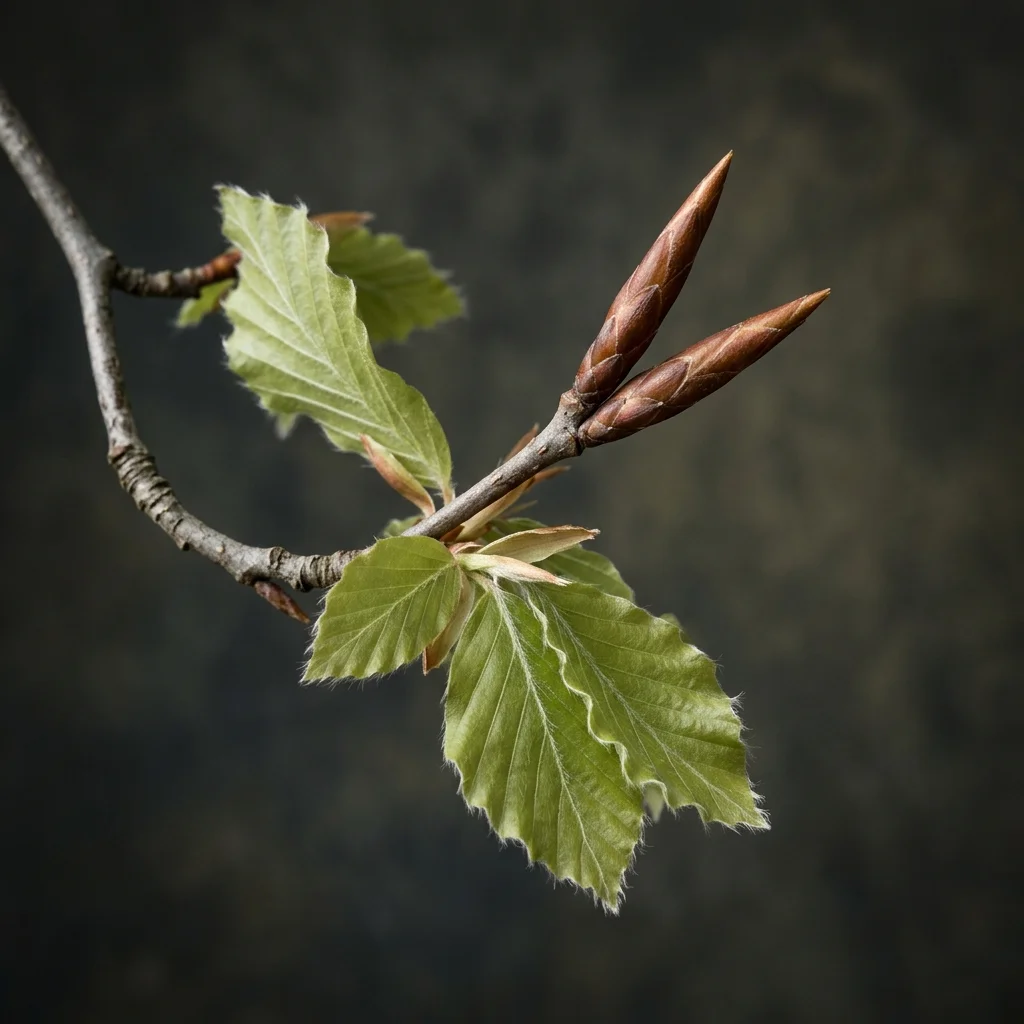
How to Identify European Beech
Identify European Beech immediately by its highly distinct biological features. Native to its specific ecosystem, it showcases spectacular foliage and structural habits optimized for its environment.
-
✓
Distinctive Features: Incredibly smooth silver-grey bark that remains smooth even on ancient trees, and long, pointed cigar-shaped buds.
-
✓
Typical Coloration: Soft bright green in spring with silky white hairs, turning dark glossy green, and copper-bronze to golden-orange in autumn.
-
✓
Potential Confusions: Similar to American Beech, but distinguished by its slightly shorter leaves (5-10cm) with wavy, non-toothed margins.
11-Step Professional Care & Planting Guide
Frequently Asked Questions
Why is the bark of European Beech unique?
Unlike most trees, its bark remains incredibly smooth, silver-grey, and elephant-skin-like even in ancient specimens, making it highly ornamental.
Is the European Beech safe for household pets?
Yes, Fagus sylvatica is completely non-toxic and pet-safe for cats and dogs.
What are beech nuts?
They are small, triangular, edible nuts enclosed in woody, bristly cupules (beechnuts), highly prized by forest wildlife in autumn.
Can I grow it as a formal hedge?
Yes! The European Beech is a world-class hedging plant, tolerating heavy clipping beautifully and retaining its golden-bronze leaves through winter for privacy.