Flowering Dogwood Care & Identification Guide
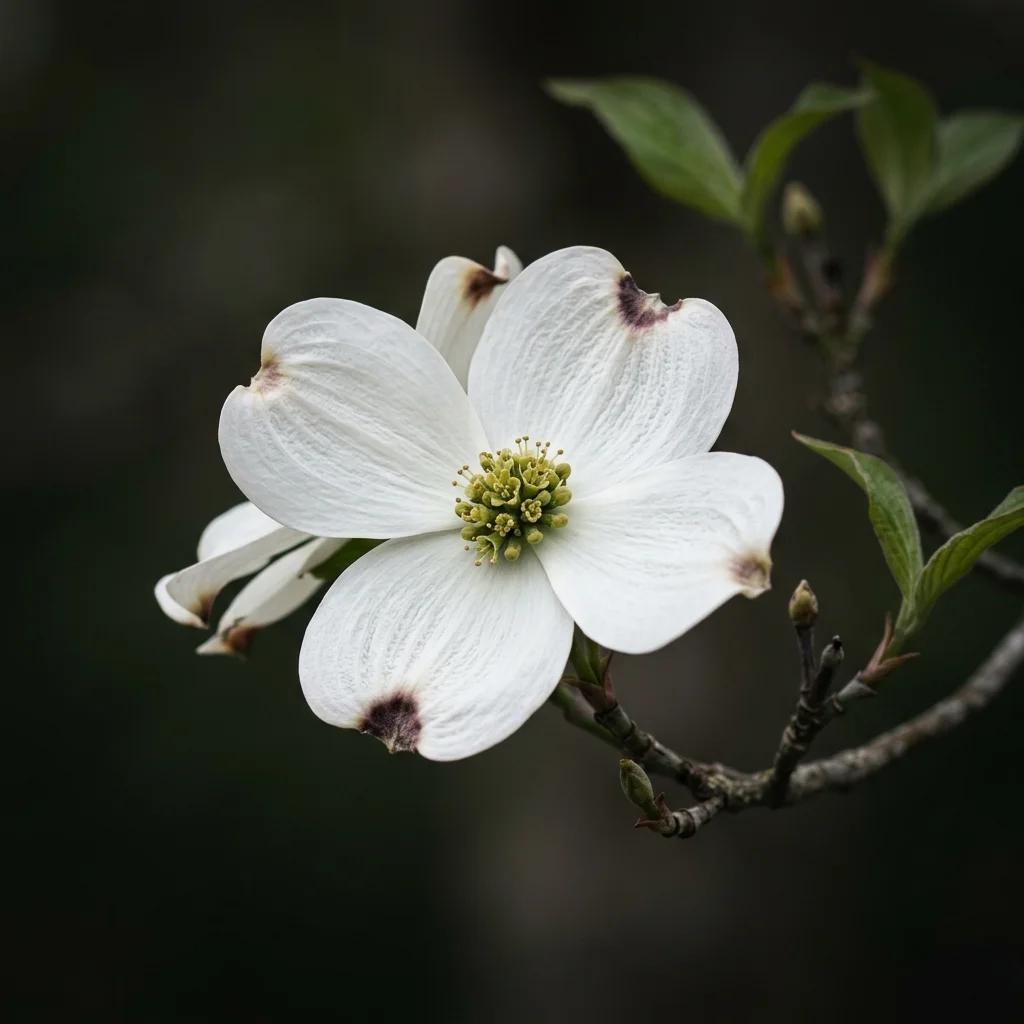
The magnificent Flowering Dogwood (Cornus florida) is a highly spectacular deciduous small tree native to Eastern North America, celebrated globally for its showy spring display of four petal-like white bracts. Each bract is identified by a highly distinct brownish-purple notched tip. It forms a dense, layered horizontal canopy. Critical Warning: Its autumn red berries are toxic to dogs and cats. It requires rich, acidic, well-drained loam and morning sun with afternoon shade.




How to Identify Flowering Dogwood
Identify Flowering Dogwood immediately by its highly distinct biological features. Native to its specific ecosystem, it showcases spectacular foliage and structural habits optimized for its environment.
-
✓
Distinctive Features: Layered horizontal branches, four showy white petal-like bracts with distinct notched tips surrounding a yellow flower cluster, and blocky alligator-like bark.
-
✓
Typical Coloration: Bright green leaves, snowy white spring bracts, and a spectacular transition to rich reddish-purple or scarlet in autumn.
-
✓
Potential Confusions: Similar to Kousa Dogwood, but distinguished by its notched bract tips (Kousa has pointed tips) and early spring blooming before leaves expand.
11-Step Professional Care & Planting Guide
Frequently Asked Questions
Are those white petals the actual flowers?
No! The four large white showy structures are modified leaves called bracts. The actual true flowers are the tiny, greenish-yellow clusters nestled in the very center of the bracts.
Are the bright red Dogwood berries toxic?
Yes! While wild birds eat them safely in autumn, the red berries are toxic to dogs, cats, and humans, causing mild to moderate stomach upset.
How to tell Flowering Dogwood apart from Kousa Dogwood?
Flowering Dogwood blooms in early spring before leaves expand, and its bracts have distinct notched tips. Kousa Dogwood blooms later in summer after leaves are fully grown, and its bracts have sharply pointed tips.
What is Dogwood Anthracnose?
It is a destructive fungal disease that causes leaf spots, cankers, and rapid twig dieback. Prevent it by planting in partial shade, keeping leaves dry, and avoiding bark wounds.