Abies fraseri

Fraser Fir Care & Identification Guide

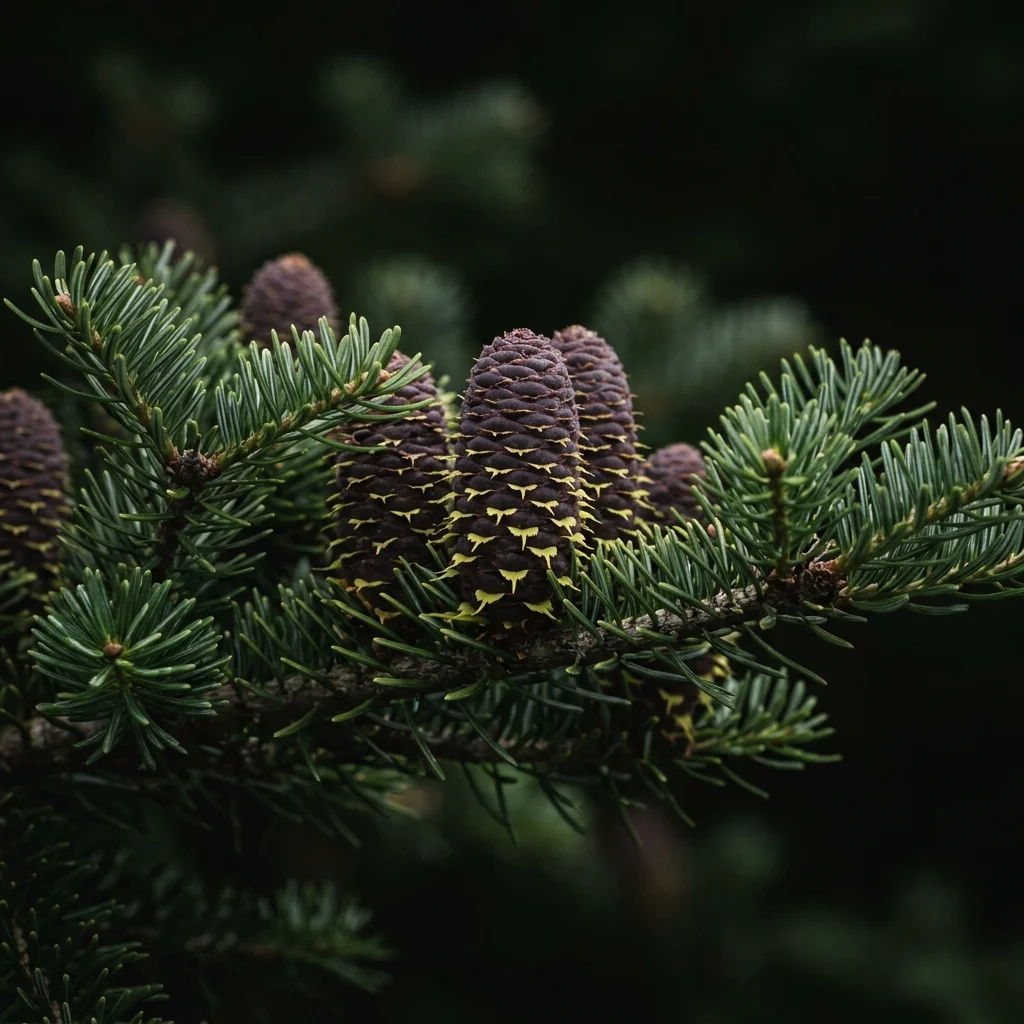
The magnificent Fraser Fir (Abies fraseri) is a highly spectacular evergreen conifer native exclusively to the high-elevation Appalachian Mountains, celebrated globally as the premier, elite Christmas tree. It boasts a dense, symmetrical conical crown and dark green flat needles. The upright, dark purple-brown cones feature highly distinct, yellow-green reflexed (back-curved) bracts that extend past the scales. It requires cool moist organic acidic soil, full sun, and moderate watering.


Sunlight Icon
Sunlight Full Sun
Watering Icon
Watering Moderate
Soil Mix Icon
Soil Mix Moist Organic Acidic Soil
Temperature Icon
Temperature -35°C to 20°C
Toxicity Warning Icon
Toxicity Non-toxic
Botanical photography of Fraser Fir (Abies fraseri) - Plant AI care database

How to Identify Fraser Fir

Identify Fraser Fir immediately by its highly distinct biological features. Native to its specific ecosystem, it showcases spectacular foliage and structural habits optimized for its environment.

  • Distinctive Features: Dense conical crown, flat needles, and erect purple-brown cones with highly visible yellow-green reflexed bracts extending past the scales.
  • Typical Coloration: Deep glossy green needles with two silver bands beneath, and dark purple young cones with yellow bracts.
  • Potential Confusions: Similar to Balsam Fir, but distinguished by its cones which feature highly visible, reflexed yellow-green bracts (Balsam Fir bracts are hidden).

11-Step Professional Care & Planting Guide

💧 【Watering & Moisture】 Water moderately. Requires consistently moist, cool, well-draining soil. High moisture demands in summer; irrigate deeply once a week.

☀️ 【Sunlight & Exposure】 Requires full direct sun. Prefers cool, breezy mountain climates with high atmospheric moisture (fog/clouds); dislikes high summer heat.

🪴 【Ideal Soil Mix】 Requires rich, deep, moist, organic acidic loam with superior drainage. Blend 50% loam, 30% organic peat moss, and 20% coarse sand (pH 4.5-5.8).

🌡️ 【Temperature & Winter Care】 Cold-hardy (USDA Zone 4-7). Extremely cold-tolerant. Dislikes hot, humid summer nights; apply a thick layer of pine bark mulch.

✂ 【Pruning & Grooming】 Minimal pruning required. Shearing can be done in late winter to shape for a perfect, dense Christmas tree conical form.

🧪 【Fertilization】 Feed in early spring with a slow-release organic acidic conifer fertilizer. Mulch deeply with composted leaf mold.

🏺 【Potting & Garden Planting】 Plant in cool, breezy garden spots. Dig a wide hole twice the root ball, backfill with rich organic acidic loam, and mulch deeply.

🌱 【Propagation】 Propagated by sowing seeds in spring after 60 days of cold stratification, or by grafting.

🐛 【Common Pests】 Highly susceptible to the balsam woolly adelgid, an invasive insect that can decimate mature stands. Spray manually with systemic treatments.

🦠 【Common Diseases】 Susceptible to phytophthora root rot in soggy clay soils. Superior soil drainage is absolutely critical.

🎓 【Botanist Advice】 Fraser Fir has outstanding needle retention after cutting, making it the most premium, sought-after Christmas tree species in the United States!

Frequently Asked Questions

Q: Why is it called the King of Christmas Trees?

A: Because of its qualities! Fraser Fir has a perfect natural conical shape, strong branches that hold heavy ornaments, a delightful scent, and incredible needle retention after being cut.

Q: Is the Fraser Fir safe for household pets?

A: Yes, Abies fraseri is completely non-toxic and pet-safe for cats and dogs.

Q: What are those yellow scales on the purple cones?

A: They are reflexed bracts! In Fraser Fir, the modified leaves (bracts) are longer than the cone scales and curve backwards, forming a beautiful yellow-purple pattern.

Q: Can I grow it in a hot southern zone?

A: No, it is highly sensitive to heat and humidity, suited only for cool, high-elevation mountain zones or northern USDA Zones 4 to 7.

Is your Fraser Fir showing yellow or dry leaves?

Don't let rot or scale pests kill your trees. Upload a photo now to get an instant AI botanical diagnosis and save your forest today!

Diagnose Fraser Fir Now