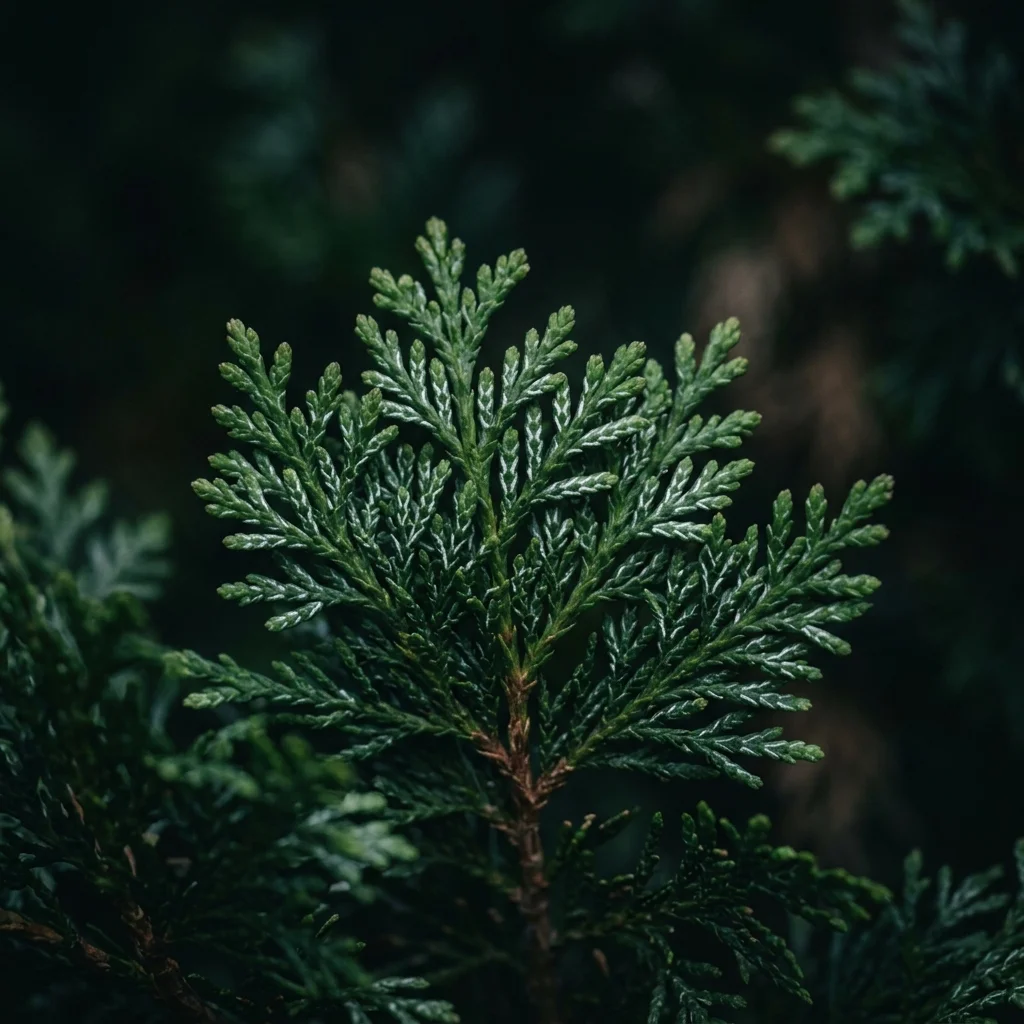
Chamaecyparis obtusa

Hinoki Cypress Care & Identification Guide

The magnificent Hinoki Cypress (Chamaecyparis obtusa), also known as Hinoki False Cypress, is a highly spectacular evergreen conifer native to Central Japan, celebrated globally for its premium, aromatic, rot-resistant wood and decorative shell-like sprays of dark green foliage. The leaf undersides feature highly distinct, bright white Y-shaped stomatal markings. This slow-growing, exceptionally long-lived tree holds great historic significance in Japanese temple architecture. It requires rich acidic soil, full direct sun to part shade, and moderate watering.


Sunlight Icon
Sunlight Full Sun to Part Shade
Watering Icon
Watering Moderate
Soil Mix Icon
Soil Mix Organic Acidic Soil
Temperature Icon
Temperature -25°C to 30°C
Toxicity Warning Icon
Toxicity Non-toxic
Botanical photography of Hinoki Cypress (Chamaecyparis obtusa) - Plant AI care database

How to Identify Hinoki Cypress

Identify Hinoki Cypress immediately by its highly distinct biological features. Native to its specific ecosystem, it showcases spectacular foliage and structural habits optimized for its environment.

  • Distinctive Features: Shell-like sprays of scale-like dark green foliage with distinct white Y-shaped markings on the leaf undersides, and premium aromatic reddish-brown bark.
  • Typical Coloration: Rich glossy dark green scale foliage, brilliant white Y-shaped lines beneath, and attractive reddish-brown trunk bark.
  • Potential Confusions: Similar to Sawara Cypress (Chamaecyparis pisifera), but distinguished by its blunt-tipped scale leaves (Sawara has sharp, pointed needle-like scale leaves with X-shaped markings beneath).

11-Step Professional Care & Planting Guide

💧 【Watering & Moisture】 Water moderately. Prefers consistently moist, cool, well-drained soil. Highly sensitive to extreme drought; water deeply once a week during dry summers.

☀️ 【Sunlight & Exposure】 Thrives in full direct sun to partial afternoon shade. Prefers cool, humid summer climates; protect young plants from harsh, drying winds.

🪴 【Ideal Soil Mix】 Requires rich, deep, organic-rich well-draining acidic soil. Blend 50% organic loam, 30% organic peat moss, and 20% coarse sand (optimal pH 5.0-6.0).

🌡️ 【Temperature & Winter Care】 Cold-hardy down to -25°C (USDA Zone 5-8). Robustly cold-tolerant, but foliage can turn bronze-brown in freezing winter winds. Apply compost mulch.

✂ 【Pruning & Grooming】 Minimal pruning required. Prune lightly in late spring only to shape or remove dead twigs. Never prune back into old wood lacking green scales.

🧪 【Fertilization】 Feed in early spring with a slow-release organic acidic conifer fertilizer. Mulch with composted pine bark to preserve soil acidity.

🏺 【Potting & Garden Planting】 Thrives in large pots or rock gardens! Choose a heavy pot with superior drainage, backfill with organic acidic loam, and mulch deeply.

🌱 【Propagation】 Propagated by taking semi-hardwood cuttings in late summer, requiring rooting hormone and high humidity to root.

🐛 【Common Pests】 Watch out for juniper scales, bagworms, or spider mites. Spray manually with organic neem oil or insecticidal soap.

🦠 【Common Diseases】 Susceptible to root rot in waterlogged clay soils. Outstanding soil drainage and porous organic loam are essential.

🎓 【Botanist Advice】 The white Y-shaped stomatal bands on the leaf undersides are a brilliant anatomical fingerprint! Crush the foliage to release the highly soothing, citrus-woody Phytoncide scent.

Frequently Asked Questions

Q: What are those white Y-shaped markings on the leaves?

A: They are stomatal bands! These are specialized microscopic structures where the leaf breathes. In Hinoki Cypress, they are coated in natural white wax, forming a perfect Y-shape under each branchlet.

Q: Is the Hinoki Cypress safe for dogs and cats?

A: Yes, Chamaecyparis obtusa is completely non-toxic and pet-safe for cats and dogs.

Q: Why is Hinoki wood so famous in Japan?

A: It is legendary! Hinoki wood is highly rot-resistant, extremely durable, and has a heavenly citrus-woody fragrance. It is traditionally used to build Shinto shrines, temples, and luxury bath buckets (Ofuro).

Q: Why is the foliage turning bronze in winter?

A: This is a natural winter bronzing! In cold weather, the scale foliage develops protective anthocyanin pigments, turning a warm bronze-gold, and will green up rapidly in spring.

Is your Hinoki Cypress showing yellow or dry leaves?

Don't let rot or scale pests kill your trees. Upload a photo now to get an instant AI botanical diagnosis and save your forest today!

Diagnose Hinoki Cypress Now