Jacaranda Care & Identification Guide
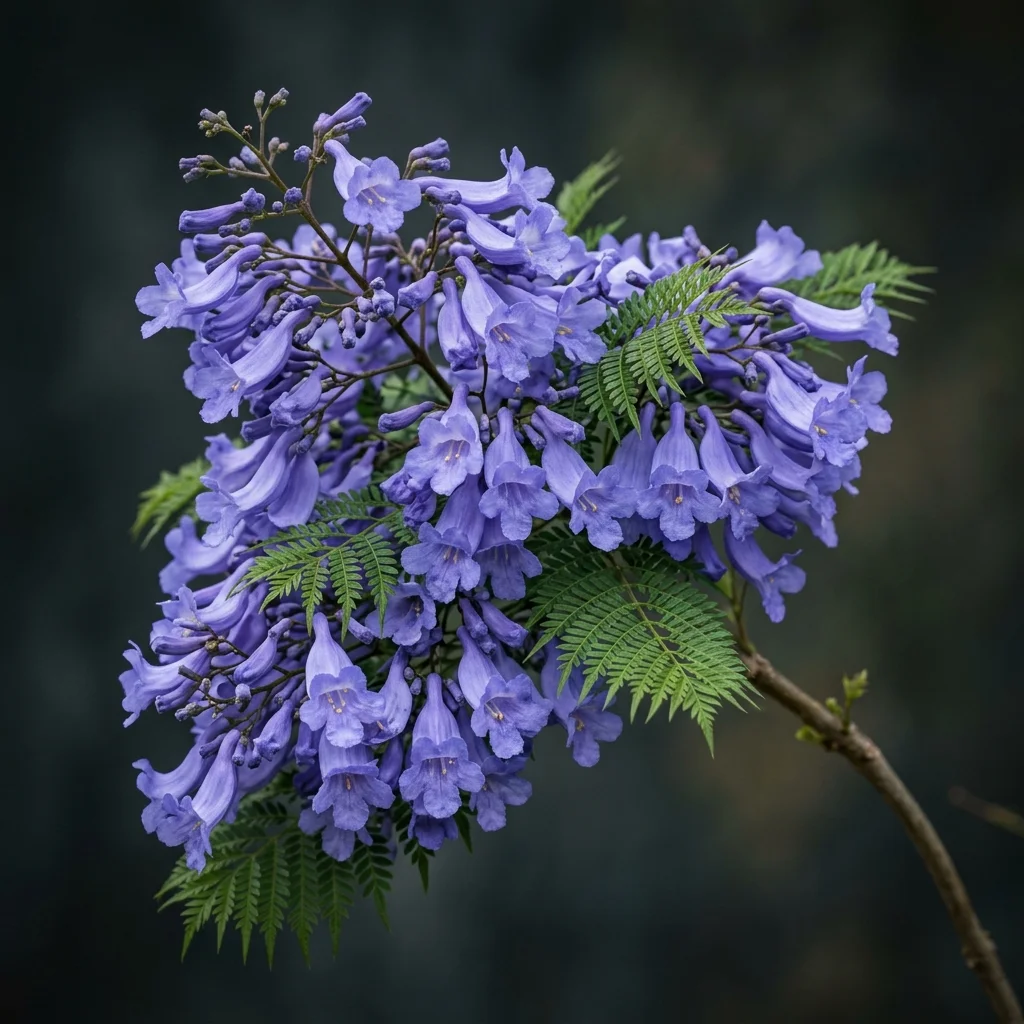
The magnificent Jacaranda (Jacaranda mimosifolia) is a colossal and highly spectacular deciduous tree native to South America, celebrated globally for its breathtaking display of intense lavender-blue, bell-shaped flowers that blanket the tree canopy. The flowers are carried in huge, lush panicles, creating a dazzling purple haze. It features airy, fern-like green pinnate foliage. It requires sandy loam, full direct sun, and moderate watering.





How to Identify Jacaranda
Identify Jacaranda immediately by its highly distinct biological features. Native to its specific ecosystem, it showcases spectacular foliage and structural habits optimized for its environment.
-
✓
Distinctive Features: Clouds of intense lavender-blue bell-shaped flowers in massive panicles, and delicate, airy fern-like bipinnate leaves.
-
✓
Typical Coloration: Rich lavender-blue to violet flowers, light bright green fern-like leaves, and yellowish-bronze late winter foliage.
-
✓
Potential Confusions: Similar to Royal Poinciana, but instantly distinguished by its intense lavender-blue flowers (Royal Poinciana has orange-scarlet blooms).
11-Step Professional Care & Planting Guide
Frequently Asked Questions
Why is it called the purple tree?
Because of its flowers! In late spring and summer, the entire tree canopy is covered in a spectacular, dense blanket of intense lavender-blue bell-shaped flowers, turning the landscape purple.
Is the Jacaranda safe for household pets?
Yes, Jacaranda mimosifolia is completely non-toxic and pet-safe for cats and dogs.
Why do the flowers form a carpet on the ground?
It is a romantic phenomenon! As the lavender-blue blossoms finish blooming, they drop cleanly from the branches, forming a thick, glowing purple carpet over lawns and streets.
Can I grow it in a cold northern zone?
No, it is highly sensitive to frost and freezing temperatures. It is suited only for warm, subtropical USDA Zones 9 to 11.