Kwanzan Cherry Care & Identification Guide
The magnificent Kwanzan Cherry (Prunus 'Kanzan'), also known as the Kanzan Cherry, is a highly spectacular deciduous tree native to Japan, celebrated globally for its massive, fluffy, double pink flowers that resemble miniature roses or peonies. Each blossom contains 20 to 50 petals. Uniquely, its emerging young leaves have a beautiful bronze coloration, expanding alongside the dense flower clusters. It requires fertile well-drained loam, full sun, and moderate watering.





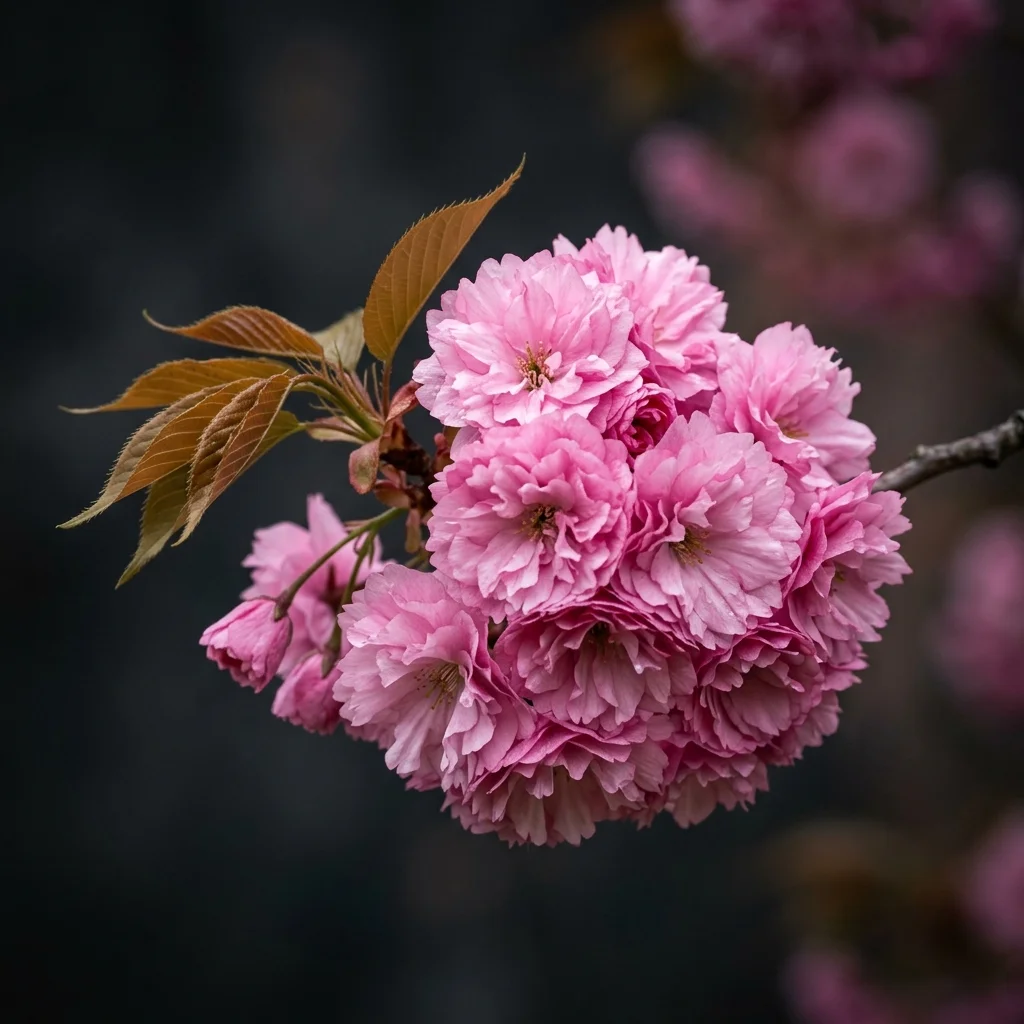
How to Identify Kwanzan Cherry
Identify Kwanzan Cherry immediately by its highly distinct biological features. Native to its specific ecosystem, it showcases spectacular foliage and structural habits optimized for its environment.
-
✓
Distinctive Features: Heavily double rose-like bright pink flowers in tight clusters of 2-5, emerging bronze-colored young leaves, and vase-shaped symmetrical crown.
-
✓
Typical Coloration: Bright pink double blossoms, bronze-green emerging foliage turning dark green, and a spectacular orange-bronze display in autumn.
-
✓
Potential Confusions: Similar to Yoshino Cherry, but instantly distinguished by its massive double flowers (containing 20-50 petals) and bronze-colored young leaves.
11-Step Professional Care & Planting Guide
Frequently Asked Questions
Why are the flowers so fluffy?
It is a double blossom mutation! Unlike wild single cherry blossoms with 5 petals, the Kwanzan Cherry (Prunus 'Kanzan') produces heavily double flowers with 20 to 50 petals each, resembling miniature roses.
Is the Kwanzan Cherry safe for household pets?
Yes, Prunus 'Kanzan' is completely non-toxic and pet-safe for cats and dogs.
Why are the leaves bronze in spring?
This is a natural young leaf coloration! The newly emerging foliage has a beautiful bronze tone that contrasts spectacularly with the pink flowers, eventually turning dark green.
Can I grow it as a street tree?
Yes! Because of its upright, vase-shaped habit and compact size, it is a premier choice for street parkways, lawns, and small urban spaces.