Lemon Tree Care & Identification Guide
The magnificent Lemon Tree (Citrus limon) is a highly spectacular evergreen citrus classic native to South Asia, celebrated globally for its bright yellow, intensely sour, vitamin-C rich edible fruits and highly fragrant white blossoms that feature purple-tinged throats. It boasts glossy, dark green elliptic leaves that release a strong citrus fragrance when crushed, and small sharp thorns at the leaf nodes. It requires sandy acidic loam, full direct sun, and moderate watering. Critical Warning: The foliage and fruit peels contain toxic limonene and psoralens.





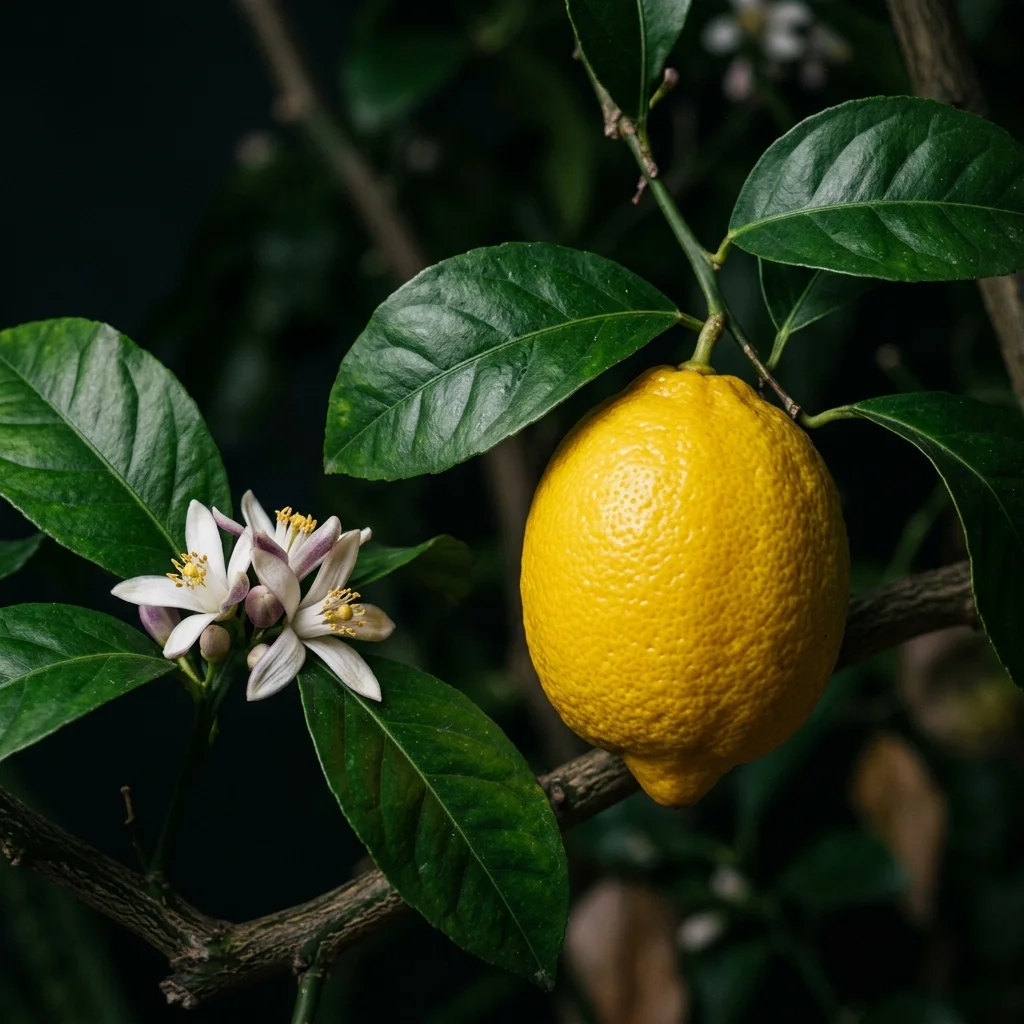
How to Identify Lemon Tree
Identify Lemon Tree immediately by its highly distinct biological features. Native to its specific ecosystem, it showcases spectacular foliage and structural habits optimized for its environment.
-
✓
Distinctive Features: Bright yellow oval edible fruits with textured skin, fragrant 5-petaled white flowers with purple-tinged undersides, and glossy green aromatic leaves with small thorns.
-
✓
Typical Coloration: Snowy white flowers with yellow stamens and purple backs, glossy dark green foliage, and glowing bright yellow mature fruits.
-
✓
Potential Confusions: Similar to Lime Tree (Citrus aurantiifolia), but easily distinguished by its larger, bright yellow oval fruits with pointed tips (limes are smaller, round, and green).
11-Step Professional Care & Planting Guide
Frequently Asked Questions
Why are the leaves on my lemon tree turning yellow while the veins stay green?
This is Iron Chlorosis! It is a highly common micronutrient deficiency, especially in cold, wet, or alkaline soils where the tree cannot absorb iron. Apply a chelated iron soil drench to fix it.
Is the Lemon tree safe for household pets?
No, Citrus limon is toxic to dogs and cats. The leaves and fruit peels contain the toxic compound Limonene and phototoxic Psoralens, which cause vomiting, diarrhea, drooling, and skin sensitivity.
What is a Meyer Lemon?
It is a prized hybrid! The Meyer Lemon (Citrus × meyeri) is a cross between a regular lemon and a mandarin orange, producing sweeter, less acidic fruits with a thin, smooth deep orange-yellow skin.
Can I grow a lemon tree indoors?
Yes! Dwarf cultivars (like Improved Meyer Lemon) grow exceptionally well in containers placed in south-facing windows with at least 6-8 hours of direct winter sunlight.