Norway Spruce Care & Identification Guide
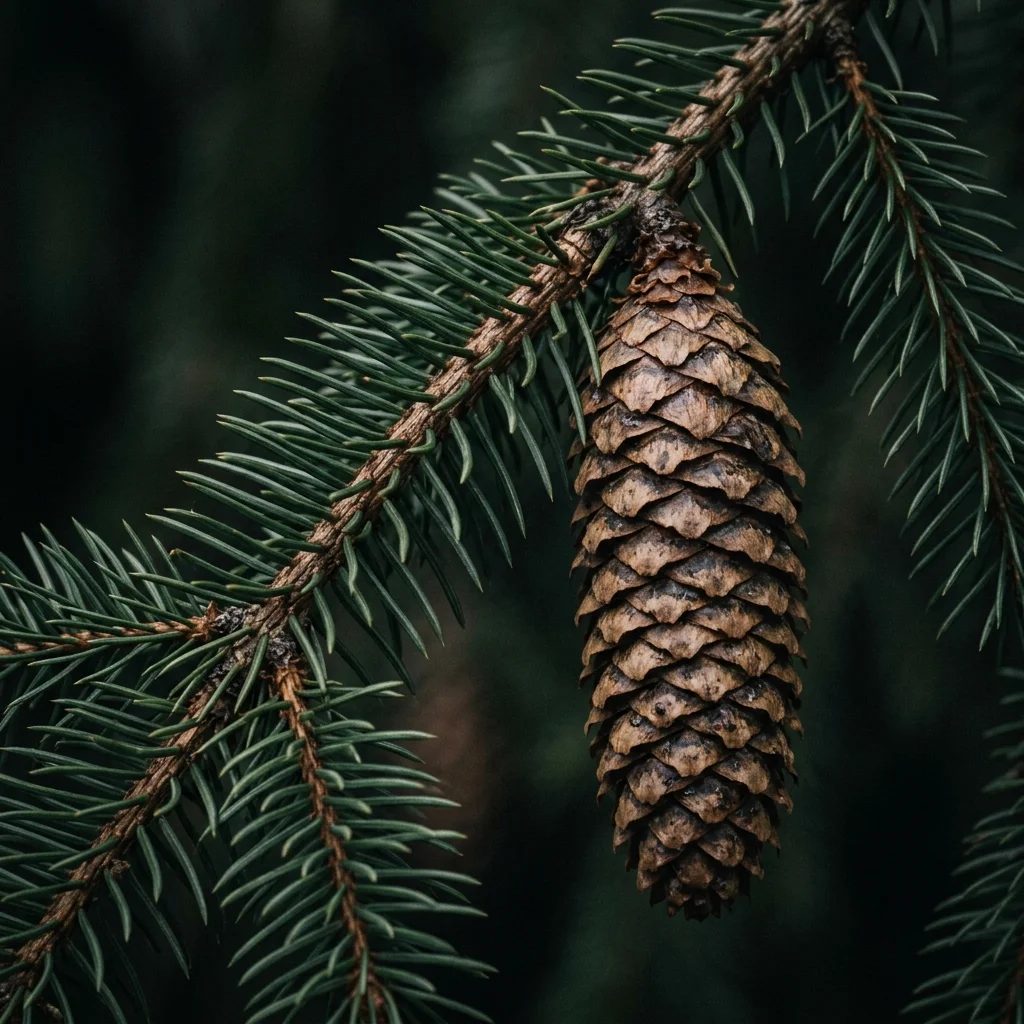
The magnificent Norway Spruce (Picea abies) is a highly spectacular evergreen conifer native to Northern and Central Europe, celebrated globally for its rapid growth rate, elegant weeping branchlets, and its role as the classic Christmas tree. It features stiff, four-angled dark green needles arranged spirally around the twigs, and large, hanging, cylindrical woody cones. It grows into a grand, sweeping conical crown. It requires well-drained organic loam, full sun, and moderate watering.





How to Identify Norway Spruce
Identify Norway Spruce immediately by its highly distinct biological features. Native to its specific ecosystem, it showcases spectacular foliage and structural habits optimized for its environment.
-
✓
Distinctive Features: Conical crown with sweeping branches and hanging branchlets, stiff four-angled needles, and large hanging cylindrical cones.
-
✓
Typical Coloration: Glossy dark green needles, and attractive grey-brown scaly bark.
-
✓
Potential Confusions: Similar to Colorado Blue Spruce, but easily distinguished by its dark green, non-sharp needles (Blue Spruce has extremely sharp, blue-grey needles) and longer cylindrical cones.
11-Step Professional Care & Planting Guide
Frequently Asked Questions
Why are the branchlets weeping down?
It is a natural adaptation! As Norway Spruce matures, its secondary branchlets naturally droop or weep downward, helping the tree shed heavy winter snow loads without breaking limbs.
Is the Norway Spruce safe for cats and dogs?
Yes, Picea abies is completely non-toxic and pet-safe for cats and dogs.
How large can the pine cones grow?
They are colossal! Norway Spruce produces the largest cones of any spruce, cylindrical in shape and growing 4 to 7 inches (10-18 cm) long, hanging gracefully downwards.
Is it highly drought-tolerant?
Once established in deep loam, it has excellent drought-tolerance, but it will suffer and drop needles if subjected to prolonged, baking desert-like heat.