Pacific Yew Care & Identification Guide
The magnificent Pacific Yew (Taxus brevifolia), also known as the Western Yew, is a highly spectacular evergreen conifer native to the Pacific Northwest, celebrated globally for its slow growth rate, historic medicinal value, and striking red arils. Its bark contains the powerful anti-cancer drug Taxol. It features flat, dark green needle-like leaves arranged in two rows. Critical Warning: The entire tree, especially the seeds, needles, and bark, is highly toxic to mammals, containing lethal Taxine alkaloids that cause cardiac arrest. It requires moist organic loam, part shade, and moderate watering.





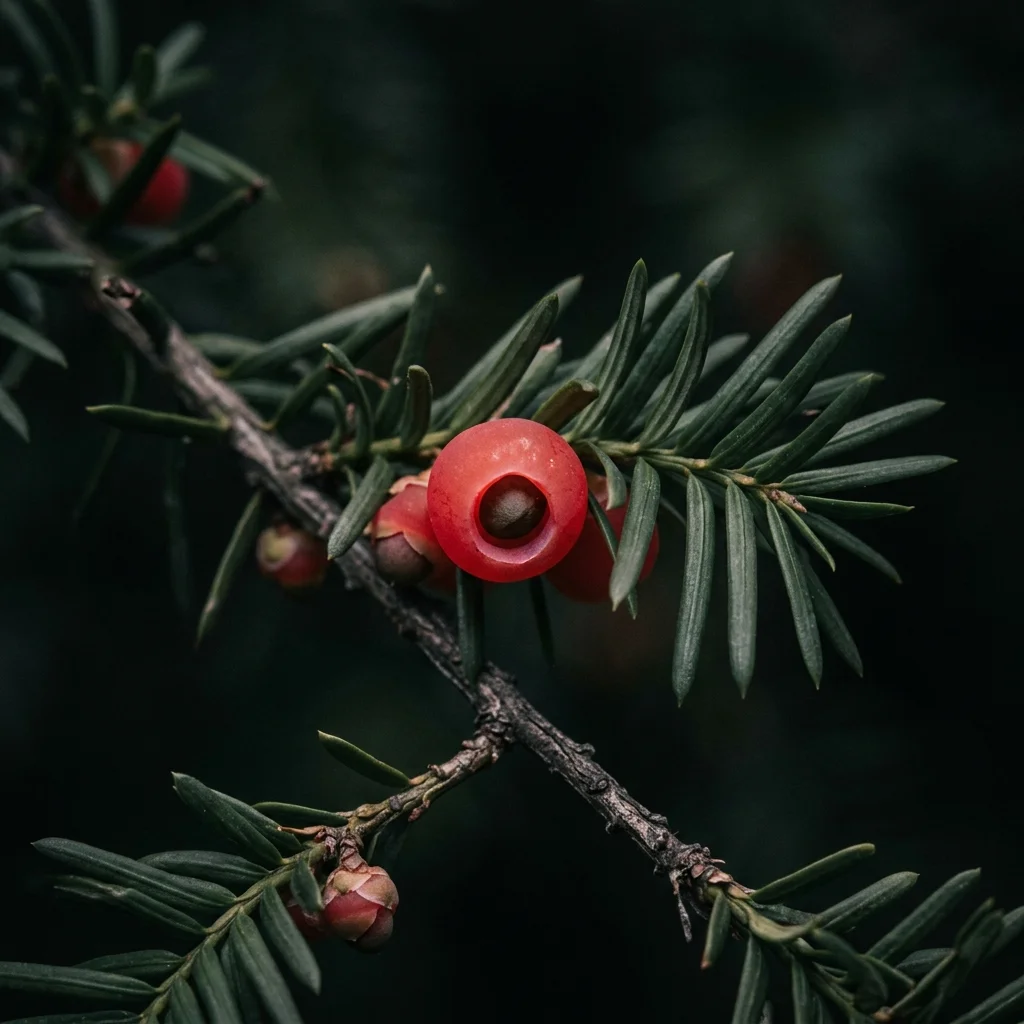
How to Identify Pacific Yew
Identify Pacific Yew immediately by its highly distinct biological features. Native to its specific ecosystem, it showcases spectacular foliage and structural habits optimized for its environment.
-
✓
Distinctive Features: Flat, dark green needles in two flat rows, bright red fleshy cup-shaped aril berries enclosing a dark seed, and thin reddish-purple papery bark.
-
✓
Typical Coloration: Dark green needle foliage, paper-thin reddish-purple bark, and bright scarlet-red fleshy arils.
-
✓
Potential Confusions: Similar to Coast Redwood in leaf structure, but instantly distinguished by its fleshy red arils instead of dry woody cones.
11-Step Professional Care & Planting Guide
Frequently Asked Questions
What is Taxol and how is it related to Yew?
It is a medical miracle! Taxol is a powerful anti-cancer drug discovered in the bark of the Pacific Yew (Taxus brevifolia). It works by stopping cancer cells from dividing, saving millions of lives.
Are the red yew berries toxic?
Yes! The bright red, fleshy, cup-shaped outer part (the aril) is the only non-toxic part of the tree. However, the hard seed nestled inside the aril is extremely deadly and must never be chewed or swallowed.
Is the Pacific Yew safe for household pets?
No, all Taxus species are extremely toxic and potentially fatal to dogs, cats, horses, and livestock due to Taxine alkaloids that cause rapid heart failure.
Does it grow well in full sun?
No, it is a true understory conifer that prefers partial to full shade. Planting it in intense, scorching direct sun will cause foliage burn and severe stress.