Pin Oak Care & Identification Guide
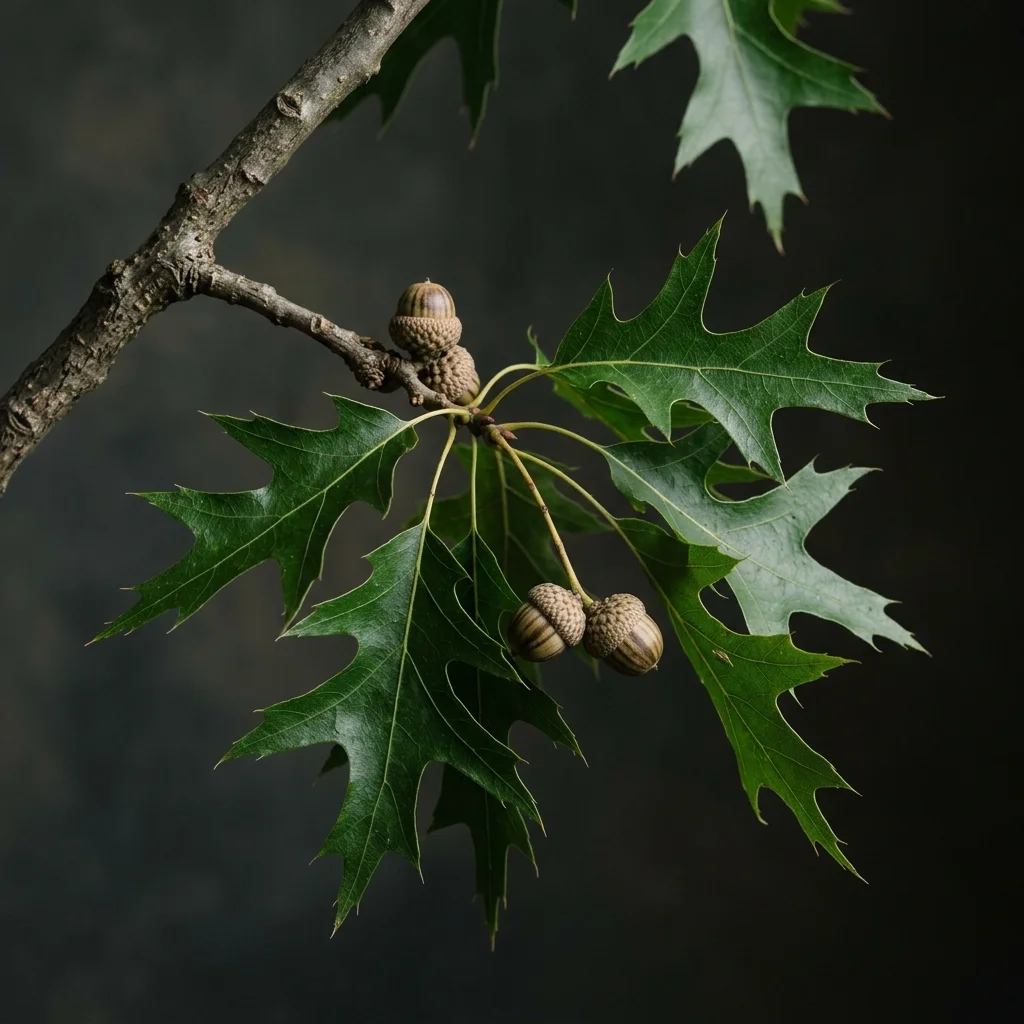
The magnificent Pin Oak (Quercus palustris), also known as the Swamp Spanish Oak, is a highly spectacular and fast-growing deciduous oak native to Eastern North America, celebrated globally for its symmetrical pyramidal shape, dense branching, and brilliant autumn colors. It features deeply lobed green leaves with pointed U-shaped sinuses. It produces small, round, striped acorns in very shallow caps. It thrives in wet, acidic soils, full direct sun, and moderate to high watering.





How to Identify Pin Oak
Identify Pin Oak immediately by its highly distinct biological features. Native to its specific ecosystem, it showcases spectacular foliage and structural habits optimized for its environment.
-
✓
Distinctive Features: Symmetrical pyramidal shape with drooping lower branches, deeply lobed leaves with U-shaped sinuses, and small striped acorns.
-
✓
Typical Coloration: Bright glossy green in summer, turning to a breathtaking bronze-orange or brilliant scarlet in autumn.
-
✓
Potential Confusions: Similar to Red Oak, but distinguished by its deeply cut U-shaped sinuses and much smaller, round, striped acorns.
11-Step Professional Care & Planting Guide
Frequently Asked Questions
Why is it called the Pin Oak?
Because of its branches! The tree grows numerous small, pin-like dead twigs along the main branches, giving it a unique 'pinned' look.
Is the Pin Oak safe for pets?
Yes, Quercus palustris is completely non-toxic and pet-safe.
Why are the lower branches drooping?
This is its natural growth habit! The upper branches grow upward, the middle branches grow horizontally, and the lower branches droop downward.
How do I fix yellow leaves on my Pin Oak?
Yellowing leaves indicate iron chlorosis from alkaline soil. Apply elemental sulfur, peat moss, or chelated iron to lower the pH and restore green color.