Pomegranate Care & Identification Guide
The magnificent Pomegranate (Punica granatum) is a highly spectacular deciduous small tree native to Iran and the Mediterranean, celebrated globally for its ancient culture, showy trumpet-shaped orange-red blossoms, and leathery, bright red round fruits. The fruit splits open naturally on the branch when ripe, displaying clusters of glistening, juicy ruby-red seeds called arils. It features small, glossy, narrow green leaves and slightly thorny branches. It requires well-drained loam, full direct sun, and low watering.





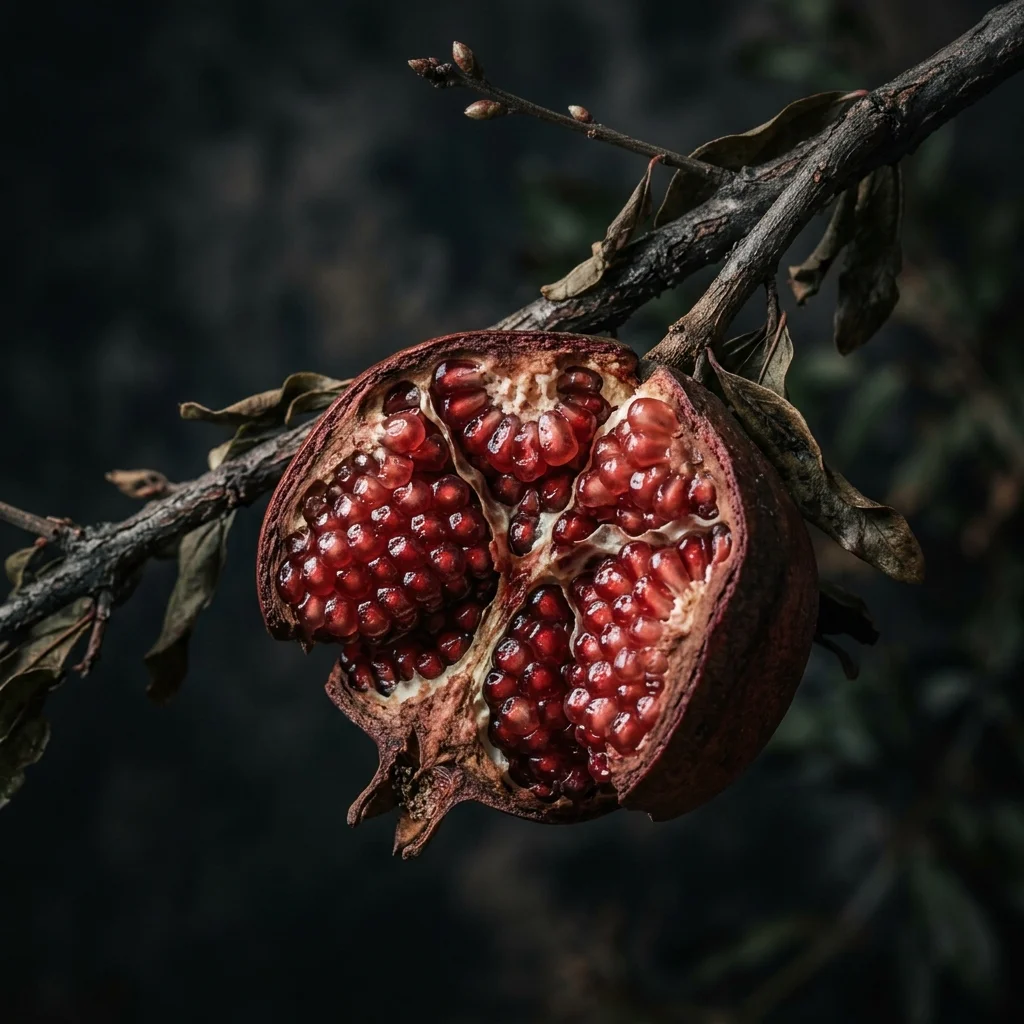
How to Identify Pomegranate
Identify Pomegranate immediately by its highly distinct biological features. Native to its specific ecosystem, it showcases spectacular foliage and structural habits optimized for its environment.
-
✓
Distinctive Features: Leathery bright red round fruits with a prominent crown-like calyx at the base, showy trumpet-shaped orange-red blossoms, and narrow glossy leaves.
-
✓
Typical Coloration: Bright orange-scarlet flowers, glossy deep green leaves, and leathery reddish-yellow fruits filled with ruby-red aril seeds.
-
✓
Potential Confusions: Incredibly unique crown-like fruit calyx and glossy, narrow lanceolate foliage make it virtually impossible to confuse with other temperate orchard trees.
11-Step Professional Care & Planting Guide
Frequently Asked Questions
Why are my pomegranate fruits splitting open on the branch?
This is due to uneven watering! If the tree goes through a dry drought spell and then receives a sudden heavy watering or rain, the internal juicy arils expand rapidly, bursting the tough leathery skin.
Are pomegranates safe for dogs and cats?
Yes, Punica granatum is completely non-toxic and pet-safe for cats and dogs, though eating large amounts of the fibrous skin can cause mild stomach upset.
How long does a pomegranate tree live?
They are exceptionally long-lived, easily living for over 200 years in warm, dry Mediterranean climates, becoming highly ornamental with age.
Does it grow well in wet climates?
It will grow, but fruit production and sugar content will be severely reduced. It prefers dry, hot, semi-arid summers and cool winters.