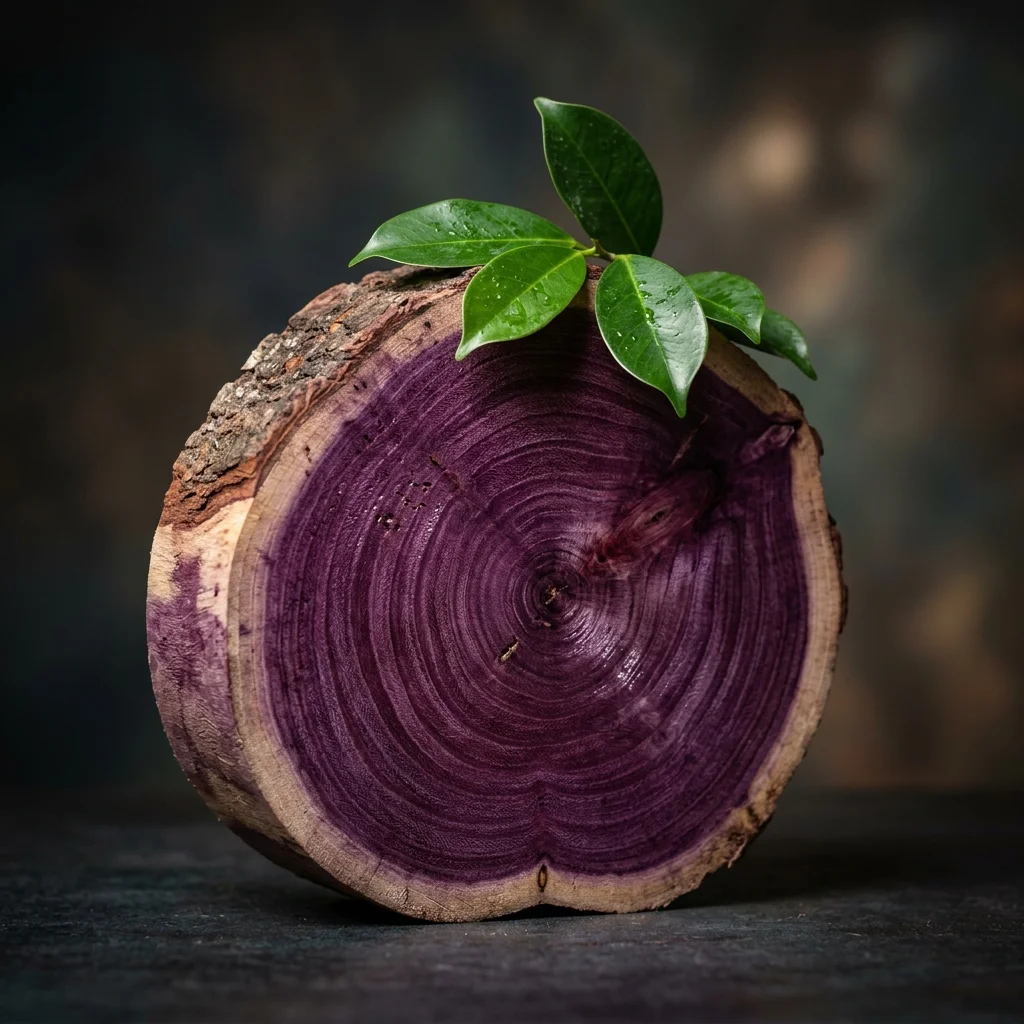
Peltogyne purpurea

Purpleheart Care & Identification Guide

The magnificent Purpleheart Tree (Peltogyne purpurea) is a spectacular and rare tropical hardwood tree native to the high-rainfall rainforests of Central and South America, celebrated globally for its exceptionally dense, strong timber that oxidizes from dull brown to a brilliant, deep violet-purple color when freshly cut and exposed to air. It requires high relative humidity, rich fertile acidic soils, and warm temperatures.


Sunlight Icon
Sunlight Full Sun
Watering Icon
Watering Moderate to High
Soil Mix Icon
Soil Mix Rich Fertile Acidic Loam
Temperature Icon
Temperature 18°C to 38°C
Toxicity Warning Icon
Toxicity Non-toxic
Botanical photography of Purpleheart (Peltogyne purpurea) - Plant AI care database

How to Identify Purpleheart

Identify Purpleheart immediately by its highly distinct biological features. Native to its specific ecosystem, it showcases spectacular foliage and structural habits optimized for its environment.

  • Distinctive Features: Exotic heartwood that oxidizes to a brilliant deep violet-purple when cut, shiny compound leaves, and clusters of small white flowers.
  • Typical Coloration: Dull brown bark, shiny green compound leaflets, and spectacular deep violet-purple heartwood.
  • Potential Confusions: Similar to other tropical legume trees, but easily distinguished by its incredibly heavy, dense violet-purple heartwood and small twin leaflets.

11-Step Professional Care & Planting Guide

💧 【Watering & Moisture】 Water moderately to highly. Prefers consistently moist, organic-rich soil. Extremely sensitive to dry drafts and prolonged soil drought.

☀️ 【Sunlight & Exposure】 Requires full direct sun. Loves intense, bright light to support its rapid leafy growth in tropical settings.

🪴 【Ideal Soil Mix】 Thrives in deep, rich, organic, acidic loam. Blend 40% organic humus, 30% rich loam, 20% peat moss, and 10% coarse sand (pH 5.0-6.5).

🌡️ 【Temperature & Winter Care】 Strictly tropical native! Extremely cold-sensitive. Growth halts below 18°C. **Freezing temperatures below 5°C cause severe dieback and are lethal**.

✂ 【Pruning & Grooming】 Prune when young to establish a clean central leader. Remove dead wood in late winter to keep the canopy healthy.

🧪 【Fertilization】 Apply a slow-release organic balanced fertilizer containing micronutrients three times a year during the warm growing season.

🏺 【Potting & Garden Planting】 Only suited for outdoor planting in frost-free tropical areas due to its large forest growth. Ensure deep fertile soil.

🌱 【Propagation】 Propagated by sowing seeds in spring under high temperatures (28°C-35°C), germinating in 1 to 2 months.

🐛 【Common Pests】 Generally pest-resistant due to dense wood. Watch for spider mites and scale insects on young foliage.

🦠 【Common Diseases】 Susceptible to root rot in poorly draining clay, and leaf spot fungus in stagnant, humid settings.

🎓 【Botanist Advice】 The brilliant purple color of the wood is a natural oxidation process! When first cut, the wood is a dull brown. With exposure to air and UV light, the peltogynoid compounds oxidize, transitioning to a spectacular deep violet-purple.

Frequently Asked Questions

Q: Why does the wood turn purple?

A: It is an oxidation cycle! When the wood is first cut, the inner heartwood is a dull brown. Exposure to oxygen and UV light causes the organic compounds (peltogynoids) to oxidize, transforming the timber into a brilliant, deep violet-purple.

Q: Is the Purpleheart Tree safe for household pets?

A: Yes, *Peltogyne purpurea* is completely non-toxic and pet-safe for cats and dogs, making it a very safe, exotic addition to home landscapes.

Q: How dense is the wood?

A: It is exceptionally dense! Purpleheart wood is so heavy and dense that it does not float in water. It is highly prized globally for luxury furniture, flooring, and heavy-duty structural construction.

Q: Can I grow a Purpleheart Tree in a dry desert climate?

A: No, it is highly unsuited. The Purpleheart Tree is a tropical rainforest native and will rapidly dehydrate and die in arid, low-humidity desert climates.

Is your Purpleheart showing yellow or dry leaves?

Don't let rot or scale pests kill your trees. Upload a photo now to get an instant AI botanical diagnosis and save your forest today!

Diagnose Purpleheart Now