Quaking Aspen Care & Identification Guide
The magnificent Quaking Aspen (Populus tremuloides) is a colossal and highly spectacular deciduous tree native to North America, celebrated globally for its unique leaves that tremble and rustle in the wind. This shimmering motion is caused by their exceptionally long, flattened leaf stalks (petioles). It has smooth, greenish-white bark and forms massive underground clonal colonies (like the famous Pando). It requires well-drained acidic soil, full sun, and moderate watering.





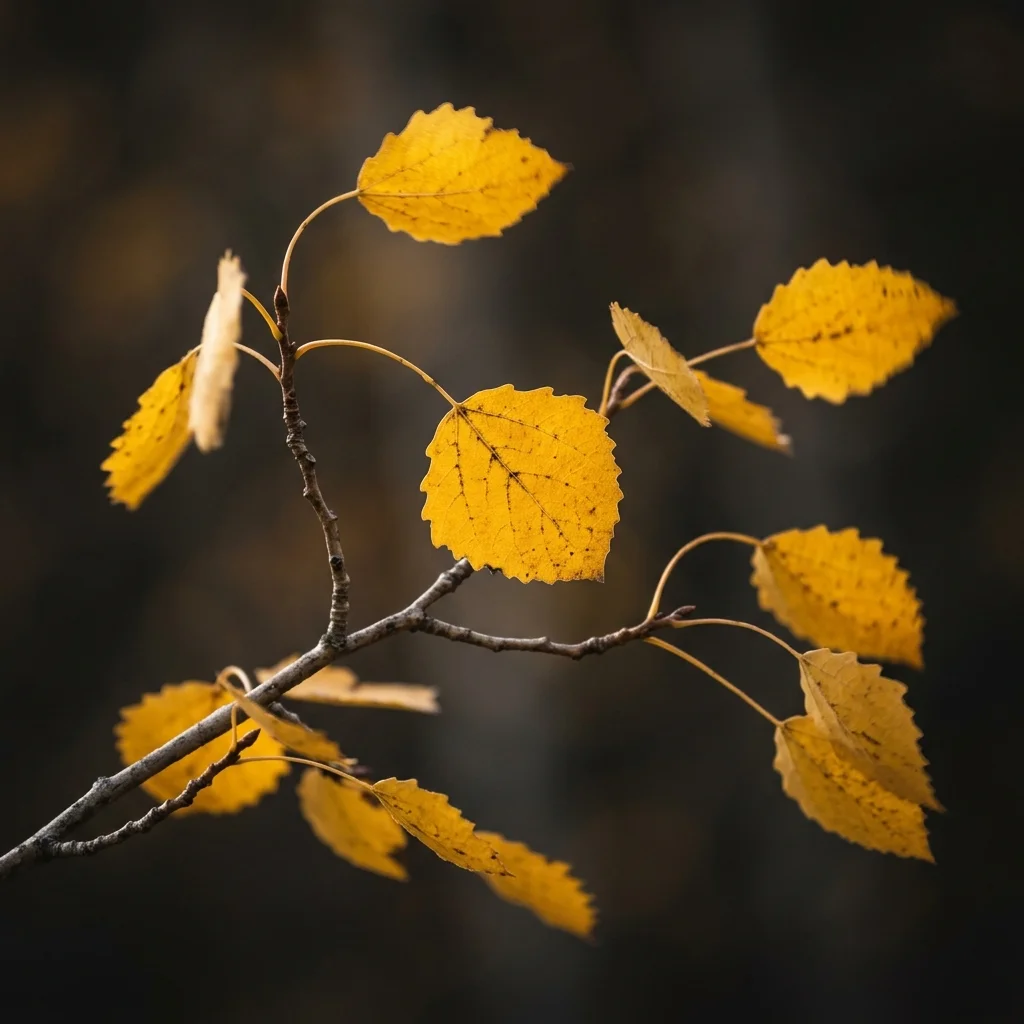
How to Identify Quaking Aspen
Identify Quaking Aspen immediately by its highly distinct biological features. Native to its specific ecosystem, it showcases spectacular foliage and structural habits optimized for its environment.
-
✓
Distinctive Features: Smooth, light greenish-white bark, rounded-to-ovate leaves with fine teeth and long, flattened petioles that cause leaf fluttering.
-
✓
Typical Coloration: Lively bright green foliage in summer, turning to a breathtaking, luminous bright golden-yellow in early autumn.
-
✓
Potential Confusions: Similar to Paper Birch, but easily distinguished by its smooth, non-peeling bark and rounded leaves with flattened stalks.
11-Step Professional Care & Planting Guide
Frequently Asked Questions
Why do Quaking Aspen leaves flutter so easily?
It is a genius structural adaptation! The leaf stalks (petioles) are exceptionally long and flattened at a right angle to the leaf blade, causing the leaves to wobble and flutter in even the gentlest breeze.
Is the Quaking Aspen safe for pets?
Yes, Populus tremuloides is completely non-toxic and pet-safe for cats and dogs.
What is a clonal colony?
It is an ancient forest miracle! A single Aspen seed can sprout and spread underground via root suckers, growing into thousands of individual trees that are genetically identical clones connected by a single massive root system.
Why does it have greenish-white bark?
It is a survival trick! The thin, greenish-white bark contains chlorophyll, allowing the tree to carry out photosynthesis and generate energy even in winter when it has shed all its leaves.