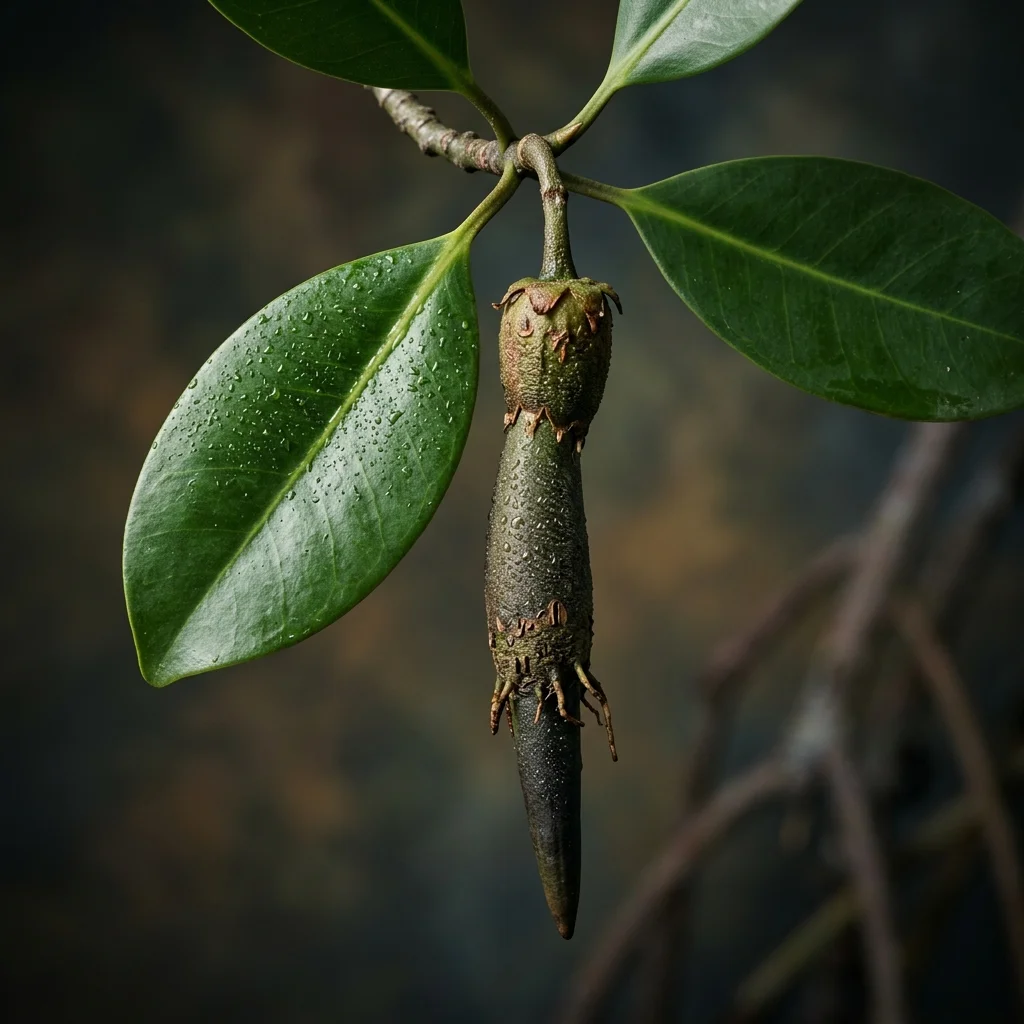
Rhizophora mangle

Red Mangrove Care & Identification Guide

The magnificent Red Mangrove (Rhizophora mangle) is a spectacular and highly unique tropical tree native to coastal estuarine environments, celebrated globally for its massive arched stilt roots (prop roots) and ability to grow directly in sea water. It is a natural halophyte, using a high-pressure root ultrafiltration mechanism to block 99% of sea salt. It exhibits viviparity, where the seed germinates while still attached to the parent tree, growing a long pencil-shaped propagule. It requires wet sandy mud, warm temperatures, and high humidity.


Sunlight Icon
Sunlight Full Sun
Watering Icon
Watering High (Aquatic/Semi-aquatic)
Soil Mix Icon
Soil Mix Wet Coastal Mud or Estuary Sand
Temperature Icon
Temperature 18°C to 38°C
Toxicity Warning Icon
Toxicity Non-toxic (high tannin bark is astringent)
Botanical photography of Red Mangrove (Rhizophora mangle) - Plant AI care database

How to Identify Red Mangrove

Identify Red Mangrove immediately by its highly distinct biological features. Native to its specific ecosystem, it showcases spectacular foliage and structural habits optimized for its environment.

  • Distinctive Features: Massive arched prop roots rising from the lower trunk, thick elliptical glossy leaves, and long, pencil-like green hanging viviparous propagules.
  • Typical Coloration: Dark glossy green leaves, reddish-brown smooth prop roots, and light grey bark.
  • Potential Confusions: Similar to Black Mangrove (Avicennia germinans), but easily distinguished by its massive arched prop roots (Black Mangrove has upright straw-like pneumatophores rising from the mud).

11-Step Professional Care & Planting Guide

💧 【Watering & Moisture】 Water constantly! Needs permanently wet, waterlogged substrate. Best grown in aquariums, brackish water setups, or muddy coastal shores.

☀️ 【Sunlight & Exposure】 Requires full direct sun. Loves intense, bright light to support its active foliage and maintain high photosynthetic rates.

🪴 【Ideal Soil Mix】 Thrives in fine, wet silty mud, estuary sand, or gravel. Can be planted directly in aquarium sand or mud (pH 6.5-8.2).

🌡️ 【Temperature & Winter Care】 Strictly tropical! Extremely cold-sensitive. Growth stops below 18°C; **temperatures below 10°C impair its salt-filtering mechanism**, causing dehydration and death.

✂ 【Pruning & Grooming】 Trim top branches if growing in indoor terrariums or paludariums to manage height. Never cut the primary prop roots, as they provide structural stability.

🧪 【Fertilization】 In aquariums, utilize comprehensive aquatic fertilizers. In soil, apply specialized slow-release tablets into the mud in spring.

🏺 【Potting & Garden Planting】 Commonly grown in paludariums, marine/refugium aquariums, or coastal beds. Anchor the pencil-shaped propagule gently in fine sand.

🌱 【Propagation】 Propagated by harvesting the mature, long, pencil-shaped green propagule (seedling pod) when it naturally falls off the parent tree, and anchoring it in wet mud.

🐛 【Common Pests】 Watch out for spider mites and scale insects on the leaves. Spray gently with insecticidal soap or rinse with fresh water.

🦠 【Common Diseases】 Susceptible to leaf spots if kept in stagnant, dry air. Ensure excellent air humidity and water movement.

🎓 【Botanist Advice】 **Salt Management Tip:** If you irrigate your Red Mangrove with salty or brackish water, **you must regularly spray the leaves with fresh water!** It excretes small amounts of excess salt onto its leaf surfaces, which will burn the leaves if not washed away.

Frequently Asked Questions

Q: What is the pencil-like thing hanging from the tree?

A: It is a **Propagule**! Red Mangroves exhibit 'viviparity'—a rare botanical phenomenon where the seed germinates and grows into a heavy pencil-shaped seedling while still attached to the parent tree before dropping into the water to float and establish.

Q: Can I grow Red Mangrove in fresh water?

A: Yes! While famously associated with coastal saltwater, the Red Mangrove actually grows exceptionally well (and often faster) in pure fresh water, as it does not have to expend energy filtering out salt.

Q: Is the Red Mangrove safe for household pets?

A: Yes, it is non-toxic. However, the bark contains exceptionally high concentrations of **Tannins** (tannic acid), making it extremely bitter and astringent, which naturally deters pets from chewing.

Q: Why is my mangrove shedding its lower leaves?

A: This is a natural salt excretion mechanism! In salty setups, the Red Mangrove concentrates excess salt in its oldest, lowest leaves (sacrificial leaves) before naturally shedding them to purge salt from its system.

Is your Red Mangrove showing yellow or dry leaves?

Don't let rot or scale pests kill your trees. Upload a photo now to get an instant AI botanical diagnosis and save your forest today!

Diagnose Red Mangrove Now