River Birch Care & Identification Guide
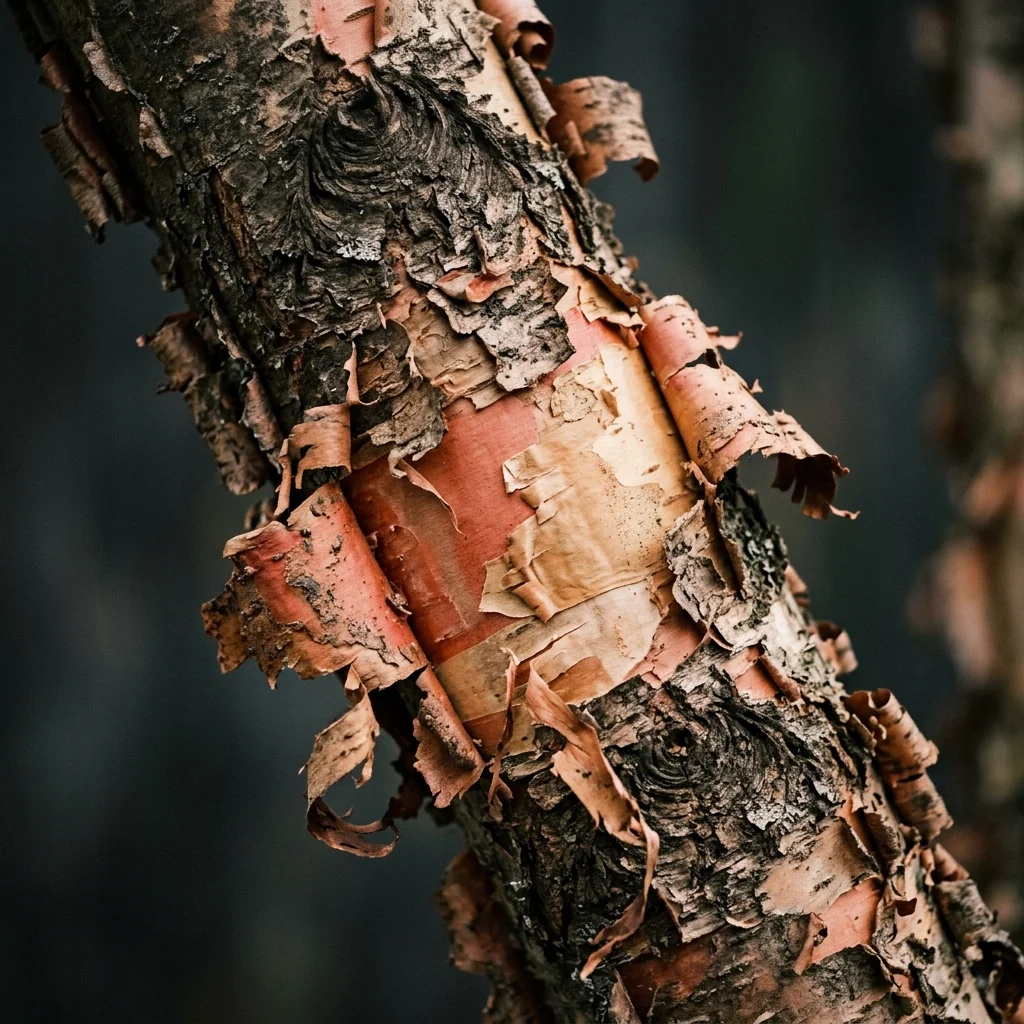
The magnificent River Birch (Betula nigra), also known as the Black Birch, is a colossal and highly spectacular deciduous native of Eastern United States, celebrated globally for its shaggy, exfoliating bark that peels in thick, curly parchment-like sheets. The bark displays a wild, artistic mosaic of salmon-pink, copper-brown, cream, and charcoal-peach. Unlike white birches, it is highly resistant to the bronze birch borer. It requires wet to moist acidic soils and full sun.





How to Identify River Birch
Identify River Birch immediately by its highly distinct biological features. Native to its specific ecosystem, it showcases spectacular foliage and structural habits optimized for its environment.
-
✓
Distinctive Features: Highly dramatic shaggy bark peeling in curled layers of salmon-pink and copper-brown, and wedge-shaped, doubly serrated dark green leaves.
-
✓
Typical Coloration: Glossy dark green leaves in summer, turning to a breathtaking, uniform golden-yellow in autumn.
-
✓
Potential Confusions: Similar to Paperbark Maple, but distinguished by its alternate, single wedge-shaped leaves (Maples have opposite, three-leaflet compound leaves).
11-Step Professional Care & Planting Guide
Frequently Asked Questions
Why is the River Birch shaggy bark unique?
It is an artistic marvel! As the trunk grows, the outer bark splits and curls back in shaggy, paper-like sheets, showcasing a beautiful mosaic of salmon-pink, copper, and peach.
Is the River Birch safe for household pets?
Yes, Betula nigra is completely non-toxic and pet-safe for cats and dogs.
Can I grow River Birch in hot, humid climates?
Yes! Unlike white-barked birches, the River Birch is native to the American South, thriving in hot, humid climates and showing extreme resistance to heat stress.
Why are my River Birch leaves turning pale yellow?
This is iron chlorosis caused by alkaline soil (pH > 6.5). Apply elemental sulfur, peat moss, or chelated iron to lower the soil pH and restore rich green leaves.