Sago Palm Care & Identification Guide
The magnificent Japanese Sago Palm (Cycas revoluta) is a spectacular evergreen cycad native to southern Japan, celebrated globally for its ancient structural beauty, feathery, stiff dark green fronds, and extreme long-lived prehistoric legacy. It is not a true palm but a member of the Cycadaceae family, dating back to the Mesozoic era. It requires moderately dry gritty loam, bright indirect to full sun, and extreme caution due to its high toxicity. All parts are highly poisonous.





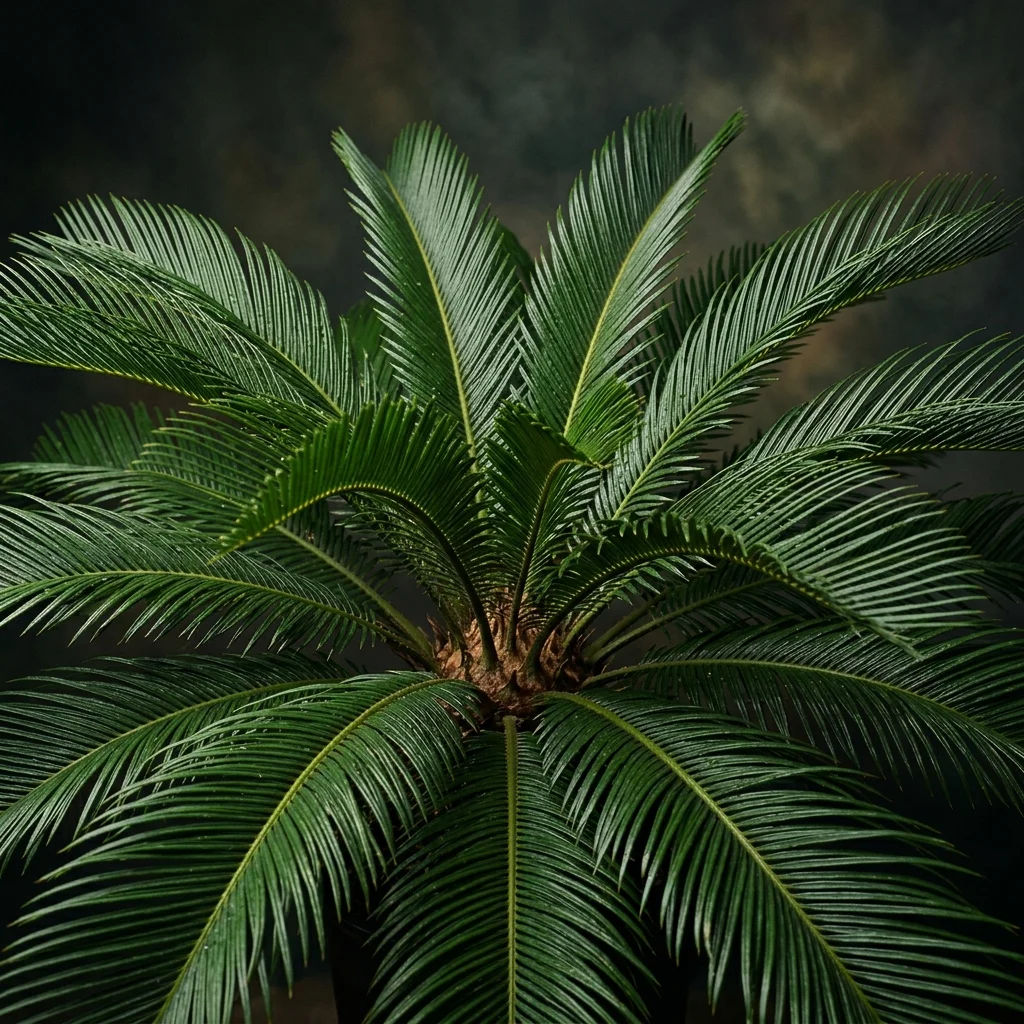
How to Identify Sago Palm
Identify Sago Palm immediately by its highly distinct biological features. Native to its specific ecosystem, it showcases spectacular foliage and structural habits optimized for its environment.
-
✓
Distinctive Features: Thick shaggy woody trunk, a dense whorl of rigid, feather-like dark green glossy fronds with narrow pinnae curling slightly downwards.
-
✓
Typical Coloration: Glossy dark green stiff leaves, shaggy brown fibrous trunk, and golden felt-like center cones.
-
✓
Potential Confusions: Similar to true palms or ferns, but easily distinguished by its exceptionally stiff, woody, needle-tipped leaflets that do not bend easily (palms have flexible soft leaves).
11-Step Professional Care & Planting Guide
Frequently Asked Questions
Is Sago Palm a true palm?
No, it is a Cycad! Cycads are ancient seed-bearing gymnosperms (裸子植物) that evolved over 250 million years ago, long before true flowering palms existed. They are more closely related to conifers.
Why is Sago Palm highly toxic to dogs?
It contains Cycasin! This powerful glycoside is a potent hepatotoxin (liver toxin) and carcinogen. If a dog eats any part of the plant, especially the red seeds, it causes severe acute liver failure within hours.
Why are my sago palm leaves turning yellow?
This is often a Manganese Deficiency! Sago Palms are highly prone to lack of Manganese, which causes yellow spotting and frizzled new fronds. Drench the soil with a Manganese sulfate solution to cure it.
How fast does a Sago Palm grow?
It grows exceptionally slowly! Sago Palms typically only produce one new flush of leaves (a 'whorl') per year, and it takes several decades to grow a trunk just 2 meters tall.