Silver Birch Care & Identification Guide
The magnificent Silver Birch (Betula pendula), also known as the European White Birch, is a colossal and highly spectacular deciduous species native to Europe and Western Asia, celebrated globally for its slender, weeping branches, triangular double-toothed leaves, and iconic white bark. As the tree matures, the bark at the very base of the trunk develops deep, rugged, charcoal-black fissures, creating a striking contrast. It requires well-drained loam, full sun, and moderate watering.





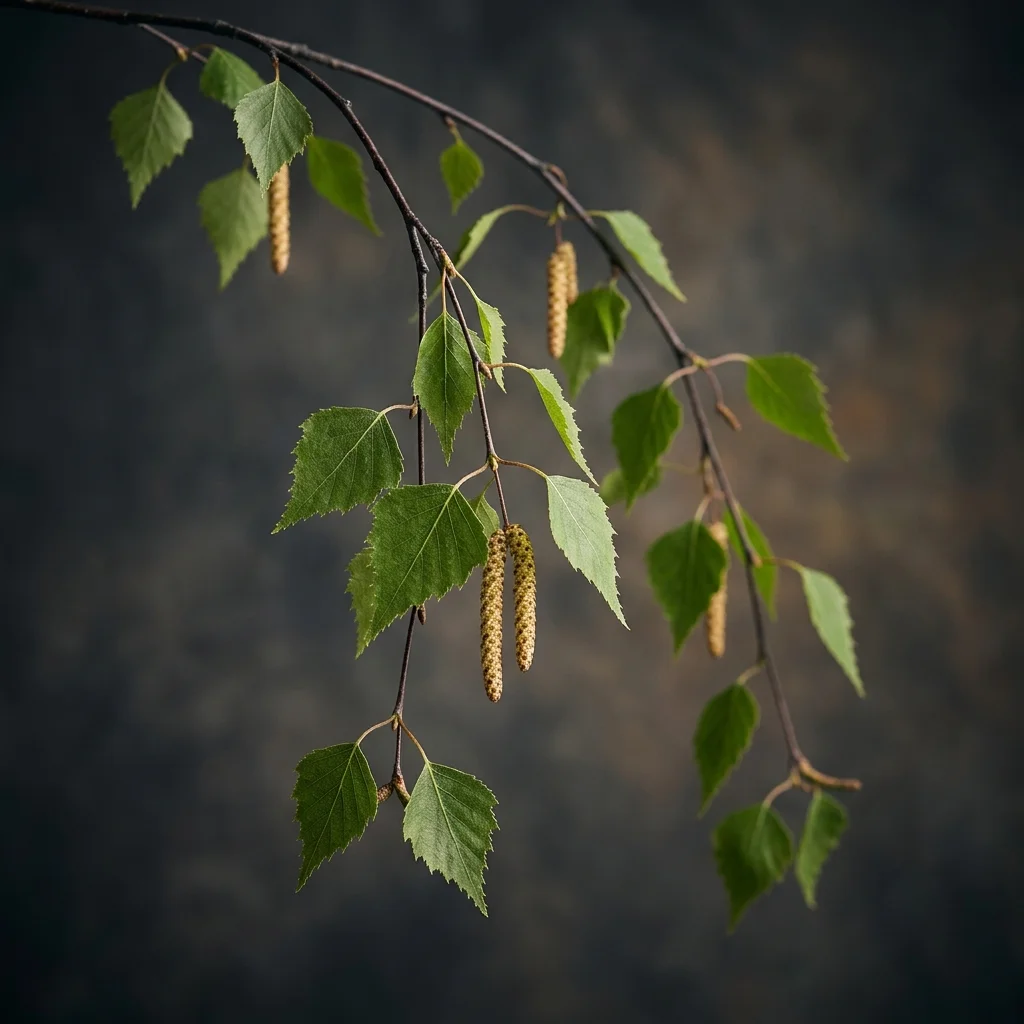
How to Identify Silver Birch
Identify Silver Birch immediately by its highly distinct biological features. Native to its specific ecosystem, it showcases spectacular foliage and structural habits optimized for its environment.
-
✓
Distinctive Features: Slender, weeping branchlets carrying delicate triangular leaves, and white bark showing diamond-shaped black cracks and deep basal fissures.
-
✓
Typical Coloration: Light green leaves in summer, turning to a breathtaking, uniform bright amber-yellow in autumn, with dangling cylindrical catkins.
-
✓
Potential Confusions: Similar to Paper Birch, but distinguished by its distinctly drooping/weeping branches and smaller, triangular leaves with long pointed tips.
11-Step Professional Care & Planting Guide
Frequently Asked Questions
Why does the trunk base turn black and cracked?
This is a natural maturation process! As the Silver Birch grows old, the thin white bark at the base splits and forms thick, rugged, charcoal-black corky ridges.
Is the Silver Birch safe for domestic pets?
Yes, Betula pendula is completely non-toxic and pet-safe for cats and dogs.
What are the dangling tassels on the branches?
They are catkins! These cylindrical, drooping structures are the male and female flowers of the birch tree, pollinated by the wind in early spring.
Can I grow Silver Birch in a hot southern climate?
No, it is not recommended. It is adapted to cold northern climates; hot, humid southern summers cause severe heat stress, making it highly vulnerable to bronze birch borer attacks.