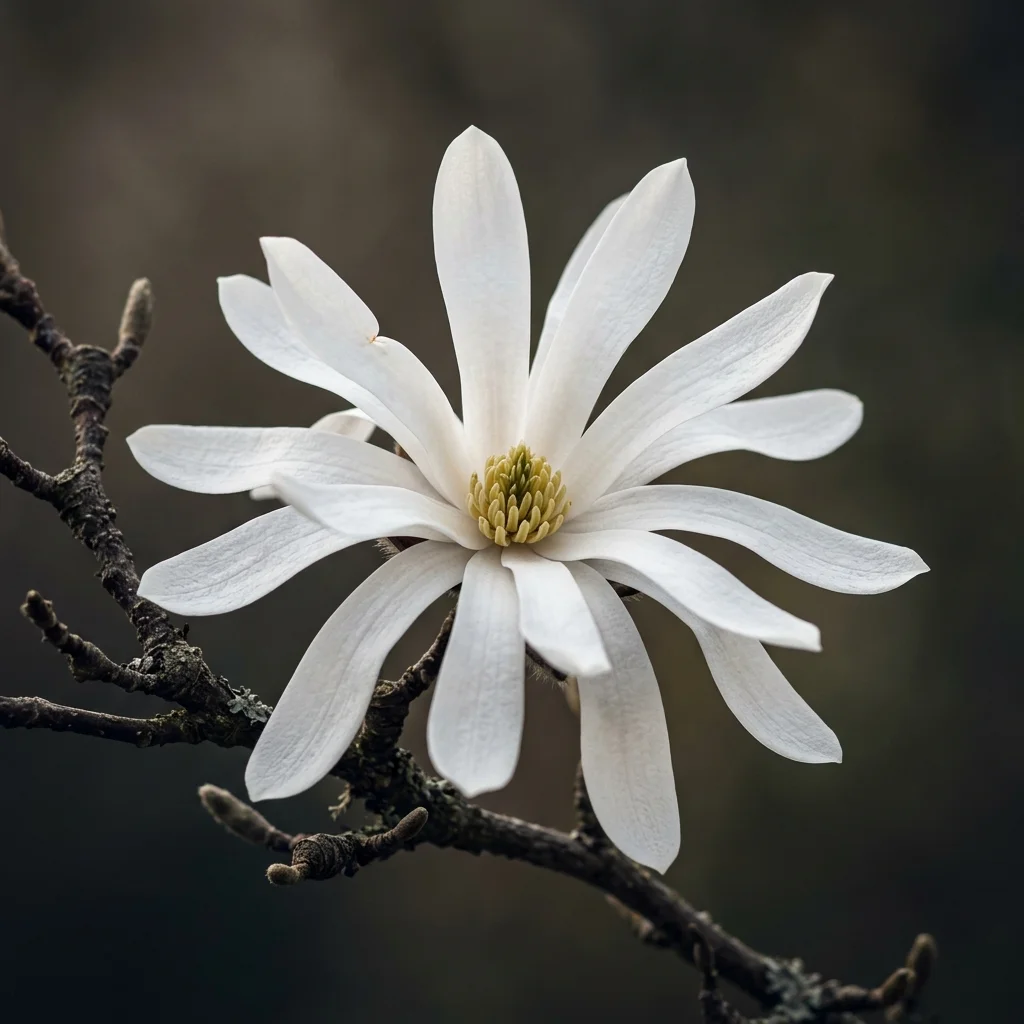
Magnolia stellata

Star Magnolia Care & Identification Guide

The magnificent Star Magnolia (Magnolia stellata) is a highly spectacular deciduous dwarf tree or large shrub native to Japan, celebrated globally for its delicate, star-shaped early spring white blooms that burst on bare rustic twigs. The flowers carry 12 to 40 narrow, ribbon-like petals (tepals) radiating outward. It grows slowly, forming a neat compact rounded crown. It requires organic acidic loam, full sun, and moderate watering.


Sunlight Icon
Sunlight Full Sun to Part Shade
Watering Icon
Watering Moderate
Soil Mix Icon
Soil Mix Organic Acidic Soil
Temperature Icon
Temperature -28°C to 24°C
Toxicity Warning Icon
Toxicity Non-toxic
Botanical photography of Star Magnolia (Magnolia stellata) - Plant AI care database

How to Identify Star Magnolia

Identify Star Magnolia immediately by its highly distinct biological features. Native to its specific ecosystem, it showcases spectacular foliage and structural habits optimized for its environment.

  • Distinctive Features: Dainty, star-like white flowers with numerous narrow ribbon-like petals blooming on bare twigs, and small ovate leaves.
  • Typical Coloration: Pristine white flowers with yellow centers, dark green leaves, and copper-amber autumn foliage.
  • Potential Confusions: Similar to Saucer Magnolia, but distinguished by its much smaller star-like flowers, narrow ribbon petals, and compact dwarf habit.

11-Step Professional Care & Planting Guide

💧 【Watering & Moisture】 Water moderately. Keep soil consistently damp for young plants. Established star magnolias have excellent moisture retention but hate standing water.

☀️ 【Sunlight & Exposure】 Requires full direct sun to partial shade. Sheltering from cold wind is highly recommended to preserve early flower buds.

🪴 【Ideal Soil Mix】 Requires rich, deep, well-draining organic acidic loam. Blend 40% organic loam, 30% organic peat moss, and 30% coarse perlite (pH 5.5-6.5).

🌡️ 【Temperature & Winter Care】 Cold-hardy down to -28°C (USDA Zone 4-9). Extremely cold-tolerant. Protect early blooms from late spring frosts.

✂ 【Pruning & Grooming】 Prune only immediately after early spring blooming to maintain its compact shape. Avoid pruning in autumn.

🧪 【Fertilization】 Feed lightly in late spring with a slow-release organic balanced fertilizer. Mulch with composted leaf mold.

🏺 【Potting & Garden Planting】 Thrives in containers! Choose a wide pot with excellent drainage holes, backfill with organic acidic loam, and mulch deeply.

🌱 【Propagation】 Propagated by taking softwood cuttings in early summer, which root readily with rooting hormone.

🐛 【Common Pests】 Generally pest-free. Watch occasionally for scales. Spray manually with neem oil.

🦠 【Common Diseases】 Highly disease-resistant. Susceptible to root rot in waterlogged clay soils. Ensure superior drainage.

🎓 【Botanist Advice】 The Star Magnolia is one of the slowest-growing and most compact magnolias on Earth! It is a stellar choice for small patios, courtyards, and container gardens.

Frequently Asked Questions

Q: Why are the petals narrow and ribbon-like?

A: This is a key botanical distinction! Unlike saucer magnolias, the flowers of Star Magnolia (Magnolia stellata) carry 12 to 40 narrow, strap-like petals (botanically called tepals) that spread outward like a star.

Q: Is the Star Magnolia safe for household pets?

A: Yes, Magnolia stellata is completely non-toxic and pet-safe for cats and dogs.

Q: Does it bloom before its leaves appear?

A: Yes! It is one of the earliest deciduous trees to bloom, bursting into star-like white clouds in late winter or early spring on bare branches before leaves emerge.

Q: How fast does it grow?

A: It is exceptionally slow-growing, only growing 3 to 6 inches per year, making it an extremely stable and compact choice for small residential spaces.

Is your Star Magnolia showing yellow or dry leaves?

Don't let rot or scale pests kill your trees. Upload a photo now to get an instant AI botanical diagnosis and save your forest today!

Diagnose Star Magnolia Now