Sweet Birch Care & Identification Guide
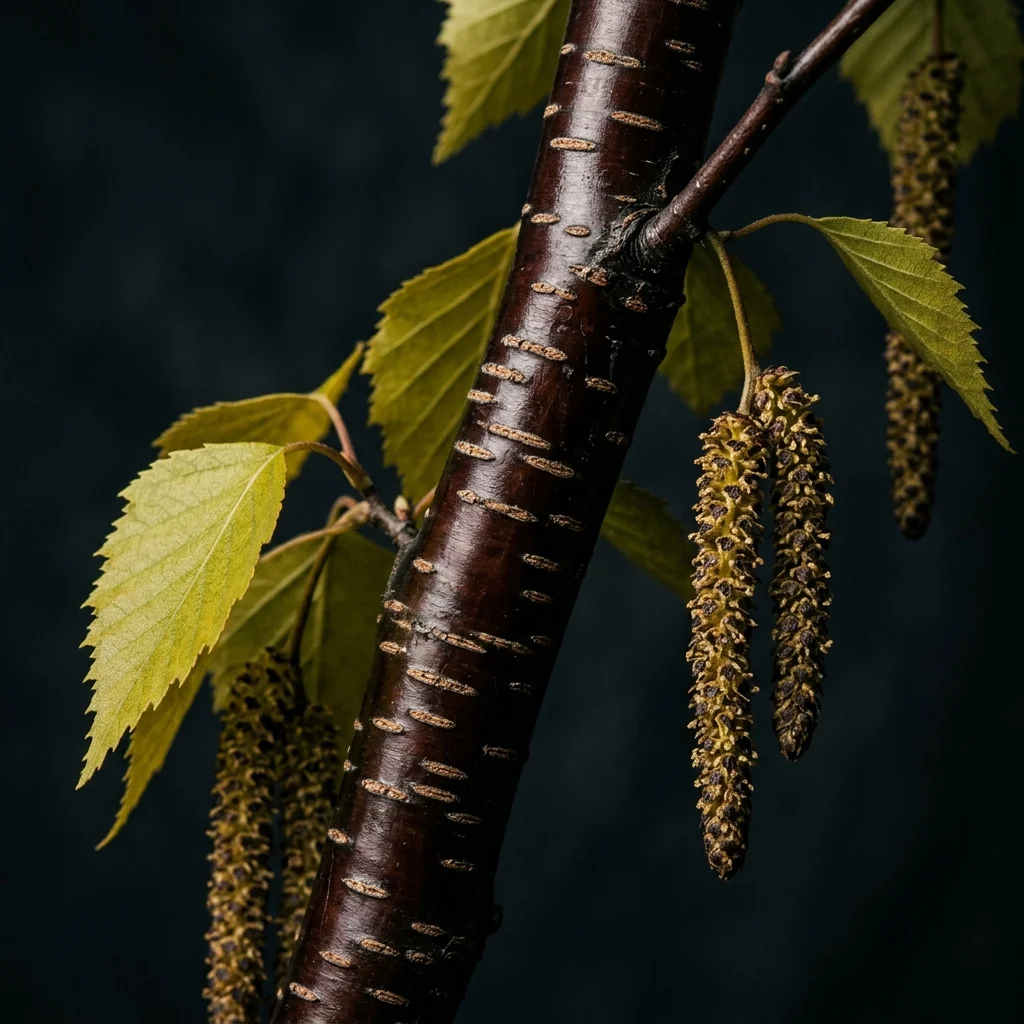
The magnificent Sweet Birch (Betula lenta), also known as Cherry Birch or Black Birch, is an elegant deciduous tree native to Eastern North America, celebrated globally for its glossy, dark reddish-brown bark that features prominent horizontal lenticels, strongly resembling a cherry tree. When its twigs or bark are scraped, it releases an intense, sweet wintergreen aroma due to its rich content of methyl salicylate (wintergreen oil). It features simple, serrated golden-green leaves and hanging male catkins. It requires rich, moist, organic acidic loam, full sun, and moderate watering.





How to Identify Sweet Birch
Identify Sweet Birch immediately by its highly distinct biological features. Native to its specific ecosystem, it showcases spectacular foliage and structural habits optimized for its environment.
-
✓
Distinctive Features: Glossy, cherry-like dark reddish-brown bark with horizontal lenticels, simple serrated leaves, and an intense wintergreen fragrance when twigs are broken.
-
✓
Typical Coloration: Bright golden-green summer leaves turning rich golden-yellow in autumn, and beautiful dark bronze-red bark.
-
✓
Potential Confusions: Often confused with Yellow Birch (Betula alleghaniensis), but distinguished by its dark, non-peeling bark (Yellow Birch bark peels in thin, papery curly golden sheets).
11-Step Professional Care & Planting Guide
Frequently Asked Questions
Why does the twig smell like wintergreen?
It is wintergreen oil! The twigs and bark contain Methyl salicylate, the chemical compound that gives wintergreen its distinctive minty aroma. It was historically distilled to make birch beer.
Is the Sweet Birch safe for cats and dogs?
Yes, the tree itself is completely non-toxic and pet-safe, though concentrated extracted birch essential oil is highly toxic to pets.
How does the bark change as it ages?
When young, the bark is beautifully smooth, glossy, and cherry-like. As it grows into a colossal mature tree, the bark breaks into large, thick, dark plates that do not peel.
Does it tolerate hot, dry city environments?
No, Sweet Birch prefers cool, moist mountain climates and organic soils; it will rapidly decline in hot, dry, compacted urban streets.