Sweet Cherry Care & Identification Guide
The magnificent Sweet Cherry (Prunus avium), also known as the Wild Cherry, is a highly spectacular deciduous tree native to Europe and Western Asia, celebrated globally for its clusters of glossy, dark red, exceptionally sweet and juicy drupe fruits. In mid-spring, it bursts into dense, beautiful clouds of cup-shaped single white blossoms before leaf emergence. It features alternate, oblong-ovate green leaves with serrated margins. It requires rich well-drained loam, full direct sun, and moderate watering. Critical Warning: The bark, leaves, and fruit pits contain toxic cyanogenic glycosides.





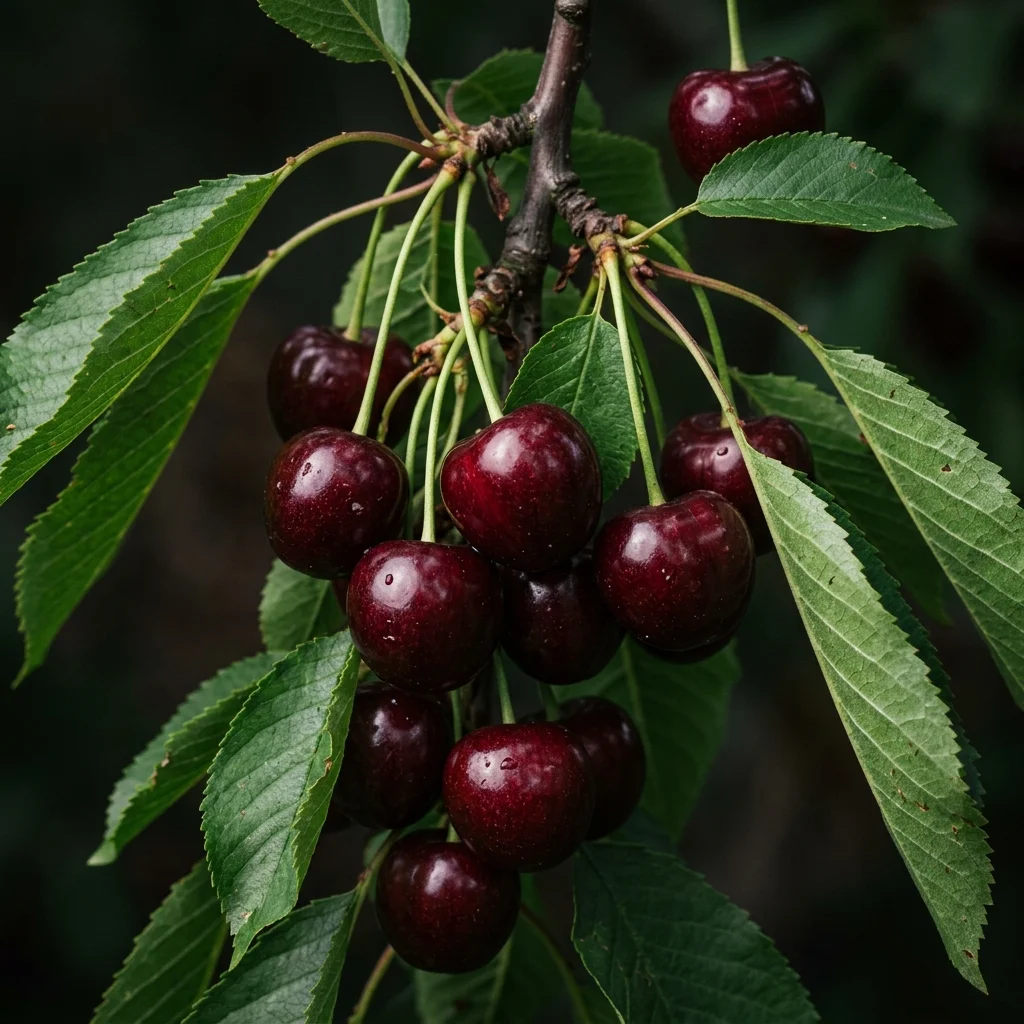
How to Identify Sweet Cherry
Identify Sweet Cherry immediately by its highly distinct biological features. Native to its specific ecosystem, it showcases spectacular foliage and structural habits optimized for its environment.
-
✓
Distinctive Features: Hanging clusters of glossy dark red round drupes with long slender green stems, spring clusters of 5-petaled white blossoms, and shiny reddish-brown bark.
-
✓
Typical Coloration: Snowy white spring blossoms, rich emerald-green summer foliage, glossy dark red-purple fruits, and copper-bronze bark with horizontal lenticels.
-
✓
Potential Confusions: Similar to Sour Cherry (Prunus cerasus), but distinguished by its much taller growth habit, larger, sweeter fruits, and leaves with fuzzy veins beneath.
11-Step Professional Care & Planting Guide
Frequently Asked Questions
Why is sap oozing from my cherry tree trunk?
This is Gummosis! It is a physiological response to stress, boring insects, or bacterial cankers, where the tree oozes thick amber-colored sap to seal wounds. Treat underlying causes.
Are cherry pits toxic to dogs?
Yes, cherry pits contain Amygdalin, a toxic compound that releases lethal cyanide when chewed and crushed. Pits also pose a severe choking hazard.
Do I need two cherry trees for pollination?
Most sweet cherry cultivars are self-incompatible and require a different sweet cherry cultivar blooming at the same time for cross-pollination, although some self-fertile cultivars exist.
How fast do sweet cherry trees grow?
They grow relatively fast (2 to 3 feet per year when young) and can reach heights of 30 to 40 feet, making them beautiful shade trees.