Sweet Chestnut Care & Identification Guide
The magnificent Sweet Chestnut (Castanea sativa), also known as the European Chestnut, is a highly spectacular deciduous tree native to Southern Europe, celebrated globally for its delicious, sweet edible nuts and high-quality timber. It features long, oblong-lanceolate leaves with heavily serrated saw-tooth margins. In autumn, it produces highly distinctive, spiky, golden-green husks called burrs, covered in needle-sharp spines, which split open to reveal 2 to 3 glossy, dark brown sweet chestnuts. It requires deep, well-draining acidic loam, full sun, and moderate watering.





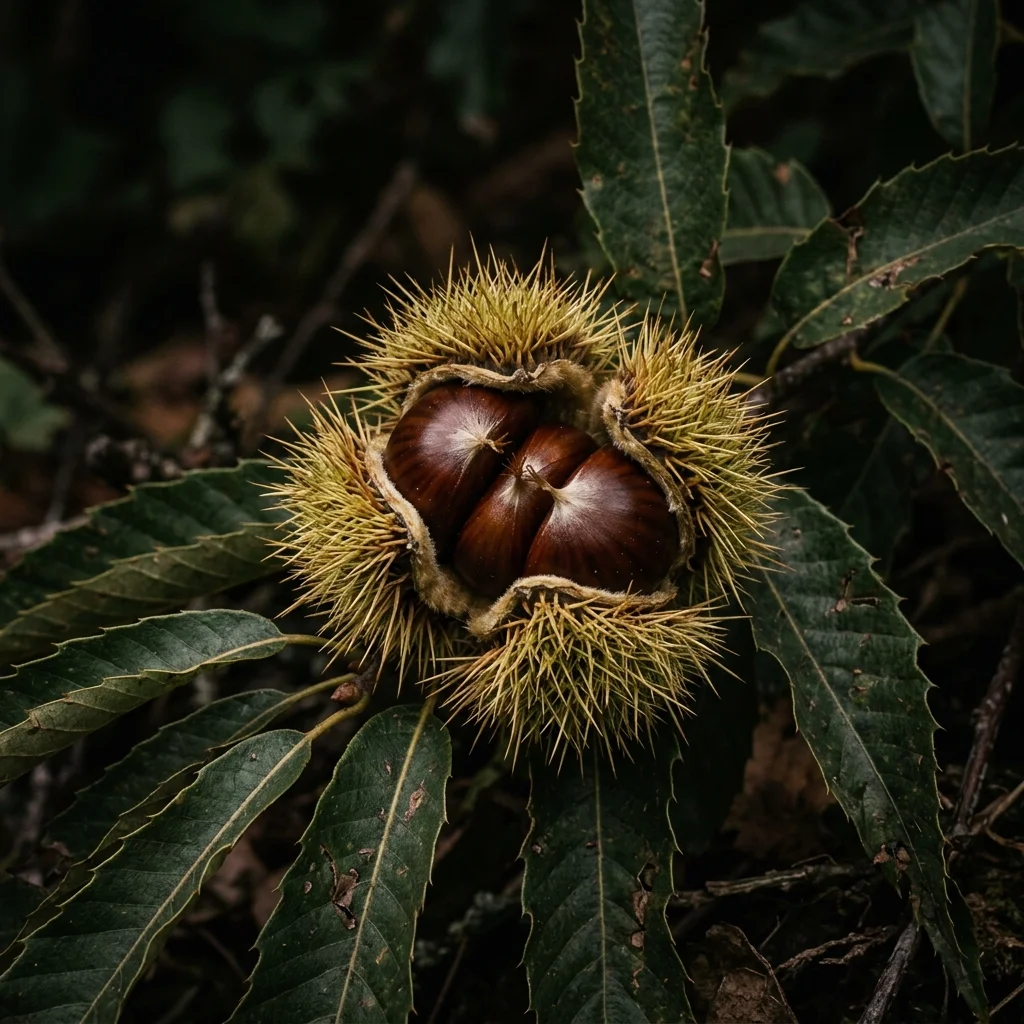
How to Identify Sweet Chestnut
Identify Sweet Chestnut immediately by its highly distinct biological features. Native to its specific ecosystem, it showcases spectacular foliage and structural habits optimized for its environment.
-
✓
Distinctive Features: Oblong-lanceolate leaves with coarse, sharp saw-tooth serrated edges, needle-sharp spiky green husks enclosing edible nuts, and beautiful spiral-furrowed bark.
-
✓
Typical Coloration: Deep glossy green summer leaves turning spectacular copper-yellow in autumn, creamy-yellow male catkins, and rich glossy brown nuts.
-
✓
Potential Confusions: Often confused with Horse Chestnut (Aesculus hippocastanum), but easily distinguished by its long simple leaves (Horse Chestnut has palmately compound leaves) and edible, pointed nuts (Horse Chestnut conkers are toxic and round).
11-Step Professional Care & Planting Guide
Frequently Asked Questions
Can I eat Sweet Chestnuts raw?
Yes, they can be eaten raw, but they are far sweeter, softer, and more delicious when roasted or boiled, which easily loosens the bitter inner papery skin (pellicle).
Is the Sweet Chestnut safe for pets?
Yes, Castanea sativa is completely non-toxic and pet-safe for cats and dogs.
How do I tell Sweet Chestnut apart from Horse Chestnut?
Look at the leaves and nuts! Sweet Chestnut has long simple serrated leaves and pointed, edible nuts inside needle-sharp husks. Horse Chestnut has palmately compound leaves and rounded, toxic conkers inside spiky husks.
Does it tolerate alkaline lime soils?
No! Sweet Chestnut is highly calcifuge, meaning it strongly dislikes alkaline lime soils which block iron absorption and cause severe leaf yellowing. Gritty organic acidic soil is essential.