Sweetgum Care & Identification Guide
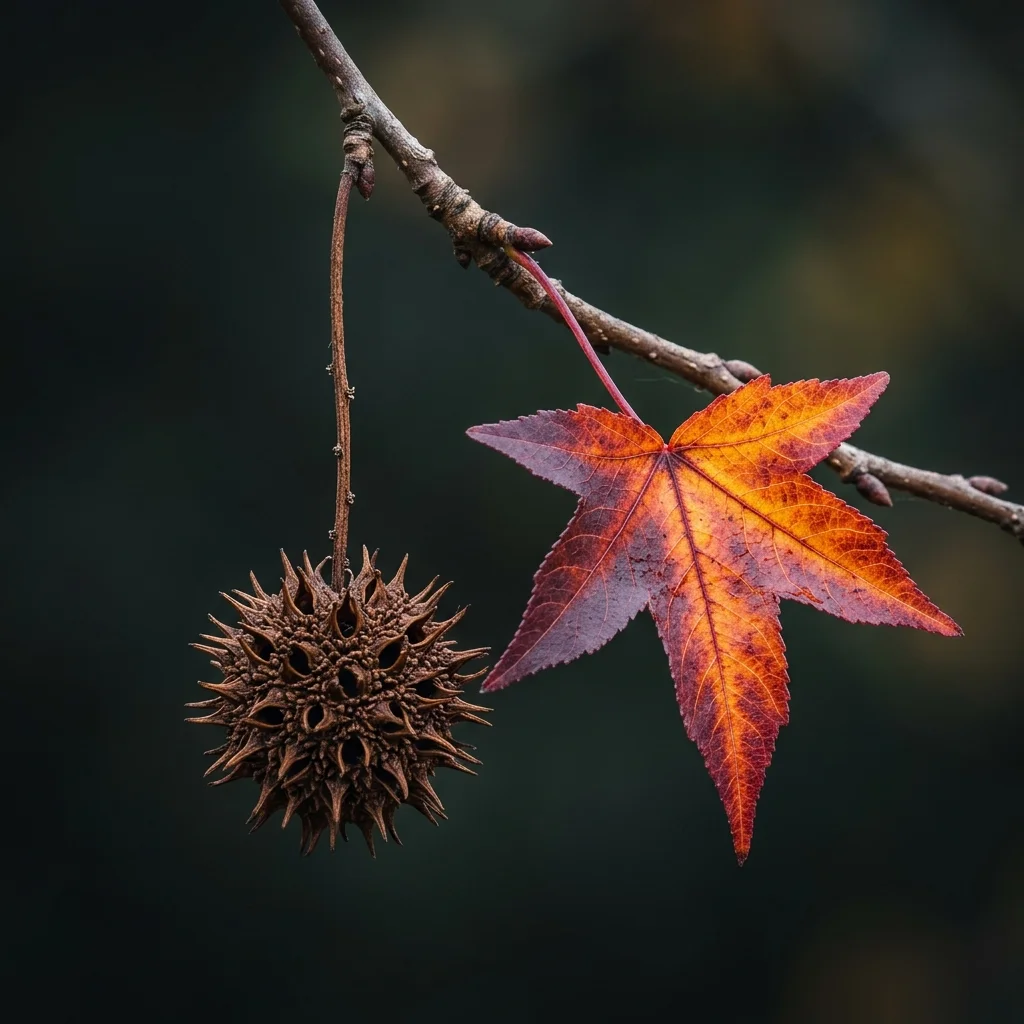
The magnificent Sweetgum (Liquidambar styraciflua), also known as the American Sweetgum, is a colossal and highly spectacular deciduous hardwood native to Eastern United States, celebrated globally for its symmetrical pyramidal shape, star-shaped foliage, and brilliant autumn colors. It carries five-pointed lobed leaves that release a pleasant aromatic fragrance when crushed. It produces distinctive spiky, woody ball-like seed fruits. It requires rich, moist, acidic soil and full sun.





How to Identify Sweetgum
Identify Sweetgum immediately by its highly distinct biological features. Native to its specific ecosystem, it showcases spectacular foliage and structural habits optimized for its environment.
-
✓
Distinctive Features: Perfect symmetrical pyramidal shape, star-shaped 5-7 lobed leaves with finely serrated edges, and dangling spiky globose woody seed balls.
-
✓
Typical Coloration: Deep glossy green leaves in summer, turning to a breathtaking, multi-colored display of bright yellow, orange, scarlet, and deep wine-purple in autumn.
-
✓
Potential Confusions: Similar to Sugar Maple, but easily distinguished by its star-shaped leaves arranged alternately on twigs, and its spiky ball-like seed fruits.
11-Step Professional Care & Planting Guide
Frequently Asked Questions
What are those spiky balls hanging from the branches?
They are gumballs! These are the dry, spiky globose woody seed fruits of the Sweetgum. They mature in autumn, open to release tiny seeds, and drop to the ground in winter.
Is the Sweetgum safe for domestic pets?
Yes, Liquidambar styraciflua is completely non-toxic and pet-safe for cats and dogs.
Why is it called 'Sweetgum'?
Because of its sap! When the bark is wounded, it exudes an aromatic, sweet, amber-colored resinous sap that has been historically used for chewing gum, incense, and folk medicine.
How to tell a Sweetgum apart from a Sugar Maple?
Look at the leaf arrangement! Sweetgum leaves are arranged alternately on the twigs and are perfectly star-shaped. Maple leaves are arranged opposite each other in pairs.