Traveler's Palm Care & Identification Guide
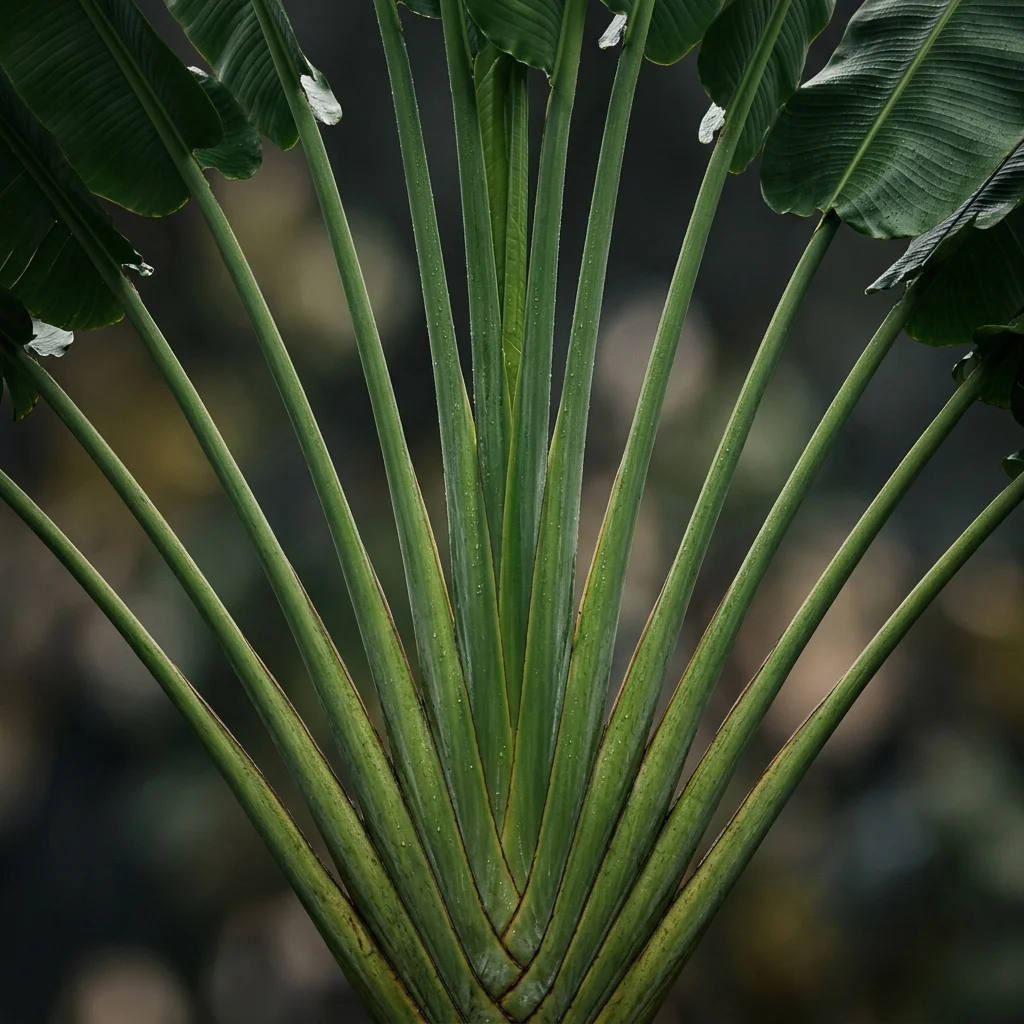
The magnificent Traveler's Palm (Ravenala madagascariensis) is a spectacular and architectural tropical giant native to Madagascar, celebrated globally for its banana-like leaves arranged in a perfect, flat, single-plane fan-shaped crown. It is not a true palm but is closely related to the Bird of Paradise. Its massive leaf bases form hollow cups that accumulate rain water, which historic travelers used as emergency drinking water. It requires wind shelter, rich organic soil, and full sun.





How to Identify Traveler's Palm
Identify Traveler's Palm immediately by its highly distinct biological features. Native to its specific ecosystem, it showcases spectacular foliage and structural habits optimized for its environment.
-
✓
Distinctive Features: Massive banana-like leaves arranged strictly in a single, two-dimensional fan shape, rising from a thick trunk.
-
✓
Typical Coloration: Rich emerald-green leaves, bright lime-green leaf sheaths, and a grey woody base trunk.
-
✓
Potential Confusions: Similar to Giant Bird of Paradise, but easily distinguished by its perfect single-plane fan arrangement (Bird of Paradise leaves grow randomly in multiple directions).
11-Step Professional Care & Planting Guide
Frequently Asked Questions
Why is it called the Traveler's Palm?
It has historical utility! The name arises because the leaf bases form cup-like structures that catch and store rainwater, providing emergency drinking water to thirsty travelers, and because the fan grows roughly on an east-west axis, acting as a crude compass.
Is the Traveler's Palm toxic to dogs and cats?
Yes, the seeds and leaves contain mild toxins that can cause gastrointestinal upset, vomiting, and diarrhea in pets if ingested in large quantities.
Why are the leaves of my traveler's palm shredding?
This is a natural response to wind! Just like banana leaves, the large fronds tear easily along their lateral veins to prevent the plant from catching too much wind and blowing over.
Can it be grown indoors?
Only as a juvenile in a highly illuminated, high-ceiling atrium. It rapidly outgrows normal indoor spaces and requires intense full direct sun to maintain its majestic single-plane leaf fan.