Tulip Tree Care & Identification Guide
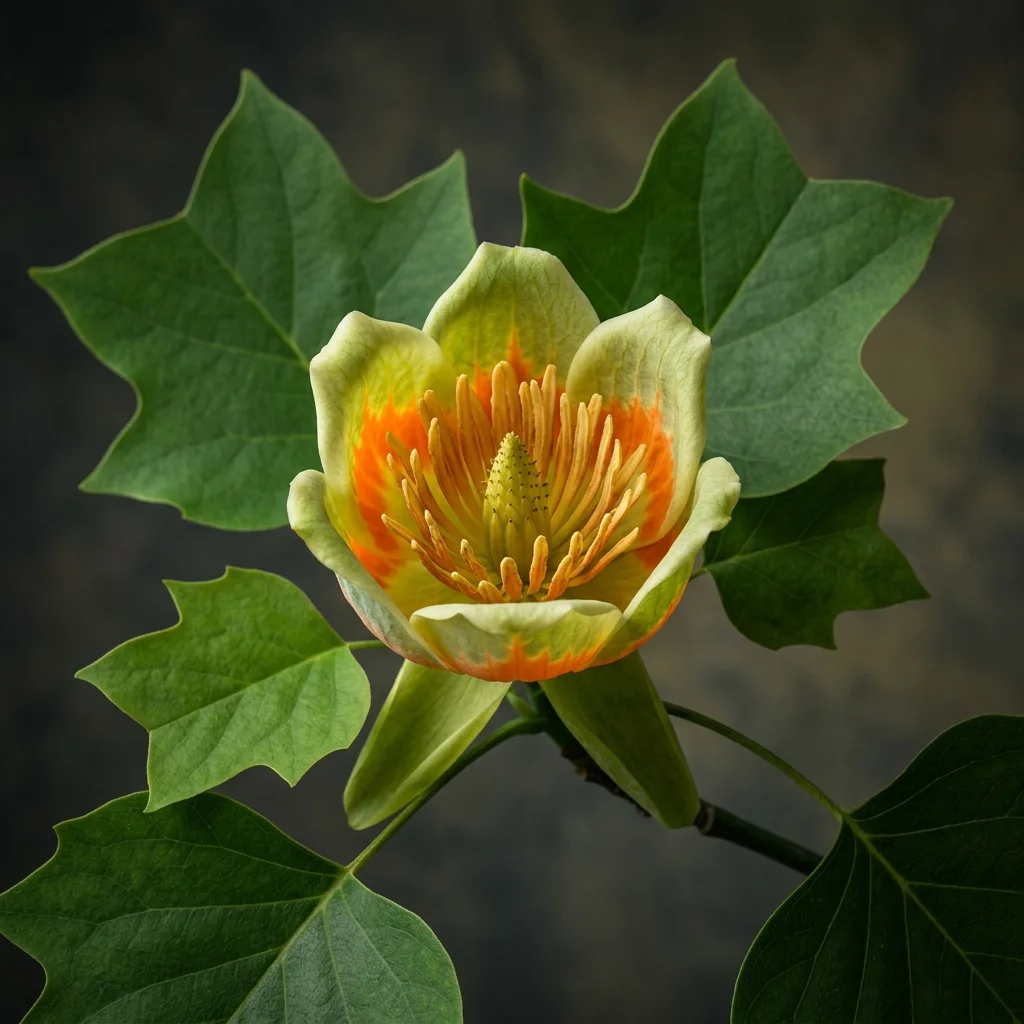
The magnificent Tulip Tree (Liriodendron tulipifera), also known as the Tulip Poplar or Yellow Poplar, is a colossal and highly spectacular deciduous native of Eastern North America, celebrated globally for its rapid growth rate, massive scale, and unique cup-shaped tulip-like flowers. The exotic blooms feature greenish-yellow petals with a glowing orange band at the base. It carries unique four-lobed saddle-shaped leaves with a notched apex. It requires deep, rich, moist loam, full sun, and high watering.





How to Identify Tulip Tree
Identify Tulip Tree immediately by its highly distinct biological features. Native to its specific ecosystem, it showcases spectacular foliage and structural habits optimized for its environment.
-
✓
Distinctive Features: Huge straight trunk, unique saddle-shaped four-lobed leaves with a flat notched apex, and large cup-shaped green and orange tulip-like flowers.
-
✓
Typical Coloration: Bright green leaves, green and yellow spring flowers with bright orange bases, and a spectacular bright golden-yellow autumn display.
-
✓
Potential Confusions: Similar to true Poplars, but easily distinguished by its unique saddle-shaped leaves and large, ornate tulip-shaped flowers (Liriodendron belongs to the Magnolia family).
11-Step Professional Care & Planting Guide
Frequently Asked Questions
Are the flowers actually like tulips?
Yes! The tree produces gorgeous, large cup-shaped flowers that closely resemble tulips, complete with yellow-green petals and a striking orange band at the base. They belong to the Magnolia family.
Is the Tulip Tree safe for dogs and cats?
Yes, Liriodendron tulipifera is completely non-toxic and pet-safe for cats and dogs.
Why does it drop its leaves in summer?
This is a drought response! The Tulip Tree is highly sensitive to dry soil; during hot, dry spells, it will drop its inner leaves to conserve water.
Is it a good tree for bees?
It is outstanding! The flowers produce massive amounts of sweet nectar, making it a premier honey tree for beekeepers, yielding delicious dark tulip honey.