Bitter Melon Growing & Harvesting Guide
Bitter Melon (Momordica charantia), the medicinal green wonder of tropical gardens, is a highly rewarding climbing vine. Prized for its unique warty, bitter fruits and blood-sugar balancing qualities, this tropical annual demands high humidity, vertical trellising, and pest-bagging protection.





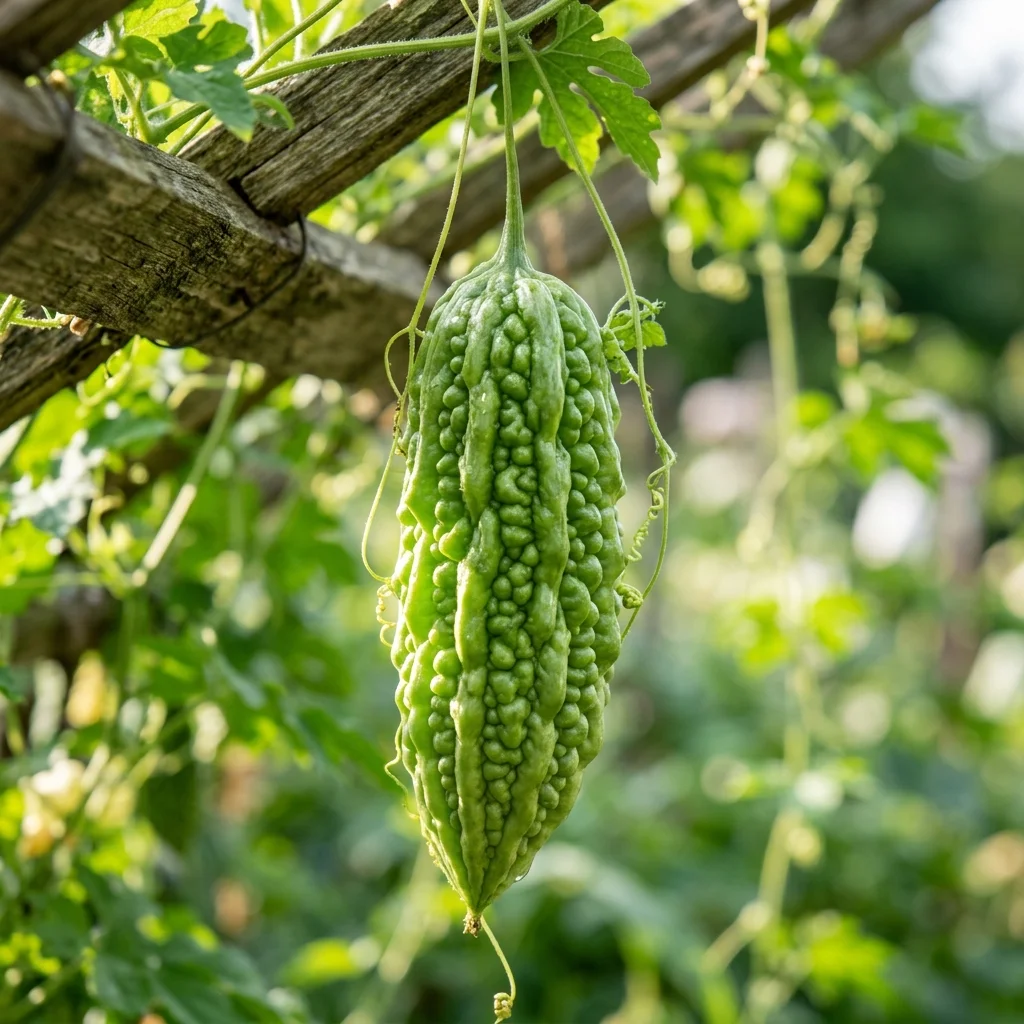
How to Identify Bitter Melon
Bitter Melon (Momordica charantia) is a highly valued edible crop globally. Recognizing its definitive vegetative and fruit/vegetable structures is key to successful companion growing and harvesting.
-
✔
Key Visual Features: Slender climbing herbaceous vine with deeply cut, palmately lobed green leaves.
-
✔
Leaf & Stems: Thin, coiled tendrils; solitary pale yellow male and female blossoms.
-
✔
Fruit/Edible Part: Elongated, warty-skinned green fruit turning orange-yellow when ripe, containing red-coated seeds.
Complete Growing & Harvesting Guide
Follow our detailed scientific agricultural cultivation guide to keep your Bitter Melon thriving and high-yielding.
Common Diseases & Treatment
Fusarium Wilt (Fusarium)
Symptoms: Vines wilt suddenly, starting from lower leaves and moving up; the vascular bundle inside the cut stem shows brown staining.
Downy Mildew (Pseudoperonospora)
Symptoms: Yellow, angular spots appear on leaf upper surfaces, matching purple-gray fuzzy mold growth underneath in humid conditions.
Frequently Asked Questions
Why did my bitter melon fruits turn bright orange and split open?
This indicates overripeness. Bitter melons ripen rapidly; mature fruits turn orange, the flesh softens, and they split to reveal red seeds.
How can I reduce the extreme bitterness of bitter melon for cooking?
Slice the green fruit, remove seeds and pith, sprinkle with salt, let sit for 15 minutes, then squeeze and rinse with cold water.
Why are my baby bitter melons turning yellow and falling off?
This is usually caused by melon fly stings laying eggs inside the baby fruit, or a complete failure of pollination by local bees.
Is bitter melon safe for dogs and cats to eat?
No. While underripe green flesh is mildly toxic, the seeds and bright orange ripe pulp contain toxic saponins, causing pet vomiting and diarrhea.