Blackberry Growing & Harvesting Guide
Blackberry (Rubus fruticosus) is the robust, high-yielding powerhouse of the summer fruit garden. Highly prized for its glossy, deep purple-black aggregate fruits and rapid growth habit, this hardy bramble is a sweet summer essential.





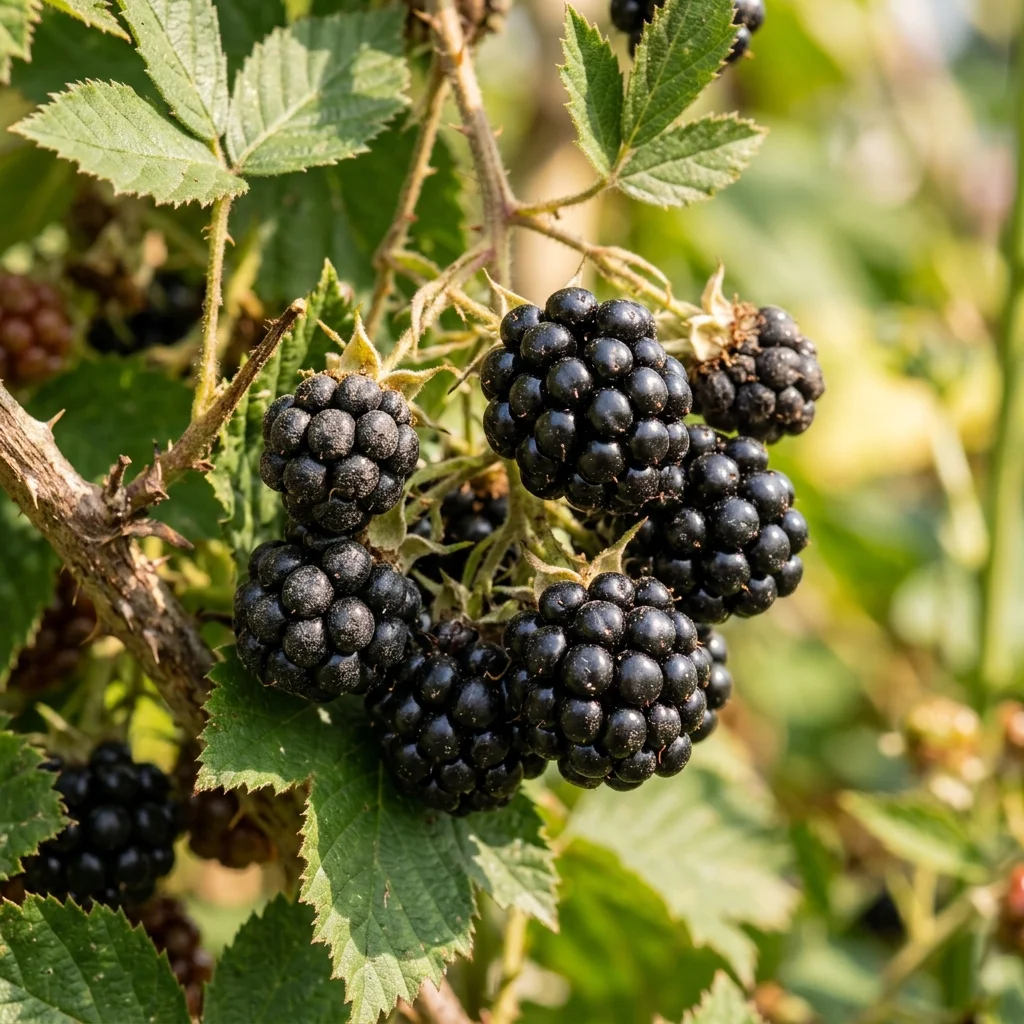
How to Identify Blackberry
Blackberry (Rubus fruticosus) is a highly valued edible crop globally. Recognizing its definitive vegetative and fruit/vegetable structures is key to successful companion growing and harvesting.
-
✔
Key Visual Features: Robust, arching, or trailing woody biennial canes (brambles) carrying sharp, hooked thorns.
-
✔
Leaf & Stems: Palmate compound dark green leaves with 3 to 5 serrated leaflets; clusters of white-pink blossoms.
-
✔
Fruit/Edible Part: Glossy, aggregate black fruits that retain the soft white solid core (torus) inside when harvested.
Complete Growing & Harvesting Guide
Follow our detailed scientific agricultural cultivation guide to keep your Blackberry thriving and high-yielding.
Common Diseases & Treatment
Anthracnose (Fungal)
Symptoms: Leaves and canes develop small, purple-bordered grey spots, causing canes to split and fruit to dry.
Double Blossom
Symptoms: Spring flower buds distort, producing double pink petals and leafy clusters, leading to zero fruit formation.
Frequently Asked Questions
Why are my blackberries bitter and dry?
Harvesting too early is the main cause. Blackberries should be matte black and soft; shiny black berries are still acidic.
Should I grow thornless blackberries?
Highly recommended! Thornless cultivars (like 'Triple Crown') are much easier to prune, trellis, and harvest without injuries.
Do blackberries produce fruit in their first year?
Standard varieties fruit only on 2nd-year canes (floricanes). Primocane varieties can produce a light crop on 1st-year canes.
Are blackberry thorns dangerous to pets?
Yes. Hooked thorns can easily scratch dog or cat eyes and skin. Plant thornless cultivars to ensure a pet-safe garden.