Vaccinium corymbosum

Blueberry Growing & Harvesting Guide

Blueberry (Vaccinium corymbosum), specifically the Highbush Blueberry, is the superfood king of the edible landscape. Famous for its elegant bell-shaped spring flowers, spectacular red autumn foliage, and clusters of sweet, powdery-blue berries, this woody shrub is highly rewarding.


Sunlight Icon
Sunlight Full Sun (6-8 hours)
Watering Icon
Watering Consistent / Moist
Soil Mix Icon
Soil pH Highly Acidic (pH 4.5-5.0)
Temperature Icon
Target Temp 15°C - 28°C
Toxicity Warning Icon
Toxicity Pet Friendly (Fruits)
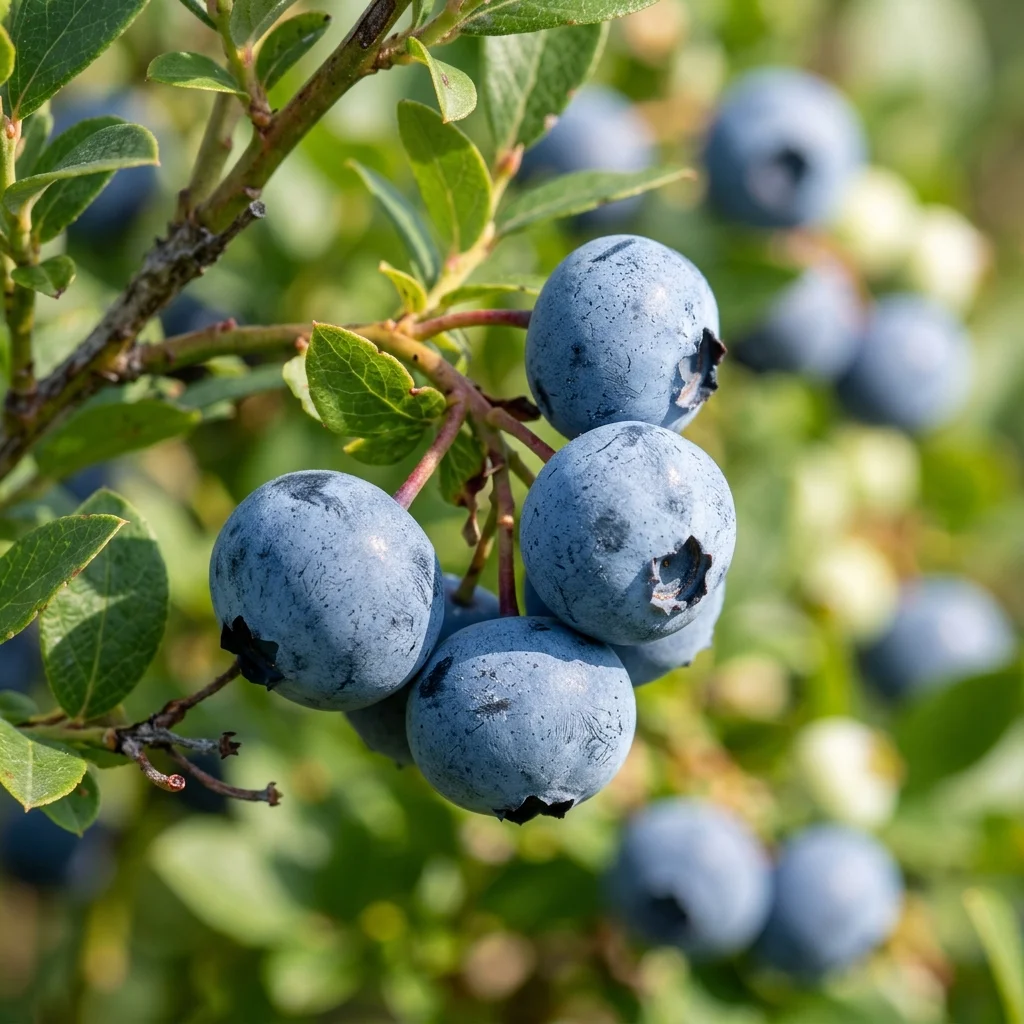
Botanical macro photography of Blueberry (Vaccinium corymbosum) - Plant AI care database

How to Identify Blueberry

Blueberry (Vaccinium corymbosum) is a highly valued edible crop globally. Recognizing its definitive vegetative and fruit/vegetable structures is key to successful companion growing and harvesting.

  • Key Visual Features: Woody deciduous branching shrubs (3-8 feet tall) with smooth grey-brown bark.
  • Leaf & Stems: Leathery, oval dark green leaves turning brilliant fiery red in autumn; white urn-shaped flowers.
  • Fruit/Edible Part: Hanging clusters of globose berries (1-2 cm) with a distinct crown-like calyx and dusty blue wax bloom.
💡 Plant AI Tip: Snap a photo with Plant AI to identify garden veggies and diagnose leaf spot diseases in 1 second.

Complete Growing & Harvesting Guide

Follow our detailed scientific agricultural cultivation guide to keep your Blueberry thriving and high-yielding.

Requires 1-2 inches of water weekly. Blueberries have shallow root systems and dry out quickly; mulch heavily.
Prune in late winter once established. Remove wood older than 6 years, dead branches, and low twiggy growth.
Apply acidifying organic fertilizer (like cottonseed meal or ammonium sulfate) in early spring. Avoid nitrate fertilizers.
Prefers full, direct sunlight for 6-8 hours daily to produce maximum sugars and heavy berry crops.
Mandatorily requires extremely acidic, organic-rich, sandy peat soil with pH 4.5-5.0. Will die in alkaline soil.
Amend soil heavily with sphagnum peat moss and pine bark. Plant two different varieties nearby for cross-pollination.
Broadly hardy. Requires winter chill hours (depending on variety) to break dormancy and set spring flower buds.
Space blueberry shrubs 4-5 feet apart to allow full mature rounding and adequate air circulation.
Birds are the primary pest; they will strip bushes clean. Protect with secure overhead mesh netting.
Susceptible to Mummy Berry (fungal) and iron chlorosis (yellow leaves from alkaline soil pH).
Harvest when berries are fully blue to the stem, soft to touch, and separate easily. Blue wax coating is natural.

Is your Blueberry leaves turning yellow, spotted or dying?

Protect your kitchen garden. Take a photo with Plant AI to diagnose pests and crop diseases instantly.

Diagnose My Crop

Common Diseases & Treatment

Iron Chlorosis

Symptoms: Young leaves turn bright yellow while leaf veins remain dark green, indicating the plant cannot absorb iron.

Action: Test soil pH instantly. Apply agricultural sulfur to lower pH below 5.0 and apply chelated iron.

Mummy Berry (Fungal)

Symptoms: Developing berries turn pinkish-tan, shrivel up, harden into grey 'mummies', and drop to the ground.

Action: Rake and remove all fallen mummies in autumn, apply fresh pine bark mulch, and spray with organic fungicide.

Frequently Asked Questions

Why is my blueberry bush leaves turning yellow?

This is almost always caused by iron chlorosis due to high soil pH (above 5.2). Apply sulfur to acidify the soil immediately.

Do I need to plant two different blueberry bushes?

Yes. While some varieties are self-fertile, cross-pollinating two different cultivars yields significantly larger, sweeter berries.

How long does it take for a blueberry bush to bear fruit?

Young bushes will produce a few berries in their 2nd year. Full commercial harvest is achieved by the 5th to 6th year.

Are blueberries safe for dogs?

Yes! Blueberries are a fantastic, healthy, low-calorie antioxidant treat for dogs. The foliage is also completely non-toxic.

Harvest bountiful greens. Grow healthy edibles today!

Get Started for Free