Brassica oleracea var. gemmifera

Brussels Sprout Growing & Harvesting Guide

Brussels Sprout (Brassica oleracea var. gemmifera) is the striking, heavy-yielding architectural marvel of the winter garden. Famously producing miniature cabbage-like buds clustered along a tall, sturdy central stalk, this cold-loving brassica develops sweet, nutty flavors under deep frost.


Sunlight Icon
Sunlight Full Sun (6+ hours)
Watering Icon
Watering Deep / Regular
Soil Mix Icon
Soil pH Rich, Moisture-Retentive (pH 6.5-7.5)
Temperature Icon
Target Temp 7°C - 21°C
Toxicity Warning Icon
Toxicity Pet Friendly (Non-toxic)
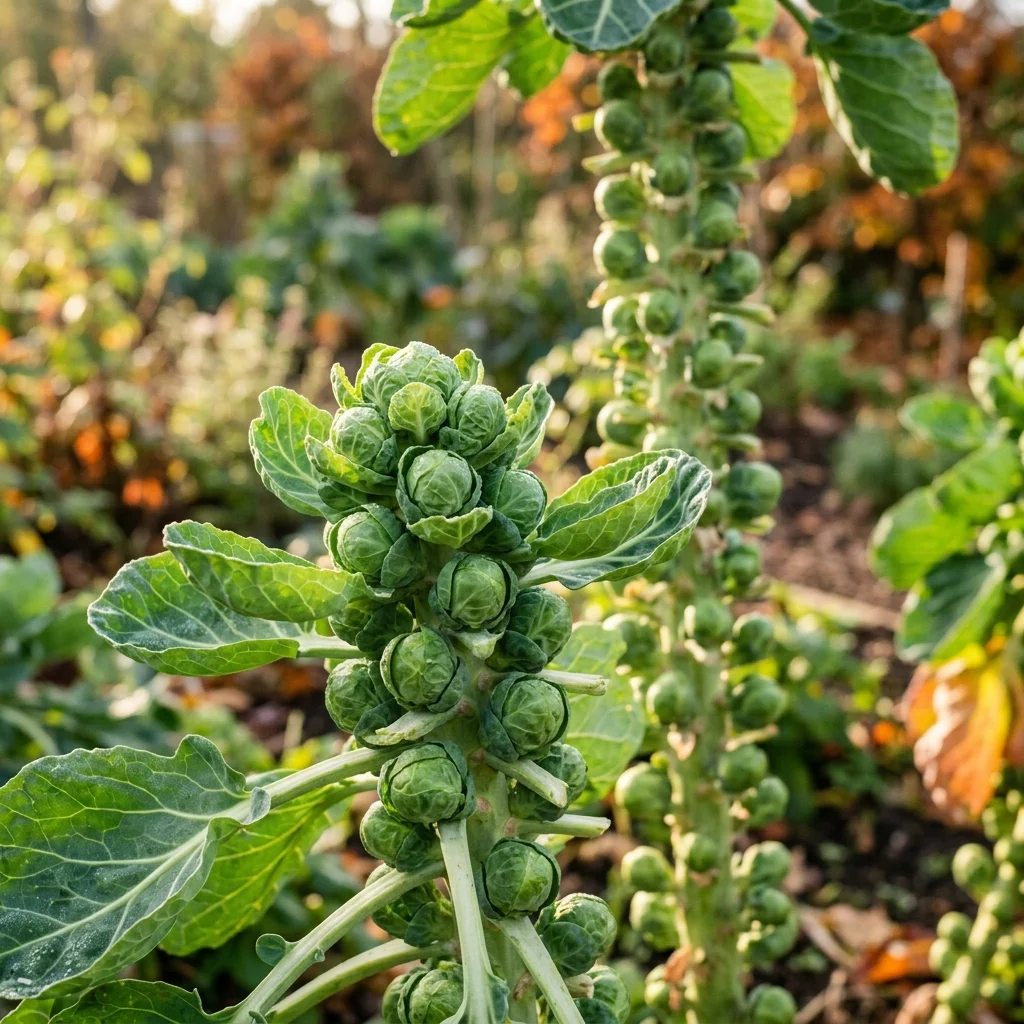
Botanical macro photography of Brussels Sprout (Brassica oleracea var. gemmifera) - Plant AI care database

How to Identify Brussels Sprout

Brussels Sprout (Brassica oleracea var. gemmifera) is a highly valued edible crop globally. Recognizing its definitive vegetative and fruit/vegetable structures is key to successful companion growing and harvesting.

  • Key Visual Features: Tall, upright, woody-stemmed herbaceous plants growing up to 3 feet high.
  • Leaf & Stems: Broad, bluish-green long-petioled leaves radiating out from a central thick stalk.
  • Fruit/Edible Part: Dozens of small, compact, miniature cabbage-like buds nestled in leaf axils along the main stalk.
💡 Plant AI Tip: Snap a photo with Plant AI to identify garden veggies and diagnose leaf spot diseases in 1 second.

Complete Growing & Harvesting Guide

Follow our detailed scientific agricultural cultivation guide to keep your Brussels Sprout thriving and high-yielding.

Requires consistent deep watering. Keep soil consistently moist but never waterlogged. Mulch heavily to retain moisture.
Prune away lower leaves as you harvest sprouts from the bottom up. Perform 'topping' by cutting the main growing tip 4 weeks before harvest.
Apply balanced organic vegetable fertilizer rich in nitrogen and potassium every 3-4 weeks. Extremely sensitive to boron deficiency.
Requires full sun, demanding 6+ hours of direct light daily. Shaded stalks will produce loose, leafy, non-heading sprouts.
Needs deep, heavy, fast-draining clay loam rich in organic compost (pH 6.5-7.5) with high moisture-retention capacity.
Sow indoors 12-16 weeks before first fall frost. Transplant outdoors in early summer to ensure long growing season.
Thrives in cool climates. Ideal temperature range is 7°C-21°C. Highly frost-tolerant; deep frost dramatically improves sprout sweetness.
Space plants 24-30 inches apart in rows spaced 3 feet apart. Tall stalks need ample room and wind protection.
Prone to cabbage aphids, loopers, and thrips. Use organic neem oil or predatory insects proactive to control scale.
Susceptible to Clubroot and Alternaria Leaf Spot. Practice 4-year crop rotation and ensure excellent soil hygiene.
Harvest from the bottom of the stalk upward when sprouts are firm, compact, and 1-1.5 inches wide. Twist off clean.

Is your Brussels Sprout leaves turning yellow, spotted or dying?

Protect your kitchen garden. Take a photo with Plant AI to diagnose pests and crop diseases instantly.

Diagnose My Crop

Common Diseases & Treatment

Alternaria Leaf Spot (Fungal)

Symptoms: Lower leaves and sprouts develop circular, dark brown-black spots with concentric rings, causing leaf drop and bitter sprouts.

Action: Prune lower foliage for airflow, avoid overhead watering, and spray organic copper proactively in humid seasons.

Loose Buds (Physiological)

Symptoms: Sprouts remain loose, open, and leafy instead of forming tight, compact cabbages, ruining harvest quality.

Action: Avoid high temperatures during bud formation, maintain consistent watering, and pinch out the top growing tip in late fall.

Frequently Asked Questions

Why are my Brussels sprouts loose and leafy?

High temperatures during summer or nitrogen over-fertilization cause buds to grow loose. Perform 'topping' in fall to force tight buds.

What is 'topping' and when should I do it?

Topping is pinching out the top growing point. Do this 3-4 weeks before harvest to force the plant to direct all energy into sizing the sprouts.

Do Brussels sprouts survive freezing winter temperatures?

Yes! Brussels sprouts are extremely cold-hardy, surviving temperatures down to -10°C. Frost actually sweetens their flavor.

Are Brussels sprouts safe for pet dogs?

Yes. Brussels sprouts are non-toxic and pet-safe in small quantities. Steam lightly before feeding to avoid stomach gas.

Harvest bountiful greens. Grow healthy edibles today!

Get Started for Free