Sechium edule

Chayote Growing & Harvesting Guide

Chayote (Sechium edule), the prolific climbing pear-squash of the tropics, is an incredibly high-yielding perennial crop. Prized for its mild succulent fruits and edible tubers, this unique viviparous cucurbit grows from a whole germinated fruit planted directly into deeply worked soils.


Sunlight Icon
Sunlight Full Sun / Partial Shade
Watering Icon
Watering Consistent / Deep
Soil Mix Icon
Soil pH Loose, Sandy Loam (pH 6.0-6.8)
Temperature Icon
Target Temp 20°C - 30°C
Toxicity Warning Icon
Toxicity Pet Friendly (Non-toxic)
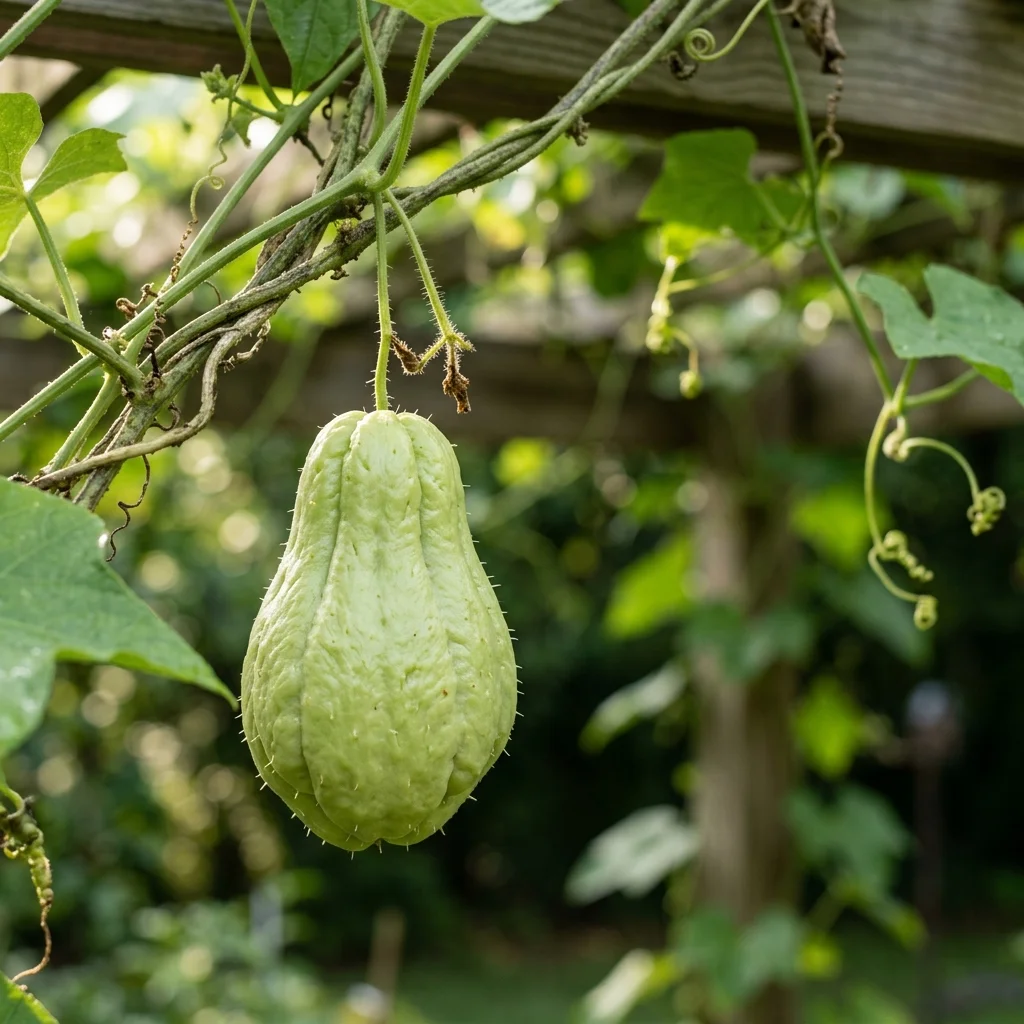
Botanical macro photography of Chayote (Sechium edule) - Plant AI care database

How to Identify Chayote

Chayote (Sechium edule) is a highly valued edible crop globally. Recognizing its definitive vegetative and fruit/vegetable structures is key to successful companion growing and harvesting.

  • Key Visual Features: Vigorous perennial climbing vine with hairy, heart-shaped or angular leaves.
  • Leaf & Stems: Strong coiled tendrils; small, greenish-white unisexual blossoms.
  • Fruit/Edible Part: Pear-shaped, pale green succulent fruit with shallow wrinkles, containing a single large flat seed.
💡 Plant AI Tip: Snap a photo with Plant AI to identify garden veggies and diagnose leaf spot diseases in 1 second.

Complete Growing & Harvesting Guide

Follow our detailed scientific agricultural cultivation guide to keep your Chayote thriving and high-yielding.

Water deeply and regularly, keeping soil consistently moist but never soggy. Chayote is highly prone to root rot in clay.
Prune away weak lateral stems. At the end of winter, cut the entire vine back to 3 feet from the base to rejuvenate growth.
Apply generous compost manure at planting. Side-dress with balanced organic granular food every 6 weeks.
Requires warm full sun (6+ hours daily) for optimal flowering, but tolerates very light afternoon shade in searing hot climates.
Demands extremely loose, deep, compost-rich sandy loam with excellent drainage to prevent tuberous root rot (pH 6.0-6.8).
Plant the entire germinated chayote fruit (viviparous seed) flat in the soil, leaving the sprouted stem end exposed above soil level.
Thrives in subtropical to tropical climates. Highly sensitive to frost; protect root crown with deep straw mulch in winter.
Plant vines 6 to 8 feet apart. A heavy-duty overhead horizontal arbor or trellis is mandatory to support the massive vine weight.
Prone to aphids, spider mites, and whiteflies. Treat vine foliage proactively with organic insecticidal soap.
Susceptible to Powdery Mildew and Root Rot. Ensure excellent soil drainage and wide spacing for cross-ventilation.
Harvest in late autumn when the pear-shaped green fruits are about 4 to 6 inches long and slightly soft to pressure.

Is your Chayote leaves turning yellow, spotted or dying?

Protect your kitchen garden. Take a photo with Plant AI to diagnose pests and crop diseases instantly.

Diagnose My Crop

Common Diseases & Treatment

Root Rot (Phytophthora)

Symptoms: Vine foliage turns yellow and wilts rapidly; base stems and roots become brown, mushy, and exude a sour rotting odor.

Action: Improve soil drainage immediately, elevate planting beds, and apply preventative organic Bacillus subtilis drench.

Leaf Spot (Cercospora)

Symptoms: Foliage develops small, circular brown spots with gray centers, leading to leaf drying under humid weather.

Action: Remove infected lower leaves, maximize canopy airflow, and apply organic copper fungicide proactively.

Frequently Asked Questions

What does viviparous seed mean for chayote?

Unlike most plants, chayote seeds sprout while still inside the mature fruit. You must plant the entire whole fruit to grow a new vine.

Are the roots and leaves of chayote edible?

Yes! Chayote is entirely edible. The tender young vine shoots make delicious greens, and the mature underground tubers can be cooked like potatoes.

Why is my chayote vine growing huge but not flowering?

Chayote is a short-day plant. It only begins to flower and set fruit when day lengths shorten significantly in late summer and early autumn.

Is chayote safe for cats and dogs?

Yes! Chayote fruit is entirely non-toxic to pets. It can be served boiled and unseasoned as a healthy, hydrating snack.

Harvest bountiful greens. Grow healthy edibles today!

Get Started for Free