Cucumis sativus

Cucumber Growing & Harvesting Guide

Cucumber (Cucumis sativus) is the refreshing, crisp classic of the home vegetable garden. Highly valued for its hydrating fruits and high yield, this popular cucurbit thrives in warm weather, requiring robust trellis support and consistent soil moisture to prevent bitter fruit development.


Sunlight Icon
Sunlight Full Sun (6+ hours)
Watering Icon
Watering Consistent / High
Soil Mix Icon
Soil pH Fertile, Moist, Fast-Draining (pH 6.0-6.8)
Temperature Icon
Target Temp 18°C - 32°C
Toxicity Warning Icon
Toxicity Pet Friendly (Non-toxic)
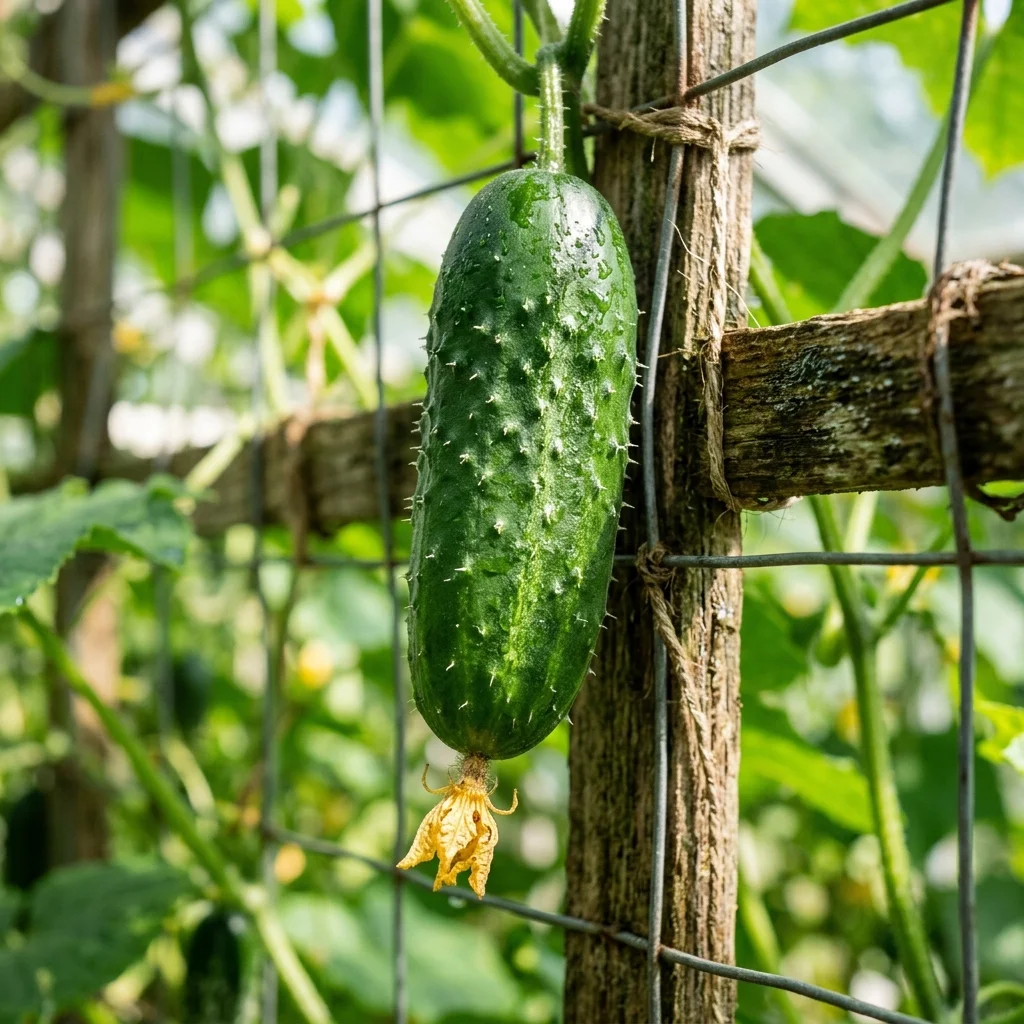
Botanical macro photography of Cucumber (Cucumis sativus) - Plant AI care database

How to Identify Cucumber

Cucumber (Cucumis sativus) is a highly valued edible crop globally. Recognizing its definitive vegetative and fruit/vegetable structures is key to successful companion growing and harvesting.

  • Key Visual Features: Climbing annual vine with hairy stems, rough triangular leaves, and clinging tendrils.
  • Leaf & Stems: Bright yellow five-lobed flowers, both male and female on the same plant (monoecious).
  • Fruit/Edible Part: Elongated, cylindrical green fruit with crisp, watery flesh and numerous small seeds.
💡 Plant AI Tip: Snap a photo with Plant AI to identify garden veggies and diagnose leaf spot diseases in 1 second.

Complete Growing & Harvesting Guide

Follow our detailed scientific agricultural cultivation guide to keep your Cucumber thriving and high-yielding.

Provide 1 inch of water weekly. Keep soil evenly moist. Fluctuating water triggers cucurbitacin, causing fruit to become bitter.
Prune suckers and lateral branches up to the first 4 nodes to direct energy into primary fruit set and improve air circulation.
Apply balanced low-nitrogen organic compost at planting, followed by potassium-rich feed once yellow flowers open to boost fruit size.
Requires full sun, minimum 6 to 8 hours daily. Vital for high photosynthesis and rapid flowering.
Prefers highly fertile, organic sandy loam that retains moisture yet drains exceptionally well (pH 6.0-6.8).
Sow seeds 1 inch deep indoors in biodegradable pots or direct sow after all frost has passed, spaced 12 inches apart.
Thrives in warm summer climates. Growth stalls below 15°C; protect young seedlings from sudden late frost.
Space plants 12 inches apart. Providing strong vertical trellises keeps fruits off the ground, avoiding yellow spot rot.
Watch for cucumber beetles and aphids. Handpick beetles and spray organic neem oil under the leaves.
Highly susceptible to Powdery Mildew and Bacterial Wilt. Water the base soil directly, keeping leaves dry.
Harvest before fruits turn yellow. Yellowing indicates overripeness, woodiness, and high bitter chemical concentrations.

Is your Cucumber leaves turning yellow, spotted or dying?

Protect your kitchen garden. Take a photo with Plant AI to diagnose pests and crop diseases instantly.

Diagnose My Crop

Common Diseases & Treatment

Powdery Mildew (Podosphaera)

Symptoms: Leaves develop white, powdery fungal spots on surfaces, leading to foliage drying up and premature leaf drop.

Action: Ensure wide spacing for air movement, water soil directly, and apply proactive organic potassium bicarbonate spray.

Bacterial Wilt (Erwinia)

Symptoms: Vines wilt rapidly during midday heat and fail to recover at night, caused by cucumber beetle vascular blockage.

Action: No cure once infected. Control cucumber beetle vectors proactively and destroy infected vines immediately.

Frequently Asked Questions

Why are my cucumbers tasting extremely bitter?

Bitterness is caused by cucurbitacin compounds, triggered by environmental stress such as drought, high heat, or irregular watering.

Why are my cucumber flowers falling off without producing fruit?

Early flowers are usually male. Female flowers (identifiable by a tiny cucumber base) will follow once insect pollinators are active.

Should I grow cucumbers on a trellis or let them sprawl?

Growing vertically on a trellis is highly recommended. It saves garden space, prevents soil rots, and results in straighter, cleaner cucumbers.

Are cucumbers safe for cats and dogs to eat?

Yes! Cucumbers are entirely non-toxic to pets. They make a crunchy, low-calorie, hydrating treat for dogs and cats in moderation.

Harvest bountiful greens. Grow healthy edibles today!

Get Started for Free