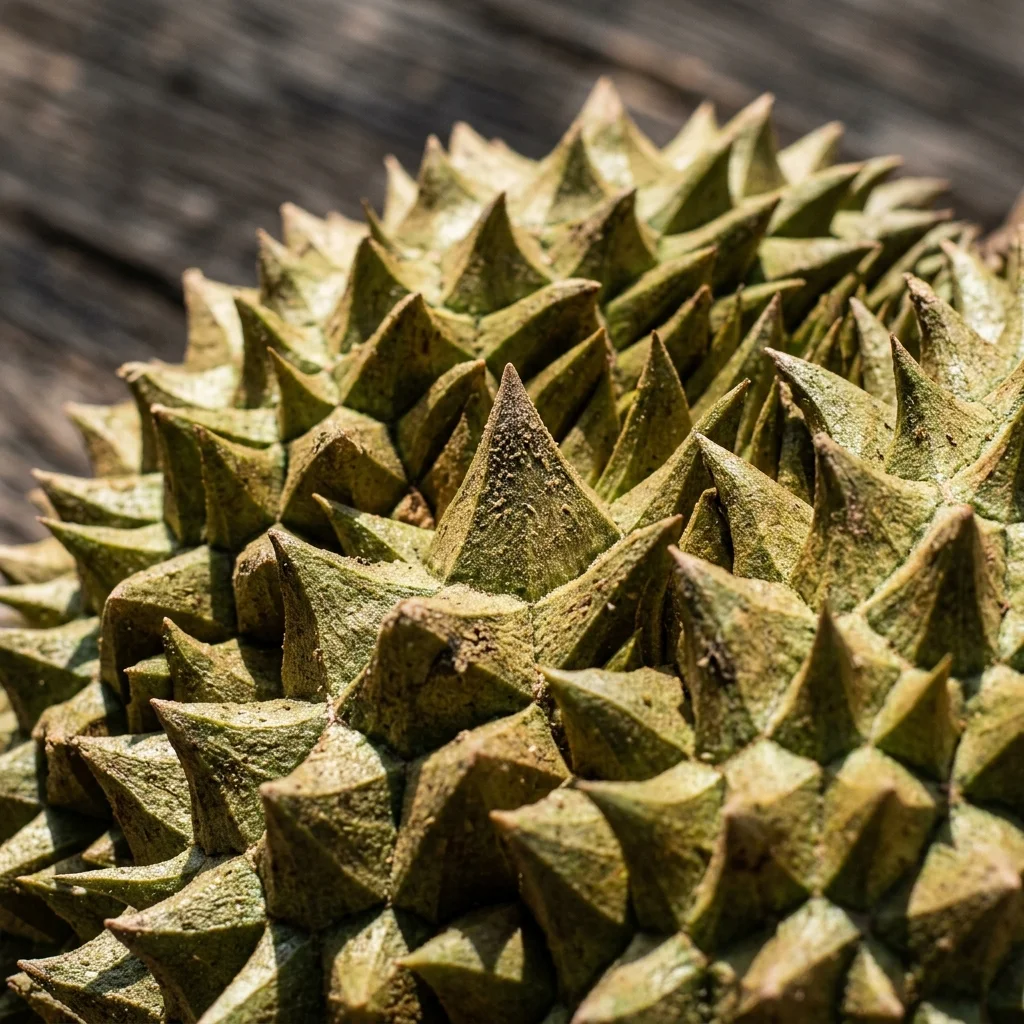
Durio zibethinus

Durian Growing & Harvesting Guide

Durian (Durio zibethinus), the colossal and highly controversial 'King of Fruits' of Southeast Asia, is a legendary tropical tree. Renowned for its rich, custard-like garlic-sweet flesh and formidable spiky husk, this giant evergreen demands warm tropical climates, deep clay-loam, and net-drop harvesting.


Sunlight Icon
Sunlight Full Sun (6+ hours)
Watering Icon
Watering High / Regular
Soil Mix Icon
Soil pH Rich, Clay-Loam, Deep-Draining (pH 5.5-6.5)
Temperature Icon
Target Temp 24°C - 38°C
Toxicity Warning Icon
Toxicity Pet Friendly (Non-toxic)
Botanical macro photography of Durian (Durio zibethinus) - Plant AI care database

How to Identify Durian

Durian (Durio zibethinus) is a highly valued edible crop globally. Recognizing its definitive vegetative and fruit/vegetable structures is key to successful companion growing and harvesting.

  • Key Visual Features: Huge tropical forest tree growing up to 80 feet with a tall straight trunk.
  • Leaf & Stems: Oblong, glossy green leaves with copper-colored scales on the undersides; massive flower clusters.
  • Fruit/Edible Part: Large, oval olive-green fruit covered in thick, sharp, woody pyramid-shaped spikes.
💡 Plant AI Tip: Snap a photo with Plant AI to identify garden veggies and diagnose leaf spot diseases in 1 second.

Complete Growing & Harvesting Guide

Follow our detailed scientific agricultural cultivation guide to keep your Durian thriving and high-yielding.

Requires regular high watering, delivering 2 inches of water weekly. Maintain consistent moisture, but dry soil slightly before harvest to concentrate sugars.
Prune young trees to establish a single central leader stem with strong, horizontal scaffolding branches.
Heavy feeder. Apply balanced organic fruit tree fertilizer quarterly, rich in potassium and magnesium during fruiting years.
Demands absolute full sun, requiring 6+ hours daily. Vital to ripen the massive, heavy fruit clusters high in canopy.
Thrives in deep, rich, deeply aerated clay loam or silt loam with excellent internal drainage (pH 5.5-6.5).
Plant grafted cultivars (like Musang King or Monthong). Sapling requires shading for the first 2 years.
Strictly tropical. Ideal temperature is 24°C to 38°C; leaves drop below 18°C and freeze kills the giant tree completely.
Space trees 30 to 40 feet apart. Plant in deep soils; durian has a extensive anchoring root system.
Prone to durian fruit borers and phytophthora stem canker. Hang protective fruit nets to catch falling ripe fruits.
Highly susceptible to Phytophthora Patch Canker. Avoid waterlogging and maintain dry root crowns.
Do not cut fruits. Harvest only when the giant fruits ripen completely, naturally falling from the high branches.

Is your Durian leaves turning yellow, spotted or dying?

Protect your kitchen garden. Take a photo with Plant AI to diagnose pests and crop diseases instantly.

Diagnose My Crop

Common Diseases & Treatment

Patch Canker (Phytophthora palmivora)

Symptoms: Tree bark cracks and bleeds a dark reddish-brown sticky sap; leaves turn yellow, shrivel, and branches die back.

Action: Improve soil drainage, apply protective organic Bacillus drench, scrape bark cankers, and inject phosphorus acid.

Durian Fruit Rot (Phytophthora)

Symptoms: Developing spiky fruits develop large, fuzzy brown rot patches between the spikes, leading to early sour rotting fruit drop.

Action: Keep base soil clear of old mulch, prune lower branches for wind movement, and spray copper fungicide proactively.

Frequently Asked Questions

Why is durian harvested only when it falls naturally?

True, premium durian flavor is only achieved when the fruit ripens fully on the tree and drops naturally. Cutting early yields firm, starch-heavy pulp.

What causes the unique, intense aroma of durian?

The aroma is caused by volatile sulfur compounds (giving a custard-onion-garlic scent) combined with esters (giving fruitiness).

How can I protect my durian tree from Phytophthora patch canker?

Phytophthora is the durian's worst enemy. Plant in raised beds with sharp drainage, avoid clay waterlogging, and keep bark dry.

Is durian pulp safe for pet cats and dogs?

Yes! The soft custard-like pulp of durian is non-toxic to pets. (Note: Due to high fat, sugar, and sulfur content, feed only in tiny amounts).

Harvest bountiful greens. Grow healthy edibles today!

Get Started for Free