Grape Growing & Harvesting Guide
Grape (Vitis vinifera), the woody climbing soul of the vineyard, is the ultimate perennial fruit vine. highly valued for its large, hand-shaped foliage and heavy hanging clusters of sweet, juicy berries, this long-lived vine is a garden masterpiece.





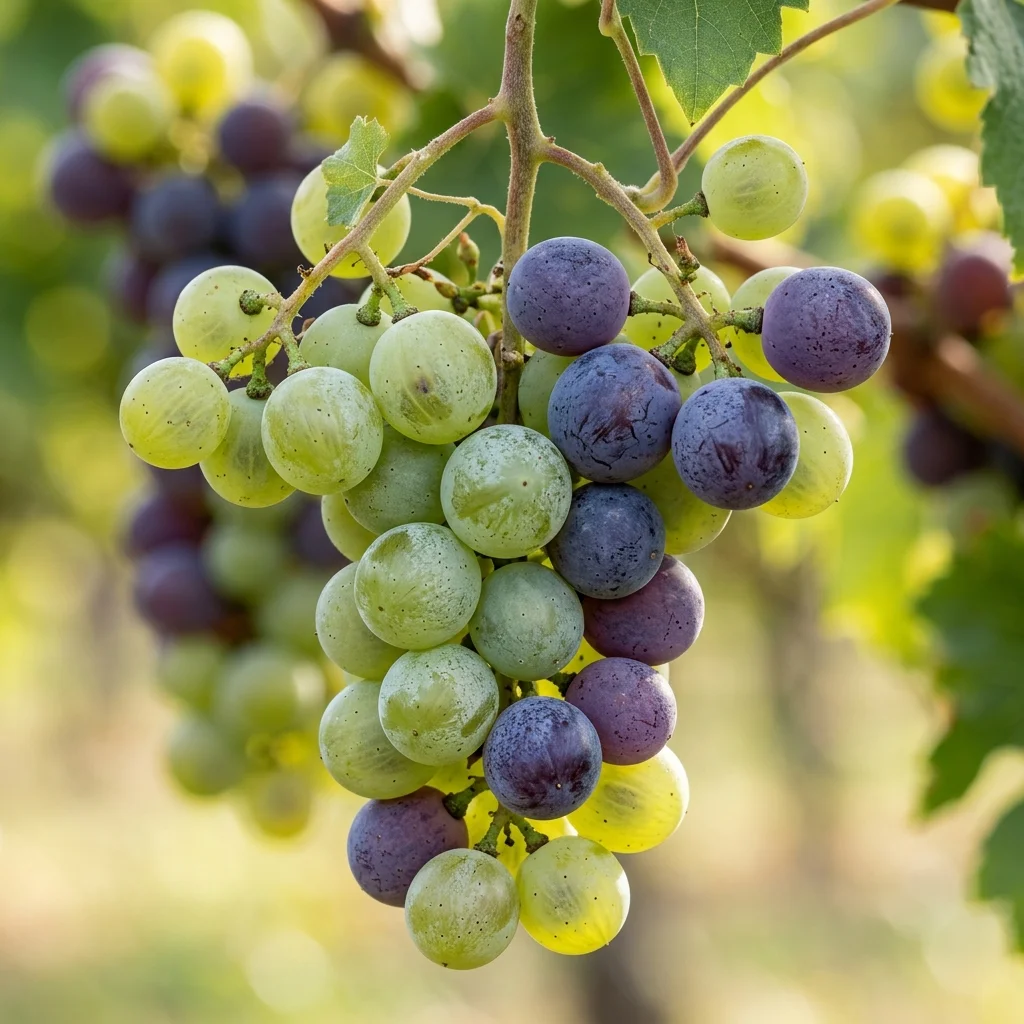
How to Identify Grape
Grape (Vitis vinifera) is a highly valued edible crop globally. Recognizing its definitive vegetative and fruit/vegetable structures is key to successful companion growing and harvesting.
-
✔
Key Visual Features: Woody, long-lived perennial vines climbing aggressively via wrapping green tendrils.
-
✔
Leaf & Stems: Large, palmately lobed green leaves with coarsely toothed margins; small green panicles of flowers.
-
✔
Fruit/Edible Part: Hanging clusters of globose or oval sweet berries (green, red, or dark purple) covered in natural bloom.
Complete Growing & Harvesting Guide
Follow our detailed scientific agricultural cultivation guide to keep your Grape thriving and high-yielding.
Common Diseases & Treatment
Black Rot (Fungal)
Symptoms: Fruits turn light brown, shrivel rapidly into hard black wrinkled mummies, and leaf spots appear with black dots.
Downy Mildew
Symptoms: Yellowish, oily spots appear on top of leaves, with a white fuzzy fungal growth forming underneath in humid weather.
Frequently Asked Questions
How heavily should I prune my grapevine?
Heavily! Pruning removes up to 90% of last year's wood. Grapes only bear fruit on shoots grown from the previous year's canes.
Why are my grapes small and sour?
Usually caused by high crop load (over-fruiting) or low sunlight. Thin out some grape clusters in early summer to boost size.
How long do grapevines live and produce?
Grapevines are exceptionally long-lived and can continue to produce abundant sweet fruit crops for 50 to 100+ years if cared for.
Are grapes toxic to dogs?
Yes! Grapes and raisins are highly toxic to dogs, causing acute and irreversible kidney failure even in small quantities.