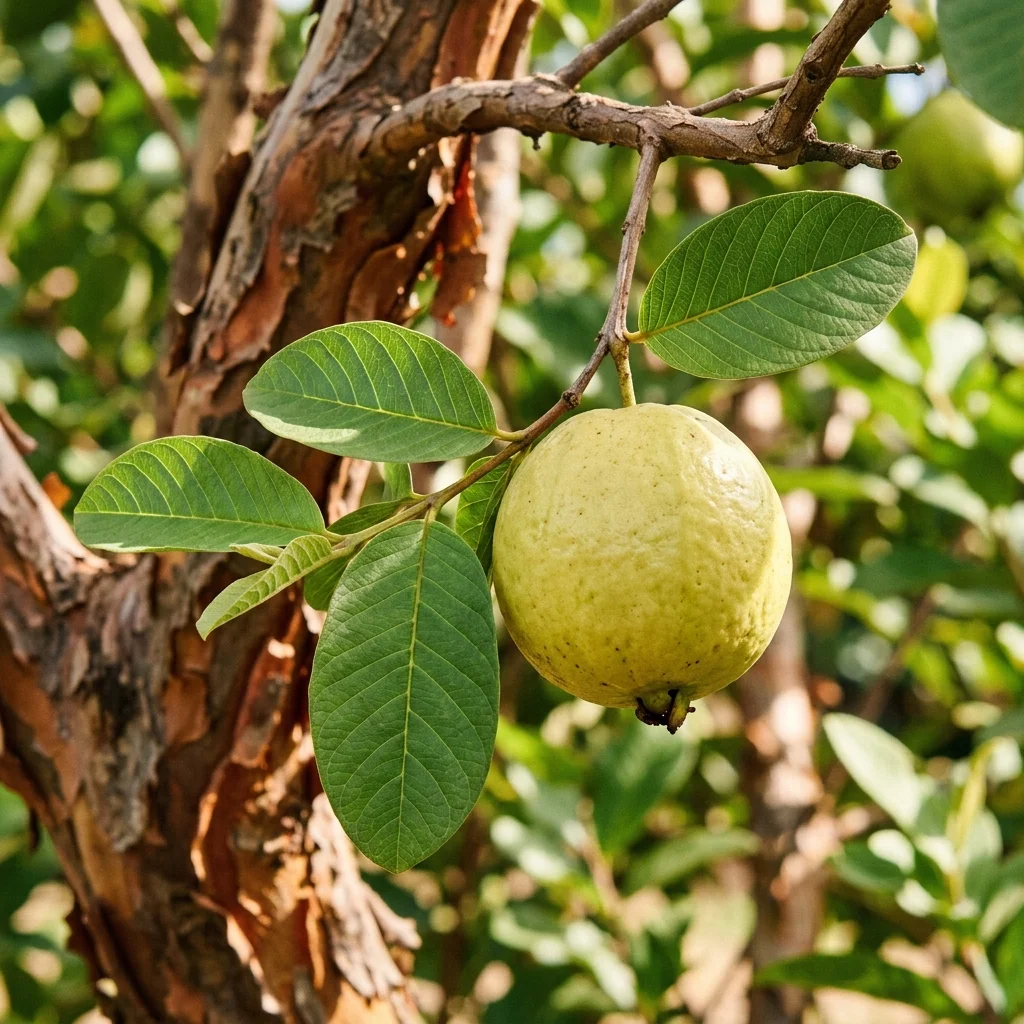
Psidium guajava

Guava Growing & Harvesting Guide

Guava (Psidium guajava) is the fragrant, highly hardy marvel of the tropical garden. Famed for its highly aromatic, sweet pink-fleshed round fruits and striking copper-colored peeling bark, this small evergreen tree produces massive crops under intense sun.


Sunlight Icon
Sunlight Full Sun (6-8 hours)
Watering Icon
Watering Deep / Regular
Soil Mix Icon
Soil pH Rich, Adaptable (pH 5.0-7.0)
Temperature Icon
Target Temp 15°C - 38°C
Toxicity Warning Icon
Toxicity Pet Friendly (Non-toxic)
Botanical macro photography of Guava (Psidium guajava) - Plant AI care database

How to Identify Guava

Guava (Psidium guajava) is a highly valued edible crop globally. Recognizing its definitive vegetative and fruit/vegetable structures is key to successful companion growing and harvesting.

  • Key Visual Features: Small evergreen trees or shrubs with copper bark that peels off in smooth sheets.
  • Leaf & Stems: Opposite, elliptic leaves with highly prominent parallel leaf veins; fragrant white blossoms with fuzzy white stamens.
  • Fruit/Edible Part: Round or pear-shaped fruits with rough yellow-green skin, a crown of dried sepals, and highly sweet pink or white pulp.
💡 Plant AI Tip: Snap a photo with Plant AI to identify garden veggies and diagnose leaf spot diseases in 1 second.

Complete Growing & Harvesting Guide

Follow our detailed scientific agricultural cultivation guide to keep your Guava thriving and high-yielding.

Water deeply once a week. Guavas are drought-tolerant but require consistent watering during flowering and fruit development.
Prune annually in late winter. Focus on thinning the inner branches to improve light penetration and keeping the tree compact.
Feed every 2-3 months with balanced organic fruit fertilizer rich in nitrogen, phosphorus, and potassium.
Requires full sun, demanding 6 to 8 hours of direct light daily. Shaded branches result in leggy canopy and low fruit yields.
Extremely adaptable to a wide range of soils. Prefers fertile sandy loam rich in organic compost (pH 5.0-7.0).
Plant in spring in a warm, sheltered location. Mulch highly to retain soil moisture, keeping mulch away from trunk bark.
Thrives in subtropical climates. Mature trees survive brief frost to -1°C, while young trees need protection.
Space trees 10-12 feet apart. Excellent for growing in large containers on warm, sunny patios.
Prone to fruit flies, scale, and whitefly. Spray young leaves with organic horticultural neem oil or wrap developing fruits.
Susceptible to Anthracnose and Guava Wilt. Avoid overhead sprinklers to keep leaves dry.
Harvest when fruits turn from light green to pale yellow, soften slightly to touch, and emit a highly sweet fragrance.

Is your Guava leaves turning yellow, spotted or dying?

Protect your kitchen garden. Take a photo with Plant AI to diagnose pests and crop diseases instantly.

Diagnose My Crop

Common Diseases & Treatment

Guava Anthracnose (Fungal)

Symptoms: Circular, dark brown spots appear on leaves and fruit skins, expanding rapidly and causing fruit to rot and drop early.

Action: Prune for internal air circulation, avoid overhead watering, and spray organic copper fungicide proactively in spring.

Guava Wilt (Fungal)

Symptoms: Leaves turn yellow, curl upward, and drop prematurely. Branches die back, and the entire tree wilts rapidly within weeks.

Action: No cure exists. Purchase only certified wilt-free grafted stock. Maintain neutral soil pH and isolate infected trees.

Frequently Asked Questions

Why is my guava tree dropping its fruit early?

Sudden drought stress, nutrient deficiency, or fruit fly infestations are common causes. Maintain consistent watering and protect fruits.

How many years does guava take to fruit?

Grafted guava trees or cuttings can start producing fruit within 1 to 2 years after spring planting.

Are guava seeds safe to eat?

Yes! Guava seeds are completely edible and contain high dietary fiber, though they are quite hard to chew.

Are guava leaves safe for household pets?

Yes. Guava leaves, bark, and ripe fruits are completely non-toxic and pet-safe according to ASPCA guidelines.

Harvest bountiful greens. Grow healthy edibles today!

Get Started for Free