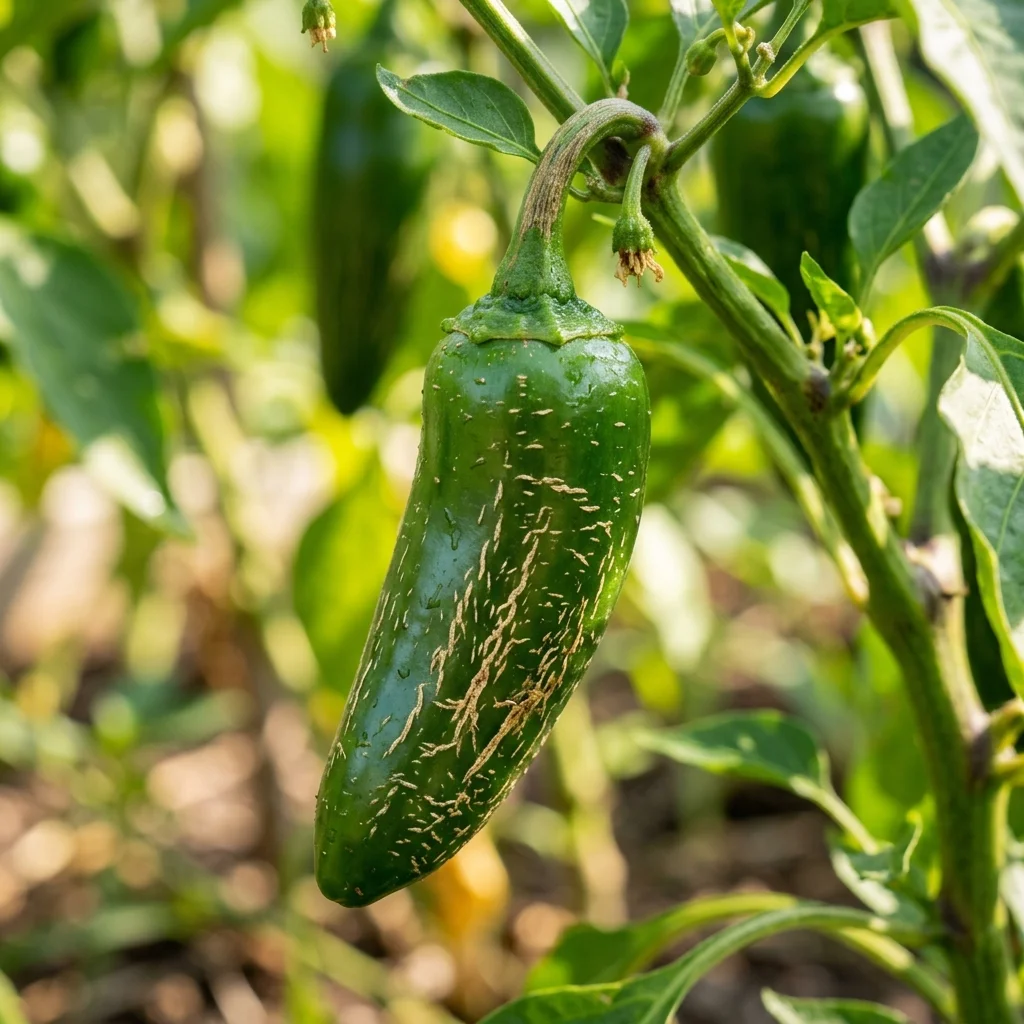
Capsicum annuum 'Jalapeño'

Jalapeno Pepper Growing & Harvesting Guide

Jalapeno Pepper (Capsicum annuum 'Jalapeño') is the iconic spicy spark of the home garden. Famous for producing medium-sized, thick-walled green pods with a moderate, balanced heat (2,500-8,000 Scoville units), this upright compact nightshade is exceptionally high-yielding.


Sunlight Icon
Sunlight Full Sun (6-8 hours)
Watering Icon
Watering Moderate / Drier
Soil Mix Icon
Soil pH Sandy, Rich Soil (pH 6.0-6.8)
Temperature Icon
Target Temp 21°C - 32°C
Toxicity Warning Icon
Toxicity Mild Irritant (Capsaicin)
Botanical macro photography of Jalapeno Pepper (Capsicum annuum 'Jalapeño') - Plant AI care database

How to Identify Jalapeno Pepper

Jalapeno Pepper (Capsicum annuum 'Jalapeño') is a highly valued edible crop globally. Recognizing its definitive vegetative and fruit/vegetable structures is key to successful companion growing and harvesting.

  • Key Visual Features: Stocky, bushy, dark green plants (24-36 inches) with strong branching canopy.
  • Leaf & Stems: Smooth, dark green lanceolate leaves; small white flowers with purple anthers.
  • Fruit/Edible Part: Pendant, cylindrical green pods (2-3 inches long) with rounded tips, sometimes showing stretch marks.
💡 Plant AI Tip: Snap a photo with Plant AI to identify garden veggies and diagnose leaf spot diseases in 1 second.

Complete Growing & Harvesting Guide

Follow our detailed scientific agricultural cultivation guide to keep your Jalapeno Pepper thriving and high-yielding.

Water deeply when the top 1-2 inches of soil feel dry. Do not overwater; slight water stress late in season increases spice.
Prune early flowers to build structure. Stake heavy plants as they load up with dozens of jalapeno pods.
Apply low-nitrogen organic fertilizer every 4 weeks. High nitrogen creates lush leaves but zero spicy pods.
Demands 6-8 hours of direct hot sun daily. Excellent candidate for hot patios and sunny vegetable beds.
Well-drained, sandy loam packed with compost. Jalapeno roots hate soggy, heavy clay soil which causes rot.
Sow seeds indoors 8 weeks before transplanting. Move outdoors only when night temperatures stay consistently above 13°C.
Prefers warm temperatures (21°C-32°C). Cold snaps below 10°C will halt growth and drop developing flowers.
Space jalapeno peppers 18 inches apart in sunny rows to maintain healthy airflow and fast leaf drying.
Prone to aphids, spider mites, and whiteflies. Treat with organic neem oil or insecticidal soap.
Susceptible to tobacco mosaic virus and damping off. Buy disease-resistant seeds and avoid overhead watering.
Harvest when pods are deep green and firm, showing fine tan 'corking' lines (which indicate high spice), or let ripen to sweet-hot red.

Is your Jalapeno Pepper leaves turning yellow, spotted or dying?

Protect your kitchen garden. Take a photo with Plant AI to diagnose pests and crop diseases instantly.

Diagnose My Crop

Common Diseases & Treatment

Tobacco Mosaic Virus

Symptoms: Leaves show light and dark green mottled patterns, curling and distorting; plants stay stunted with poor fruit.

Action: No cure exists. Pull and destroy infected plants immediately; wash hands and tools thoroughly.

Damping Off (Seedlings)

Symptoms: Young seedlings collapse at the soil line, stem turns mushy, and the seedling dies rapidly due to soil fungi.

Action: Use sterile seed starting mix, avoid overwatering, and ensure excellent airflow with fans.

Frequently Asked Questions

What do the brown 'stretch marks' on Jalapenos mean?

These lines are called 'corking.' They indicate rapid growth and are highly prized as a sign of a mature, spicy, high-quality pod.

How can I make my Jalapeno peppers spicier?

Let the soil dry out slightly between waterings once pods form. Mild drought stress triggers the plant to produce more hot capsaicin.

Why are my Jalapenos turning black?

This is a natural transitional color as the pepper ripens from green to red. It is completely normal and safe to eat.

Are Jalapeno peppers toxic to pets?

The foliage contains solanine. The spicy fruit contains capsaicin, which causes severe gastrointestinal irritation and pain in dogs and cats.

Harvest bountiful greens. Grow healthy edibles today!

Get Started for Free