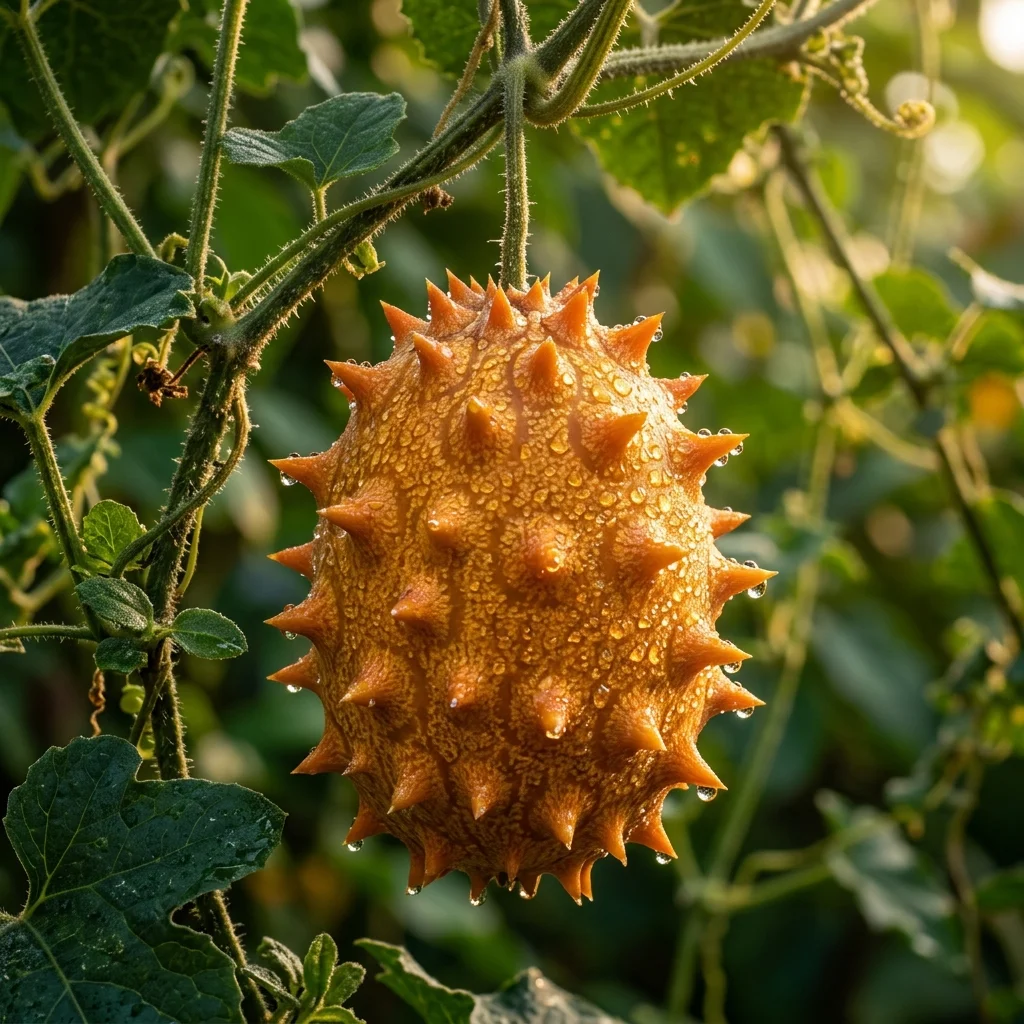
Cucumis metuliferus

Kiwano Growing & Harvesting Guide

Kiwano (Cucumis metuliferus), the exotic spiky horn melon of tropical Africa, is a highly ornamental and flavorful crop to grow. Prized for its jelly-like lime-green pulp and vibrant horned skin, this trailing cucurbit annual demands strong vertical trellising and sharp drainage.


Sunlight Icon
Sunlight Full Sun (6+ hours)
Watering Icon
Watering Moderate / Regular
Soil Mix Icon
Soil pH Rich, Sandy Loam, Aerated (pH 6.0-6.8)
Temperature Icon
Target Temp 20°C - 35°C
Toxicity Warning Icon
Toxicity Pet Friendly (Non-toxic)
Botanical macro photography of Kiwano (Cucumis metuliferus) - Plant AI care database

How to Identify Kiwano

Kiwano (Cucumis metuliferus) is a highly valued edible crop globally. Recognizing its definitive vegetative and fruit/vegetable structures is key to successful companion growing and harvesting.

  • Key Visual Features: Slender, hairy climbing annual vine with coiled tendrils and lobed leaves.
  • Leaf & Stems: Small yellow unisexual blossoms resembling typical cucumber flowers.
  • Fruit/Edible Part: Oval-shaped bright orange-yellow ripe fruit covered in thick, sharp cone-like spikes.
💡 Plant AI Tip: Snap a photo with Plant AI to identify garden veggies and diagnose leaf spot diseases in 1 second.

Complete Growing & Harvesting Guide

Follow our detailed scientific agricultural cultivation guide to keep your Kiwano thriving and high-yielding.

Water regularly, delivering 1 inch of water weekly. Maintain consistent moisture, but reduce water late in the season to prevent fruit split.
Prune away weak lateral stems at the base to direct energy into primary fruit set and enhance wind circulation.
Apply rich organic compost at planting. Side-dress with high-potassium kelp meal once golden flowers begin to open.
Demands absolute full sun, requiring 6+ hours of direct daylight daily to ripen the thick-skinned fruits.
Requires loose, deeply dug sandy loam enriched with organic compost (pH 6.0-6.8). Highly sensitive to waterlogged clay.
Sow seeds 0.5 inch deep directly in warm spring soil, or start indoors in biodegradable pots to prevent root shock.
Warm-season crop. Highly frost-sensitive; growth halts below 15°C and vines perish in freezing conditions.
Space plants 18 inches apart next to a strong vertical trellis or A-frame mesh to suspend heavy horned fruits.
Prone to cucumber beetles, aphids, and spider mites. Proactively treat foliage base with organic neem oil.
Susceptible to Powdery Mildew and Fusarium Wilt. Irrigate at soil level to keep leaves dry.
Harvest when the warty horn rind turns a uniform bright gold-orange, and the fruit feels slightly heavy.

Is your Kiwano leaves turning yellow, spotted or dying?

Protect your kitchen garden. Take a photo with Plant AI to diagnose pests and crop diseases instantly.

Diagnose My Crop

Common Diseases & Treatment

Powdery Mildew (Erysiphe)

Symptoms: Leaf upper surfaces develop white powdery fungal spots, expanding to cover stems and causing early leaf drop.

Action: Ensure wide spacing, prune lower thick foliage for airflow, and apply potassium bicarbonate spray proactively.

Fusarium Root Rot (Fusarium)

Symptoms: Vines wilt rapidly starting from the base leaves; vascular tissues inside the cut stems show brown decay.

Action: Practice strict 3-year crop rotation, utilize raised beds for drainage, and remove infected vines immediately.

Frequently Asked Questions

How does Kiwano horn melon taste?

Kiwano has a refreshing, mildly sweet, and tart taste. The gelatinous green pulp tastes like a combination of cucumber, kiwi, and banana.

Are the spikes on Kiwano fruits dangerous?

Yes. The mature spikes are quite sharp and woody. Wear heavy leather gardening gloves when harvesting and handling mature Kiwano fruits.

Why is my Kiwano fruit splitting open on the vine?

Fruit splitting is caused by a sudden excess of water after a dry spell. Reduce watering once the fruit begins to turn from green to orange.

Is Kiwano horn melon safe for cats and dogs?

Yes! The gelatinous green pulp of Kiwano is completely safe and non-toxic for dogs and cats. (Note: Remove the sharp spiky rind before serving).

Harvest bountiful greens. Grow healthy edibles today!

Get Started for Free