Kohlrabi Growing & Harvesting Guide
Kohlrabi (Brassica oleracea var. gongylodes), the sweet and crispy 'turnip-cabbage' of cool-season plots, is a highly rewarding crop. Prized for its round swollen stem bulb sitting upon the soil line, this resilient brassica demands highly fertile loam, even watering, and cool frost ripening.




How to Identify Kohlrabi
Kohlrabi (Brassica oleracea var. gongylodes) is a highly valued edible crop globally. Recognizing its definitive vegetative and fruit/vegetable structures is key to successful companion growing and harvesting.
-
✔
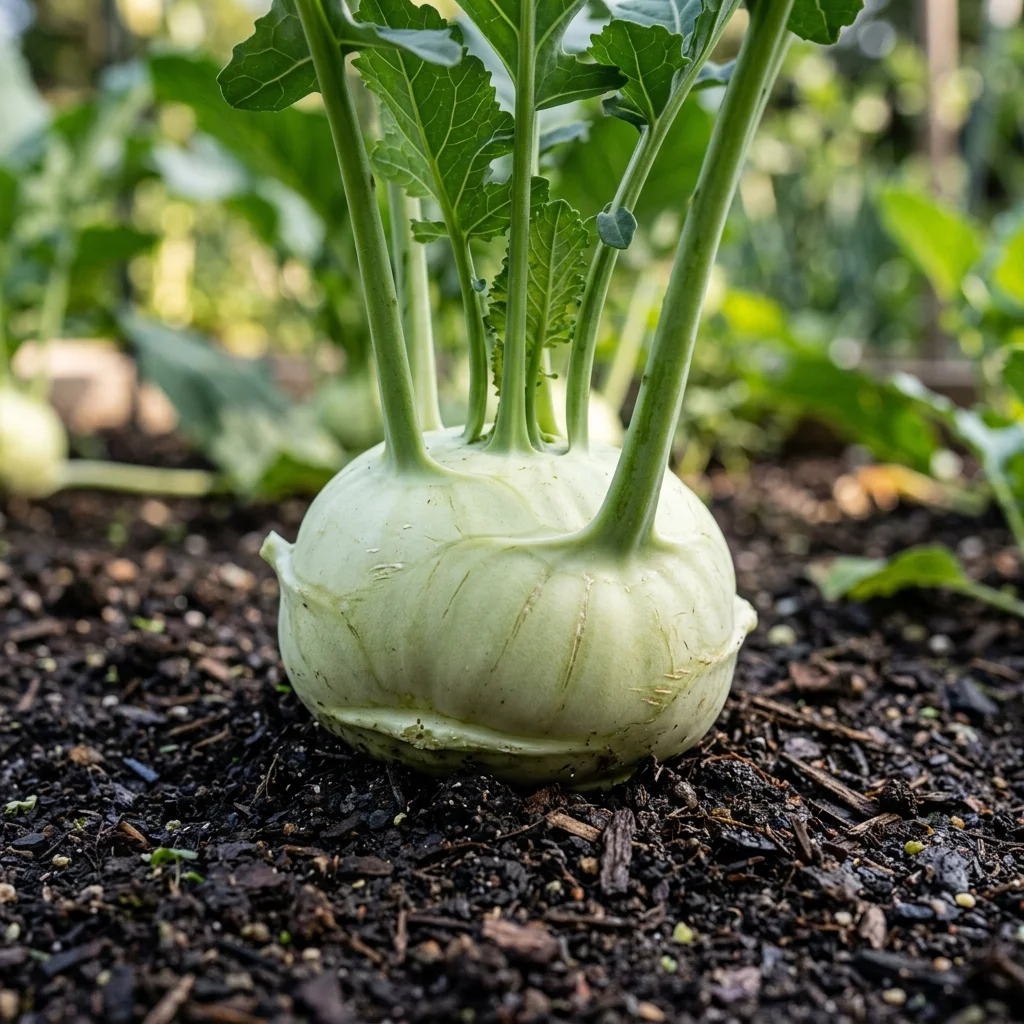
Key Visual Features: Low-growing biennial cole crop with blue-green leaves on long stalks.
-
✔
Leaf & Stems: Large leaves rise directly from a round swollen stem bulb sitting just above the soil.
-
✔
Fruit/Edible Part: Swollen globose light-green or purple stem bulb with a crispy, sweet turnip-like flesh.
Complete Growing & Harvesting Guide
Follow our detailed scientific agricultural cultivation guide to keep your Kohlrabi thriving and high-yielding.
Common Diseases & Treatment
Kohlrabi Black Rot (Xanthomonas)
Symptoms: Leaves develop V-shaped yellow spots along leaf margins; veins inside leaf stems turn black and rot.
Clubroot (Plasmodiophora)
Symptoms: Plant leaves wilt during warm afternoons; subterranean roots develop massive, distorted swollen galls.
Frequently Asked Questions
Why is my kohlrabi bulb tough, woody, and stringy?
This is caused by letting the bulb grow too large (over 3 inches) or exposing the plant to dry spells, which triggers tough wood fiber development.
Can I eat the leaves of the kohlrabi plant?
Yes! Kohlrabi leaves are highly nutritious and delicious. Cook them just like kale, collard greens, or spinach.
When should I plant kohlrabi for the best flavor?
Kohlrabi tastes best when grown in cool weather. Plant in early spring for a summer crop, or late summer to harvest sweet bulbs after autumn frosts.
Is kohlrabi safe for cats and dogs?
Yes! Plain, cooked or raw kohlrabi bulb is completely non-toxic and safe for dogs and cats. (Feed in small amounts to prevent gas).