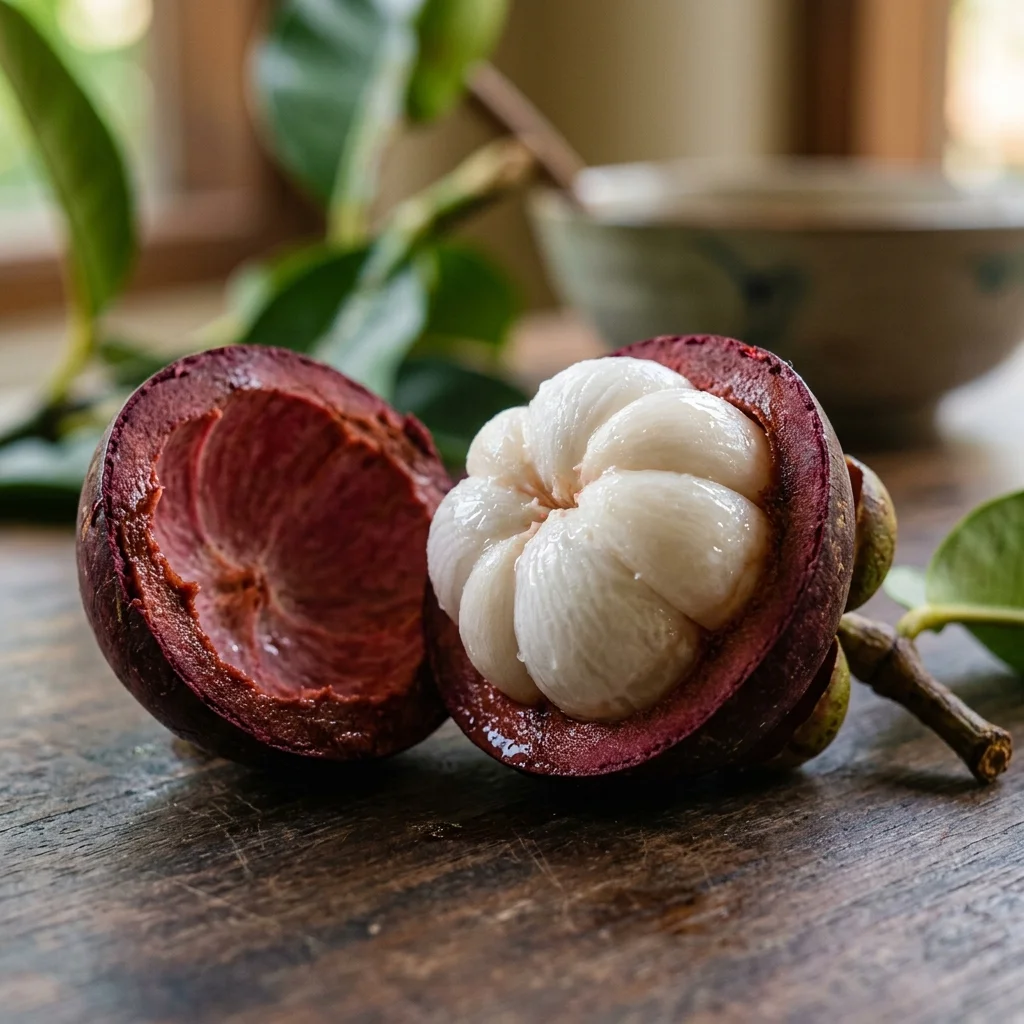
Garcinia mangostana

Mangosteen Growing & Harvesting Guide

Mangosteen (Garcinia mangostana), the legendary 'Queen of Fruits' of the tropical world, is a highly prized exotic tree. Prize-winning for its melting, snow-white segments and thick purple rind, this ultra-tropical evergreen demands high rainfall, shade protection during youth, and constant warm temperatures.


Sunlight Icon
Sunlight Filtered Sun / Partial Shade
Watering Icon
Watering High / Continuous
Soil Mix Icon
Soil pH Acidic, Organic-Rich, Clay Loam (pH 5.5-6.5)
Temperature Icon
Target Temp 22°C - 38°C
Toxicity Warning Icon
Toxicity Pet Friendly (Non-toxic)
Botanical macro photography of Mangosteen (Garcinia mangostana) - Plant AI care database

How to Identify Mangosteen

Mangosteen (Garcinia mangostana) is a highly valued edible crop globally. Recognizing its definitive vegetative and fruit/vegetable structures is key to successful companion growing and harvesting.

  • Key Visual Features: Slow-growing tropical evergreen tree with thick, dark green leathery leaves.
  • Leaf & Stems: Stems yield yellow latex when cut; flowers are fleshy, red-tinged, and unisexual.
  • Fruit/Edible Part: Round fruit with a thick, leathery dark purple rind containing 4 to 8 snow-white segment pulps.
💡 Plant AI Tip: Snap a photo with Plant AI to identify garden veggies and diagnose leaf spot diseases in 1 second.

Complete Growing & Harvesting Guide

Follow our detailed scientific agricultural cultivation guide to keep your Mangosteen thriving and high-yielding.

Requires continuous high watering, delivering 2 inches of water weekly. Highly intolerant of drought; maintain damp soil.
Minimal pruning required. Simply remove dead wood and lower branches that drag on the ground during tropical rains.
Apply highly organic feed (manure, leaf mold) quarterly. Incorporate iron chelates and trace minerals twice a year.
Requires partial shade or filtered sun when young (first 4 years) to prevent leaf sunburn. Mature trees tolerate full sun.
Prefers deep, rich, moisture-retaining clay loam or alluvial soil with high organic compost (pH 5.5-6.5).
Plant saplings carefully. Mangosteen has an extremely fragile taproot; do not disturb the root ball during transplanting.
Strictly tropical. Demands temperatures between 22°C and 38°C; growth halts below 20°C and trees die if exposed to 5°C.
Space trees 20 to 25 feet apart. Plant in high-humidity zones with wind protection to maintain humid microclimates.
Prone to thrips and mites which scar the purple rind. Treat foliage with organic insecticidal soap.
Susceptible to Yellow Latex Seepage (internal fruit rot). Maintain steady soil moisture and avoid boron deficiency.
Harvest by hand when the hard green rind turns a solid dark reddish-purple and yields slightly to thumb pressure.

Is your Mangosteen leaves turning yellow, spotted or dying?

Protect your kitchen garden. Take a photo with Plant AI to diagnose pests and crop diseases instantly.

Diagnose My Crop

Common Diseases & Treatment

Gamboge Disease (Yellow Latex Seepage)

Symptoms: Yellow, bitter latex seeps into the white fruit pulp segments, turning the white flesh yellow, bitter, and hard.

Action: Maintain highly consistent watering, apply calcium and boron trace minerals, and avoid fruit bruising during windstorms.

Root Rot (Pythium)

Symptoms: Tropical leaves drop suddenly; branches die back, and roots become brown, mushy, and rot under stagnant mud.

Action: Avoid stagnant standing water; plant in rich clay loam with drainage, and apply Bacillus subtilis drench.

Frequently Asked Questions

Why does mangosteen take so long to fruit?

Mangosteen is slow-growing. Grafted trees take 5 to 6 years to fruit, while seedling trees can take 8 to 12 years of tropical care.

Why is the root system of mangosteen so fragile?

Mangosteen has a delicate taproot with very few lateral feeder roots. Any root disturbance during transplanting can stunt or kill the sapling.

How can I prevent bitter yellow latex inside the fruits?

Avoid dry spells followed by sudden heavy watering, apply boron fertilizer, and plant trees in wind-sheltered areas to prevent bruising.

Is mangosteen safe for pet cats and dogs?

Yes! The snow-white juicy flesh of mangosteen is completely safe and non-toxic to pets. (Note: Do not let pets chew the bitter purple outer rind).

Harvest bountiful greens. Grow healthy edibles today!

Get Started for Free