Prunus persica var. nucipersica

Nectarine Growing & Harvesting Guide

Nectarine (Prunus persica var. nucipersica) is the sleek, fuzz-free royalty of the stone fruit orchard. Prized for its incredibly sweet, aromatically complex smooth fruits, this compact deciduous tree thrives in sunny climates.


Sunlight Icon
Sunlight Full Sun (6-8 hours)
Watering Icon
Watering Deep / Regular
Soil Mix Icon
Soil pH Rich Sandy Loam (pH 6.0-6.8)
Temperature Icon
Target Temp -15°C - 35°C
Toxicity Warning Icon
Toxicity Toxic to Pets (Seeds/Pit)
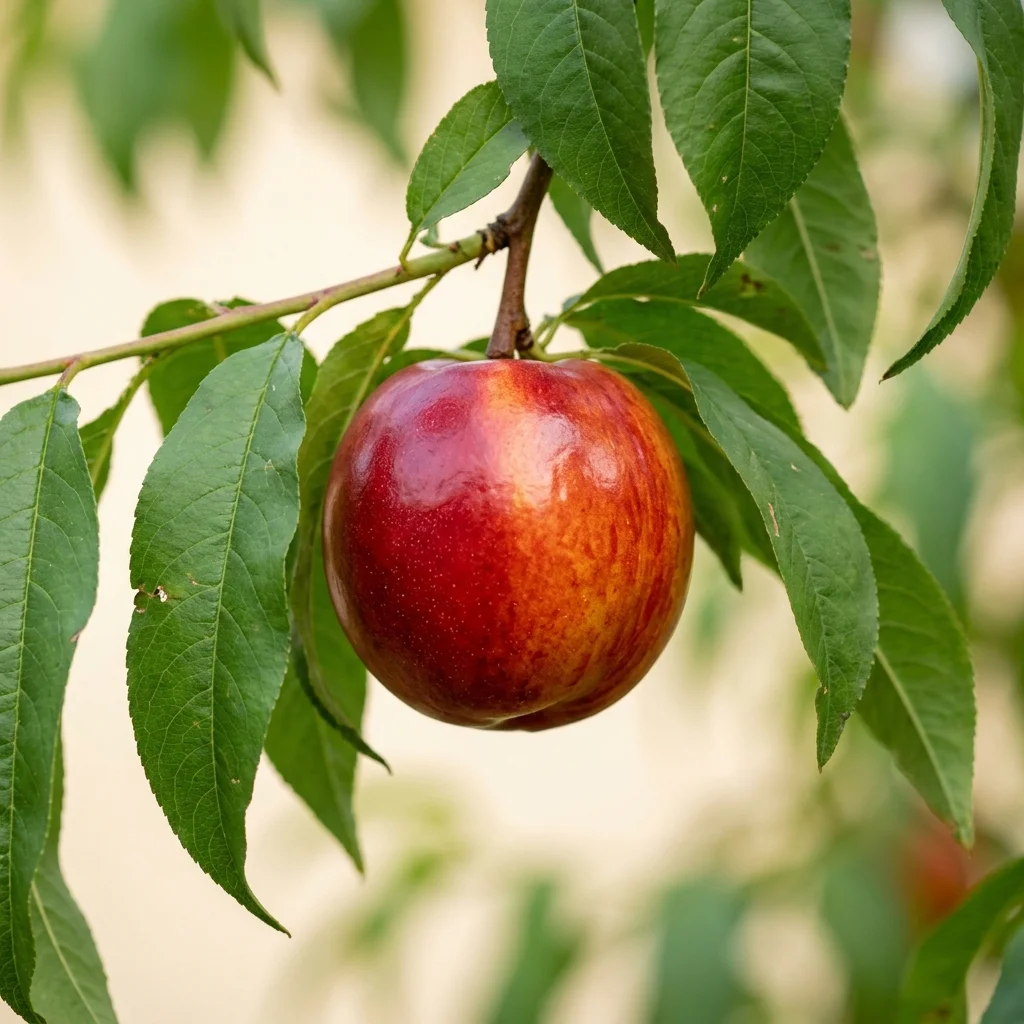
Botanical macro photography of Nectarine (Prunus persica var. nucipersica) - Plant AI care database

How to Identify Nectarine

Nectarine (Prunus persica var. nucipersica) is a highly valued edible crop globally. Recognizing its definitive vegetative and fruit/vegetable structures is key to successful companion growing and harvesting.

  • Key Visual Features: Deciduous small trees with spreading vase-shaped branch habits and dark bark.
  • Leaf & Stems: Long lanceolate green leaves with finely serrated margins; beautiful pink blossoms.
  • Fruit/Edible Part: Smooth, completely fuzz-free glossy drupes with red-yellow skin and sweet stone pit pulp.
💡 Plant AI Tip: Snap a photo with Plant AI to identify garden veggies and diagnose leaf spot diseases in 1 second.

Complete Growing & Harvesting Guide

Follow our detailed scientific agricultural cultivation guide to keep your Nectarine thriving and high-yielding.

Water deeply once every 7-10 days. Maintain stable soil moisture; sudden heavy watering near harvest causes skin splitting.
Prune in late winter. Maintain an open center vase structure to optimize inner canopy light and airflow.
Apply balanced organic fruit tree food in early spring. Avoid excessive nitrogen which delays fruit ripening.
Requires 6-8 hours of direct daily sunlight. Good sunlight ensures sugar accumulation in ripening nectarines.
Deep, fertile sandy loam with excellent organic drainage. Ideal pH is 6.0-6.8.
Plant dormant bareroot saplings in early spring. Mulch the root zone to suppress weeds and retain moisture.
Requires winter chilling. Very cold-hardy once dormant, but protect early blossoms from late frosts.
Space trees 12-15 feet apart. Keep graft union 2-3 inches above soil surface to prevent root rooting.
Prone to peach twig borers, plum curculio, and scale insects. Use organic horticultural oil in winter.
Highly susceptible to Peach Leaf Curl and Brown Rot. Spray copper fungicide proactively in late winter.
Harvest when nectarines turn completely red-yellow, feel soft to a gentle squeeze, and snap easily off twigs.

Is your Nectarine leaves turning yellow, spotted or dying?

Protect your kitchen garden. Take a photo with Plant AI to diagnose pests and crop diseases instantly.

Diagnose My Crop

Common Diseases & Treatment

Peach Leaf Curl (Fungal)

Symptoms: Emerging spring leaves turn thick, puckered, blistered, and reddish-purple, dropping off prematurely.

Action: Spray copper fungicide once in late autumn after leaf drop, and once more in late winter before bud swell.

Brown Rot (Fungal)

Symptoms: Ripening fruits show circular decaying spots that rapidly develop concentric fuzzy tan fungal rings.

Action: Remove and destroy mummified winter fruit, prune branches for airflow, and apply sulphur fungicide.

Frequently Asked Questions

Why do my nectarines have split skins?

Nectarines lack protective fuzz, making them highly vulnerable to splitting during heavy summer rains. Water consistently.

Are nectarines and peaches the same tree?

Nectarines are the exact same species as peaches, differing only by a single recessive gene that makes their skin smooth.

Can I grow a nectarine tree in a pot?

Yes! Choose dwarf varieties (like Garden Beauty) and grow them in 15-gallon pots with plenty of drain holes and compost-rich soil.

Are nectarine pits toxic to dogs?

Yes. Nectarine pits contain amygdalin, which breaks down into cyanide if chewed. Pits also pose a physical obstruction risk.

Harvest bountiful greens. Grow healthy edibles today!

Get Started for Free