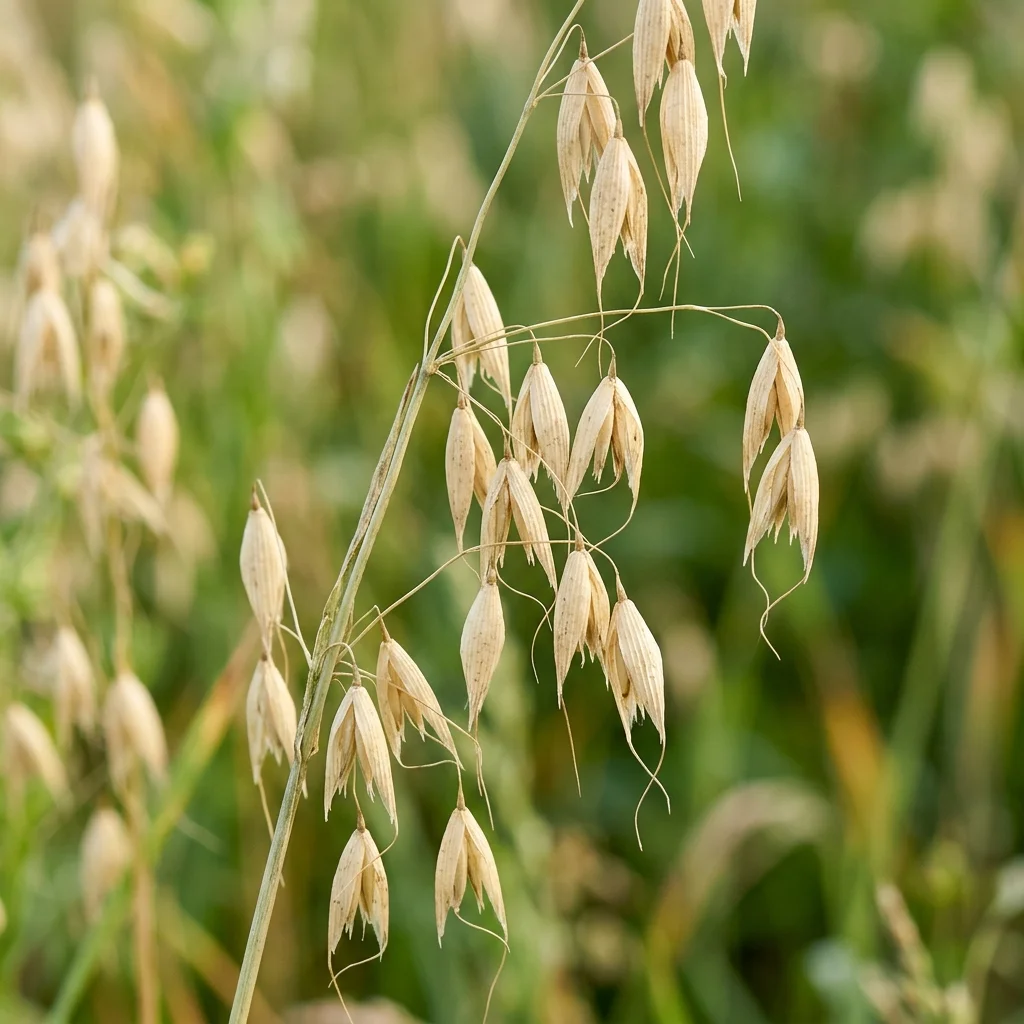
Avena sativa

Oats Growing & Harvesting Guide

Oats (Avena sativa), the highly nutritious cool-climate cereal, is a beautiful grass crop to cultivate. Prizes for its delicate hanging panicles and outstanding heart-healthy grains, this cold-tolerant annual thrives in wet, cool springs where other grains struggle.


Sunlight Icon
Sunlight Full Sun (6+ hours)
Watering Icon
Watering Consistent / High
Soil Mix Icon
Soil pH Moisture-Retentive, Average Loam (pH 5.5-7.0)
Temperature Icon
Target Temp 5°C - 20°C
Toxicity Warning Icon
Toxicity Pet Friendly (Non-toxic)
Botanical macro photography of Oats (Avena sativa) - Plant AI care database

How to Identify Oats

Oats (Avena sativa) is a highly valued edible crop globally. Recognizing its definitive vegetative and fruit/vegetable structures is key to successful companion growing and harvesting.

  • Key Visual Features: Slender, hollow, erect grass stems growing 2 to 4 feet high with flat, tapering leaves.
  • Leaf & Stems: Features a loose, open, branched terminal panicle with hanging bell-like spikelets.
  • Fruit/Edible Part: Slender dry spikelets enclosing long golden grains wrapped in protective outer papery hulls.
💡 Plant AI Tip: Snap a photo with Plant AI to identify garden veggies and diagnose leaf spot diseases in 1 second.

Complete Growing & Harvesting Guide

Follow our detailed scientific agricultural cultivation guide to keep your Oats thriving and high-yielding.

Requires high moisture. Oats have high water requirements; keep soil consistently damp during grain swelling.
No pruning required. Let the crop grass grow naturally to establish dense cover.
Apply balanced compost at sowing. Avoid heavy nitrogen fertilizers which trigger rapid tall growth and spikelet lodging.
Thrives in full sun (6+ hours daily) to dry out humidity and fuel rapid seedhead formation.
Prefers moisture-retentive loam or clay loam (pH 5.5-7.0). Tolerates slightly acidic, poor soils better than wheat.
Sow seeds 1 inch deep in very early spring as soon as soil can be worked. Germinates in cold 5°C soil.
Thrives in cool, moist, temperate conditions. Extremely sensitive to summer heat and drought; stops producing above 25°C.
Sow seeds closely (1 inch apart) in rows spaced 6 inches apart to choke out weed seedlings naturally.
Watch for cereal aphids and armyworms. Spray with organic neem oil or encourage beneficial parasitoid wasps.
Susceptible to Crown Rust and Loose Smut. Plant resistant cultivars and rotate crop beds with legumes.
Harvest when panicles turn light yellow-tan, and the grains enter the 'dough stage'──plump and firm but indentable.

Is your Oats leaves turning yellow, spotted or dying?

Protect your kitchen garden. Take a photo with Plant AI to diagnose pests and crop diseases instantly.

Diagnose My Crop

Common Diseases & Treatment

Crown Rust (Puccinia coronata)

Symptoms: Bright orange, circular pustules cover leaf surfaces, developing dark black borders late in the season, causing defoliation.

Action: Eradicate nearby buckthorn shrubs (alternate host), grow rust-resistant oat cultivars, and apply sulfur fungicide proactively.

Loose Smut (Ustilago avenae)

Symptoms: Hanging oat spikelets are entirely replaced by a black, powdery mass of fungal spores that blow away in the wind.

Action: Plant certified pre-treated seeds, practice crop rotation, and discard infected panicles immediately before spores release.

Frequently Asked Questions

What is the dough stage in oat harvesting?

It is the harvest window when grain kernels are full size. Puncturing a kernel yields a firm, doughy paste rather than milky sap.

Can I grow oats as a winter cover crop?

Yes! Oats are excellent winter cover crops. They grow rapidly in cool weather to prevent soil erosion and add massive organic matter.

How do I process harvested raw oats for eating?

Harvest, thresh (separate grains from straw), de-hull (remove tough outer papery hulls using a mill), and roll or steel-cut the inner oat groats.

Is oat grass safe for dogs and cats?

Yes! Oat grass is completely non-toxic and is the most popular grass used in commercial 'Cat Grass' kits for indoor pets.

Harvest bountiful greens. Grow healthy edibles today!

Get Started for Free