Olive Growing & Harvesting Guide
Olive (Olea europaea), the legendary peace-bearer of the Mediterranean basin, is the most celebrated evergreen drupe tree in human history. Prized for its rich oil-packed green-black fruits and silver foliage, this extremely long-lived tree is drought-resistant.




How to Identify Olive
Olive (Olea europaea) is a highly valued edible crop globally. Recognizing its definitive vegetative and fruit/vegetable structures is key to successful companion growing and harvesting.
-
✔
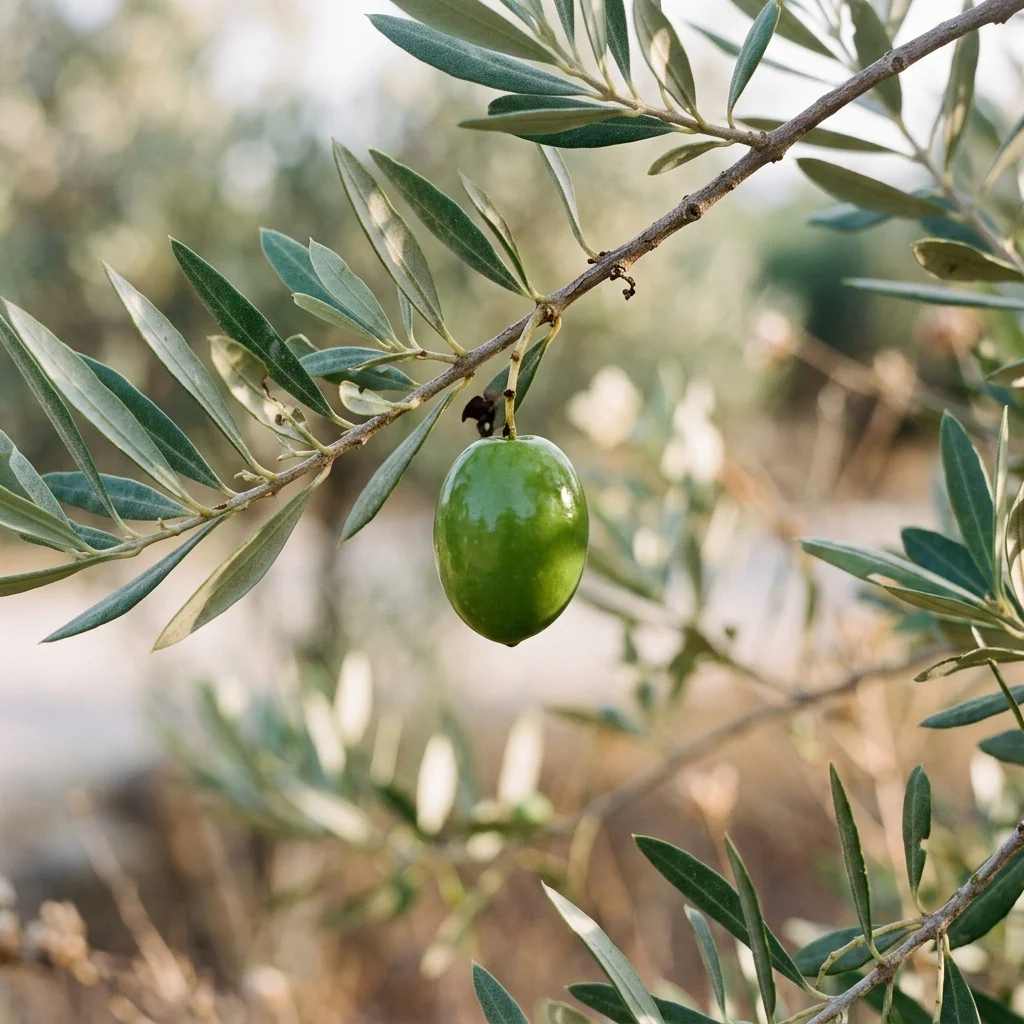
Key Visual Features: Evergreen small trees with gnarled trunk bark and narrow silvery-gray foliage.
-
✔
Leaf & Stems: Opposite, narrow oblong leaves with smooth margins; tiny white spring flowers.
-
✔
Fruit/Edible Part: Small globose oblong green drupes turning glossy deep black, containing a hard stone pit.
Complete Growing & Harvesting Guide
Follow our detailed scientific agricultural cultivation guide to keep your Olive thriving and high-yielding.
Common Diseases & Treatment
Peacock Spot (Fungal)
Symptoms: Upper leaf surfaces develop circular dark green or black spots with yellow rings, resembling peacock feathers.
Root Rot (Phytophthora)
Symptoms: Leaves wilt, turn bright yellow, twigs die back, and the lower trunk bark turns brown and slimy.
Frequently Asked Questions
Can I eat raw olives fresh off the tree?
No! Raw olives are extremely bitter and inedible due to the presence of oleuropein. They must be cured in brine or water to become sweet.
Do olive trees need cross-pollination?
Most olive cultivars are self-fertile, but planting a compatible second variety nearby greatly increases crop yields.
Can I grow an olive tree indoors?
Yes! Dwarf olive trees thrive in large pots on sunny window sills. Ensure sandy fast-draining potting soil.
Are olive leaves safe for dogs?
Yes! Olive leaves and wood are completely non-toxic to dogs. Olive oil is also highly beneficial for pet coats in moderation.